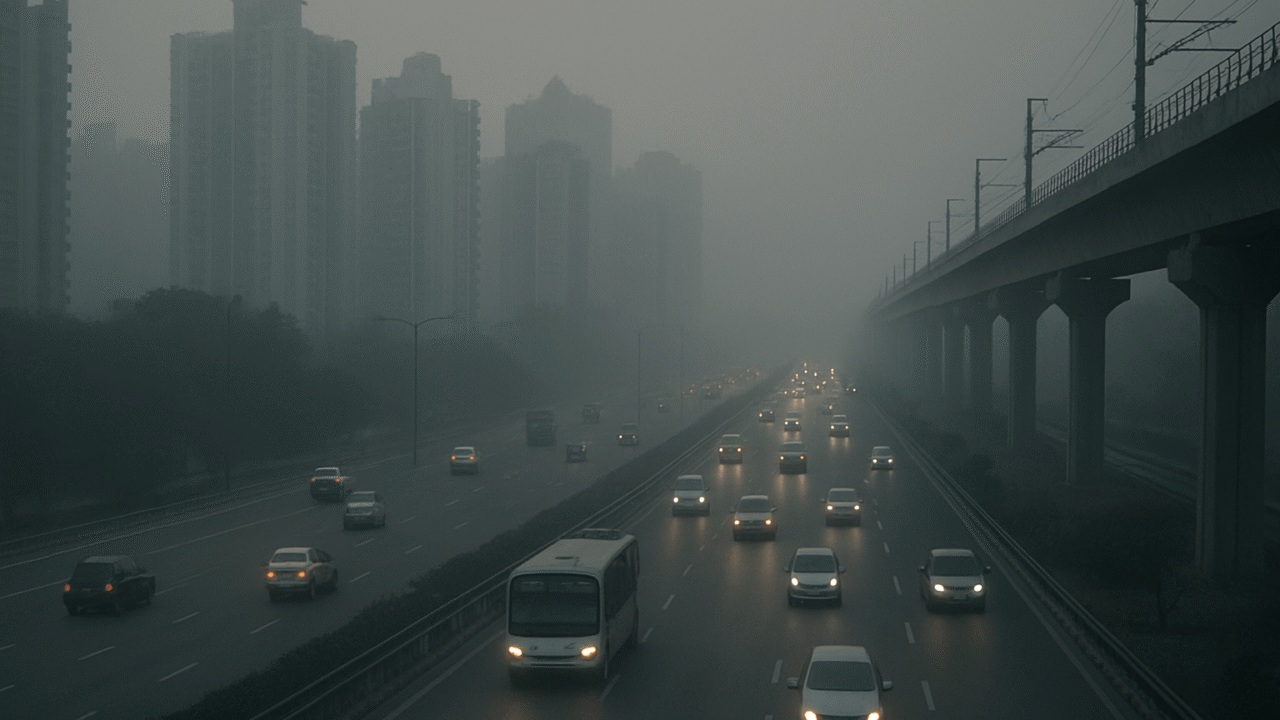
Why Noida winter feels harsher every year
Every winter in Noida, the city skyline fades behind a grey brown layer of smog and people feel their eyes burn on the way to work or school. News reports and official bulletins often say that Noida air quality is in the “very poor” or even “severe” category, with the AQI going above 300 on bad days.
These seasonal conditions are also linked to how the city has grown and how long-term planning decisions have shaped traffic patterns, waste handling, and environmental pressure points over the years.
On top of this, dense fog and cold waves make driving difficult and the mornings and nights very harsh for anyone who must be outside. This Noida winter survival guide is written as a simple, citizen friendly explainer that shows how to use official CPCB AQI information, how to think about Noida winter smog and fog, and how to adopt safer habits at home, on the road and inside your society. It is not a medical guide, but it is based on trusted information from official bodies so that Noida residents can make better winter decisions.
What Noida winter smog really means
Noida winter smog happens when pollution from vehicles, construction, industry and other urban sources stays trapped near the ground because the air is cold and still and wind is weak. This trapped pollution then mixes with natural winter fog and becomes a thick, dirty haze that cuts visibility and makes breathing feel heavy, especially in the early morning and late evening.
On such days, many people in Noida complain about burning or watering eyes, dry or scratchy throat, more coughing, tightness in the chest and feeling tired after being outdoors. Children, older adults and people who already have asthma, COPD, heart disease or other chronic problems feel these effects more and may need to reduce outdoor time even when others can still manage short trips. For any health problems or new symptoms, the right step is to talk to a doctor or specialist and not depend only on general tips or social media.
What is CPCB AQI and how it helps Noida
To make air quality easier to understand, the Central Pollution Control Board created the National Air Quality Index, often called CPCB AQI. This index turns complex pollution data into one number and one colour, and groups air quality into bands like good, satisfactory, moderate, poor, very poor and severe, each with a simple health message.
According to CPCB AQI information:
- Poor (201 to 300) can cause breathing discomfort on long exposure, especially if a person already has lung or heart disease.
- Very poor (301 to 400) can cause respiratory illness on long exposure and can be more harmful for sensitive groups.
- Severe (401 to 500) can affect even healthy people and can seriously harm people with existing diseases, so it is better to avoid unnecessary outdoor exposure.
Residents of Noida can see official AQI values on the CPCB National AQI website and in the daily AQI bulletins that list values for Delhi NCR including Noida, which reflect the impact of local pollution sources such as legacy waste sites and processing zones. There are also real time dashboards that pull data from CPCB and show Noida AQI station wise, which is useful before planning outdoor exercise, long commutes or outdoor play for children.
Main health tips from CPCB AQI and national advisories
Health advisories on air pollution published by the Ministry of Health and Family Welfare and the National Centre for Disease Control link CPCB AQI bands to simple public advice. When air moves from poor to severe, they suggest reducing time outdoors, reducing heavy physical activity outside and protecting sensitive groups such as children, elders and people with heart or lung problems.
For Noida winter smog, this guidance can be turned into three simple levels that a family can remember:
- When Noida AQI is moderate or poor, people who are sensitive should avoid intense outdoor exercise and pay attention to how they feel.
- When Noida AQI is very poor, everyone should cut down time outside, especially children, elders and people with health issues, and avoid heavy exertion outdoors.
- When Noida AQI is severe, it is better not to go out unless necessary and vulnerable groups should stay indoors as far as possible and follow their doctor’s advice closely.
These general tips follow the idea of the CPCB AQI framework and national air pollution health advisories, but they are not a replacement for personal medical advice.
How to breathe safer on bad Noida air days
A simple Noida winter habit is to check CPCB AQI in the morning and evening every day. If the Noida AQI is in the very poor or severe range, families can reduce long and heavy outdoor activities, shift walks to better air hours and reduce outdoor play for children and elders.
Small lifestyle changes can also help. Using a good quality mask such as N95 or N99 on busy roads, at crowded junctions or on a two wheeler reduces direct exposure to fine particles in Noida winter smog. Keeping windows closed when pollution is at its peak, reducing indoor smoke and dust and airing the house when AQI improves helps keep indoor air a bit cleaner. People who already have breathing or heart problems should follow the individual plan given by their doctor, especially when AQI goes above 200.
Residents can also notice which AQI levels make them feel worse and adjust routine based on that. For example, they can skip an outdoor run on a very poor day and choose indoor exercise instead. In this way, CPCB AQI becomes a daily planning tool for Noida winter instead of just a scary number on the news.
Safe driving in Noida fog and smog
In Noida winter, fog and smog make roads more dangerous, especially on Noida Expressway and Yamuna Expressway where speeds are high and visibility can suddenly drop. To reduce accidents in this season, authorities run winter road safety drives and lower speed limits on these expressways.
Everyday drivers can do a lot to stay safe. Keeping speed lower and steady and maintaining a larger distance from the vehicle in front gives more time to react when you cannot see far. Using low beam and fog lamps instead of high beam in dense fog helps because high beam reflects off water droplets and makes it harder to see. Avoid sudden lane changes, sharp braking and mobile use on Noida roads when visibility is low, especially in the early morning and late night.
Some actions clearly increase risk in fog. Driving in high beam in dense fog, using hazard lights while the vehicle is moving or stopping suddenly in the middle of the lane can confuse other drivers and cause collisions. Driving after drinking or when very sleepy is even more dangerous in winter because it slows reaction times when quick decisions are needed. Treating Noida fog and smog as a clear signal to slow down and focus fully helps protect everyone on the road.
Coping with the cold wave in Noida at home and at work
Cold waves add to the stress of Noida winter, especially for people who must stay outdoors for long hours such as guards, delivery workers, street vendors and daily wage labour. Local coverage shows that agencies in Delhi NCR have discussed cold wave preparedness and actions for vulnerable people as temperatures fall and pollution stays high.
At home, families can use layers of clothing instead of only one heavy jacket so that each person can adjust to temperature changes. It helps to prepare one warm but ventilated room with safe heating so that children and elders have a comfortable space when the cold is at its worst. Societies can support guards, housekeeping staff and helpers by ensuring they have basic winter protection such as caps, gloves and blankets during Noida winter nights.
Schools and offices in Noida can also support safety in this season. On days with very dense fog and very poor or severe AQI, flexible or slightly delayed start times and hybrid work options can reduce early morning exposure and crowding at gates and on expressways. Making these choices in line with official CPCB AQI bulletins and weather information helps manage both traffic risk and health risk better.
How RWAs and resident groups can help Noida winter safety
Resident Welfare Associations and city level federations in Noida can turn technical information into simple, useful tips for residents. They can share daily Noida AQI values from CPCB’s National AQI website or the Delhi NCR bulletin, along with a one line summary such as “very poor” or “severe” in society WhatsApp groups and notice boards.
Societies can also take practical steps inside their campuses. They can remind drivers to slow down and avoid honking in fog, paint reflective strips on speed breakers and blind turns and keep common walkways and parks safe and well lit. Encouraging car pooling, school bus use and staggered timing on the worst days can help reduce traffic and slightly reduce the local pollution load. When RWAs share official AQI and health advisory links instead of unverified forwards, they help reduce panic and misinformation about Noida winter smog.
One page Noida winter checklist for families
Families in Noida can keep a short checklist to guide decisions during Noida winter smog, fog and cold.
- Check Noida AQI every morning and evening on CPCB or trusted dashboards before planning long outdoor activities, especially for children, elders and people with health conditions.
- On very poor or severe Noida AQI days, reduce unnecessary time outside, shift walks to better air hours and choose indoor exercise options.
- When driving in Noida fog, drive slowly, use low beam and fog lamps, keep extra distance from other vehicles and avoid risky moves or mobile use.
- Keep one warm and safe room ready at home, use layered clothing and confirm that outdoor staff in your society have basic winter protection.
- Share only verified CPCB AQI links and national health advisory links in your groups and avoid forwarding unverified or alarmist messages about Noida air pollution.
Sources and official references
- National Centre for Disease Control and MoHFW health advisories on air pollution
https://ncdc.mohfw.gov.in/wp-content/uploads/2024/05/1-ADVISORY-ON-AIR-POLLUTION-AND-HEALTH.pdf
https://mohfw.gov.in/sites/default/files/pollution.pdf