A road is suddenly blocked, a notice about property dues appears in your inbox, or a new layout changes how a sector market will look. In many such situations, one line is common in conversations and on paper: “as per Noida Authority order.” For residents, the Noida Authority is constantly present in the background, but the way it works is often unclear.
At the same time, Noida Police handles law and order, Noida Metro Rail Corporation operates metro services, and agencies such as YEIDA and Greater Noida Authority manage development in adjoining areas. Together, these bodies, all linked to the UP Government, influence how people in Noida live, travel, work, and use public spaces every day.
What Is the Noida Authority
The New Okhla Industrial Development Authority (Noida Authority) is a statutory industrial development authority set up under the Uttar Pradesh Industrial Area Development Act, 1976. It was created by the Government of Uttar Pradesh to plan and develop a notified area as a planned industrial and urban township.
Unlike cities that are managed by elected municipal corporations, Noida is administered directly by this development authority. Planning, infrastructure development, land allotment, building regulation, and many civic services are handled through the Noida Authority rather than through an elected city council.
According to its official descriptions and FAQs, the key objectives of the Authority include acquiring land in the notified area through the state government, preparing a master plan, developing sites for different land uses, allotting properties according to regulations, regulating the erection of buildings and industries, and providing infrastructure and amenities. These objectives explain why so many decisions about roads, layouts, and plot rules are routed through this single institution.
How the Noida Authority Is Structured
Noida Authority functions under the administrative control of the Infrastructure and Industrial Development Department of the Government of Uttar Pradesh. At the top is a Board with a Chairperson nominated by the state government, and day to day administration is led by a Chief Executive Officer (CEO), who is a senior officer appointed by the state.
The organisational structure published on the Authority’s website shows several layers of leadership and departments. It lists posts such as Additional and Deputy Chief Executive Officers, along with heads of key wings like planning, engineering, land and property management, finance, and health and sanitation, each with specified responsibilities and contact details. Through these departments, work is divided by function and, in many cases, by sectors or zones inside the city.
How Noida Has Changed Over Time
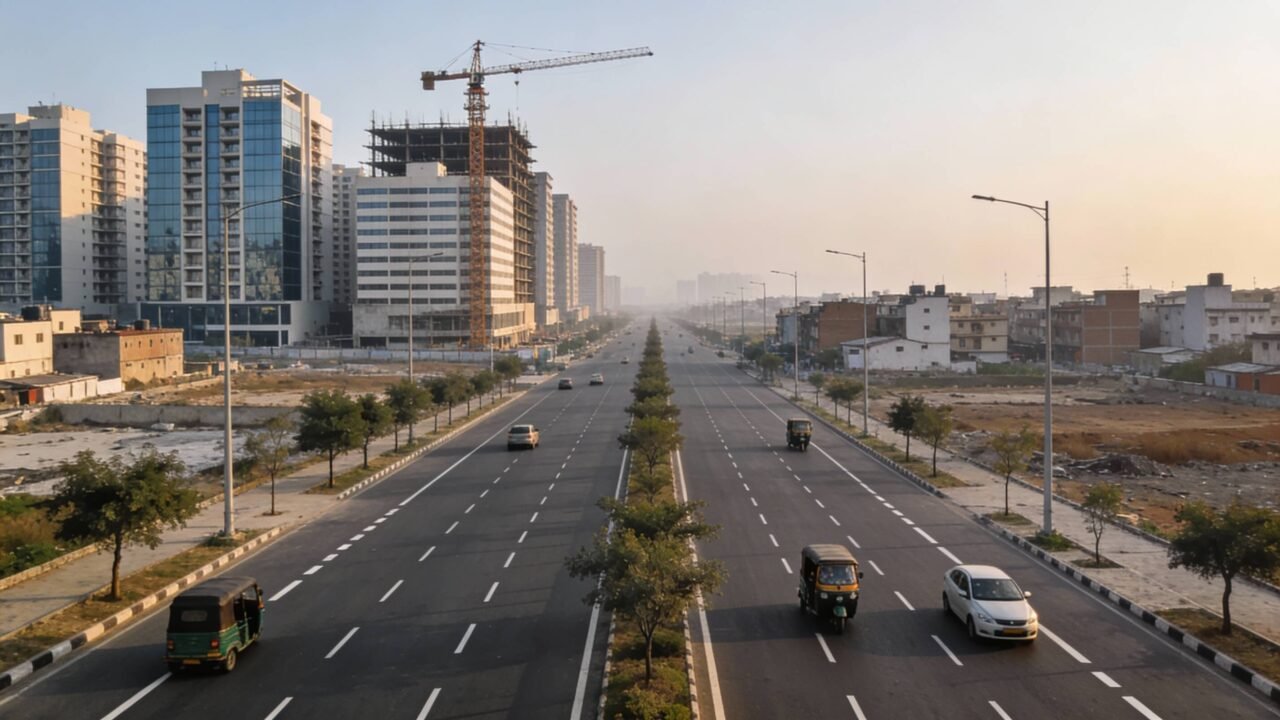
When the Authority was first created in the late 1970s, the primary focus was industrial development and decongesting Delhi by offering a planned location for industries and related activities. Over the years, Noida has transformed into a mixed urban centre with dense residential sectors, commercial hubs, IT parks, institutions, and transport corridors.
Because of this shift, the role of Noida Authority has widened from laying out sectors and allotting plots to dealing with long term urban questions such as traffic movement, drainage networks, maintenance of older sectors, and redevelopment needs. At the same time, coordination with bodies like Noida Metro Rail Corporation for metro infrastructure and YEIDA for development along the Yamuna Expressway has become a regular part of planning and implementation in the region.
What Noida Authority Actually Does
1. Urban Planning and Master Plans
Noida Authority prepares and enforces the master plan for its notified area. This plan determines land use, sector layouts, development control regulations, and density norms for residential, commercial, industrial, institutional, and recreational zones. For residents and businesses, this influences where housing projects can be built, where markets and offices can come up, and how wide main and internal roads will be.
2. Infrastructure Development
The Authority is responsible for planning and executing key physical infrastructure within its jurisdiction. This includes main roads and internal sector roads, drainage systems, street lighting, some public buildings, and supporting utility works. Such works are implemented through engineering departments that carry out technical planning and award contracts in line with government norms and budgets.
3. Property and Estate Management
Residential, commercial, and industrial plots in Noida are generally allotted by the Authority on a leasehold basis. The Authority manages allotment schemes, transfers, mutations, lease renewals, payment of dues, and related documentation through its estate and land departments and online systems. Residents and allottees interact with these functions when they apply for transfer of property, seek building plan approvals, or regularise certain changes in line with Authority rules.
4. Civic Services and Public Health
Within its area, Noida Authority also oversees several civic functions such as sanitation arrangements, solid waste systems in certain zones, and maintenance of parks and green belts. For issues like sewer overflow, water line leakage, or septic tank cleaning, dedicated helplines and portals linked to the Authority and associated programmes such as Swachh Bharat Mission Noida offer channels for complaints and requests.
5. Economic and Institutional Development
Noida Authority plays a role in promoting industrial, IT, and institutional investments in line with state policy. Land is identified and allotted for industrial estates, IT and IT enabled services parks, and institutional campuses, often linked to the broader industrial and investment promotion framework of the UP Government. When state policies prioritise certain sectors, this can translate into new schemes and land parcels in the Noida area.
How Noida Authority Relates to YEIDA, NMRC and Noida Police
Noida Authority is one among several development and service agencies connected to the Government of Uttar Pradesh in this region. YEIDA (Yamuna Expressway Industrial Development Authority) has its own notified area along the Yamuna Expressway corridor and looks after planning and development there, separate from the core sectors of Noida.
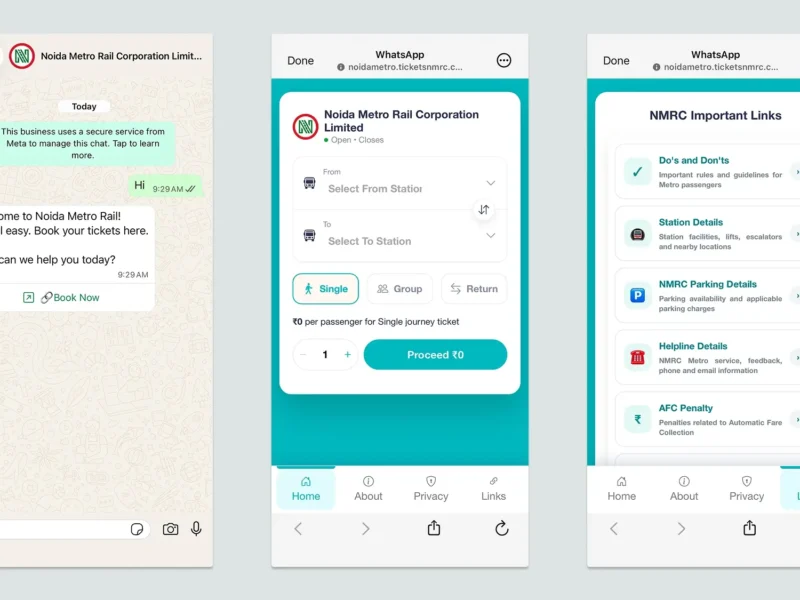
Noida Metro Rail Corporation has a separate Board of Directors and is responsible for operating and expanding metro services between Noida and Greater Noida, while coordinating alignments, station locations, and supporting infrastructure with Noida and Greater Noida authorities. Noida Police, under the state Home Department, is responsible for law and order and crime control, rather than planning or development, but often works alongside the Authority on issues like encroachment drives and public safety around markets and public spaces.
Why This Structure Matters for Residents
Almost every major aspect of urban life in Noida is connected in some way to decisions taken by Noida Authority or by agencies that work with it. Plot allotments, layout of new sectors, widening of a road, creation of a park, or changes in certain charges all trace back to official decisions, schemes, and regulations. Knowing that these come from a defined statutory body, and not from informal directions, helps residents understand the reasons behind changes and the limits of what can be altered.
For property owners and buyers, the Authority’s master plan, land use categories, and allotment rules have a direct impact on what can be built, how a neighbourhood can evolve in future, and how secure a particular investment is. For tenants, commuters, and business owners, its decisions on infrastructure and public facilities shape daily experiences such as travel time, drainage during rains, and availability of public spaces in their sectors.
What Residents Can Do With This Information
Residents can use the Noida Authority’s official portal and FAQs to identify which department is responsible for a particular service, and how to submit applications and grievances correctly. Checking official notices and circulars before reacting to messages on social media or messaging apps helps avoid confusion about charges, deadlines, or new schemes.
When an issue involves more than one body, such as safety near a metro station or traffic near a large junction, raising complaints with both the relevant development authority and Noida Police or NMRC can improve the chances of a coordinated response. For larger policy questions, residents’ welfare associations can refer to master plan documents and formal orders when they submit representations to the Authority or to the UP Government.
Suggested Official Links
- New Okhla Industrial Development Authority, official portal and information pages
https://www.noidaauthorityonline.in/