Yamuna Expressway 2026: Noida’s New Airport, Bollywood’s Film City and What It All Means for You
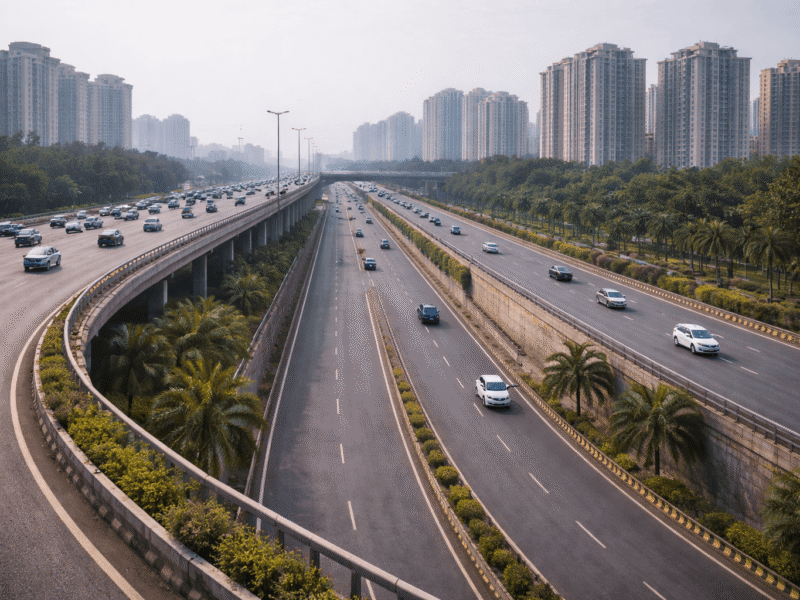
For most of the past decade, the Yamuna Expressway was simply a very smooth, very fast road. A six-lane concrete highway stretching 165 kilometres from Pari Chowk in Greater Noida to Agra, it cut the old four-hour drive down to under two, and gave weekend travellers to the Taj Mahal one of the most pleasant drives in North India.
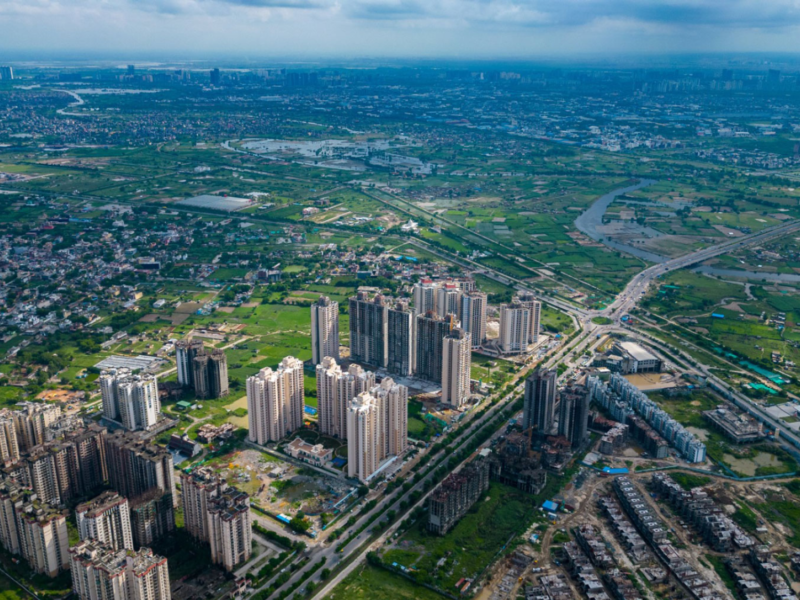
That is still true. But in March 2026, the expressway is something more. It is the spine of what may become the most transformative infrastructure corridor in the entire NCR over the next two decades. An international airport is days away from its inauguration. India’s most ambitious film city just shot its first scene. A metro line, a rapid rail corridor and a pod taxi network are all in various stages of planning. And property prices along the corridor have risen 158 percent in five years, with the biggest jump still considered by many analysts to be ahead.
Here is everything you need to know, explained clearly for Noida and Greater Noida residents.
The Airport Is Coming. This Month.
Prime Minister Narendra Modi is scheduled to inaugurate the Noida International Airport in Jewar this month, according to Uttar Pradesh Chief Minister Yogi Adityanath. The announcement was made during CM Yogi’s official visit to Singapore, where he was meeting foreign investors and discussing infrastructure partnerships.
This is not another rumour. YEIDA’s Additional CEO confirmed that the airport construction is 100 percent complete. The calibration flight test, conducted by the Airports Authority of India on October 31, 2025, successfully verified the airport’s navigation and communication systems. Commercial operations are currently targeted for mid-2026, pending DGCA approval.
Phase 1 of the airport includes one runway and a terminal designed to handle 12 million passengers annually, at a project cost of Rs 4,588 crore. The airport is being developed by Yamuna International Airport Private Limited, a fully owned subsidiary of Zurich Airport International AG, under a public-private partnership with the Uttar Pradesh government. The UP government has allocated Rs 750 crore specifically for the airport’s development in the 2026-27 state budget, part of a broader Rs 2,111 crore outlay for the civil aviation sector.
The long-term vision is genuinely large. Phase 2 will add a second runway and expand capacity to 30 million passengers annually by 2032. By 2050, four phases of construction will give the airport six runways and the capacity to handle over 152 million passengers per year, which would place it among the busiest airports in the world.
For Noida and Greater Noida residents, the most important near-term question is straightforward: how do I get there at launch? The honest answer is by expressway, for now. The distance from central Noida to Jewar is approximately 45 to 60 kilometres depending on your starting sector. Budget 45 to 60 minutes by car or cab in normal traffic, and more during peak expressway hours.
The metro connection is planned but not yet under construction. A metro link from Noida Sector 148 on the Aqua Line to the airport has completed its DPR, but physical construction has not yet commenced. A Ghaziabad-Jewar Rapid Rail Transit System corridor is under planning and expected to complete by 2031. At launch in mid-2026, the expressway remains the primary and only practical access route.
Bollywood Has Already Moved In
Here is the detail that most people outside the film industry have missed. The Noida International Film City is not just a plan anymore. It is operational.
Producer Boney Kapoor has confirmed that Mom 2, the sequel to the 2017 film Mom, is now shooting at the newly inaugurated International Film City along the Yamuna Expressway near Greater Noida, making it the first film to begin production at the facility. The cast includes Bengali actor Jisshu Sengupta and Karishma Tanna. The director is Girish Kohli, who wrote the original film. Shooting began in the first week of March 2026.
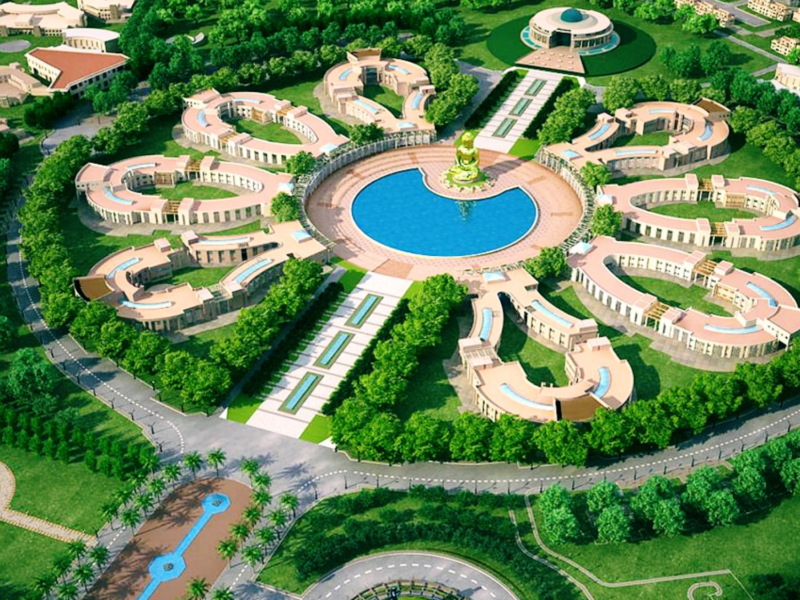
The film city covers 1,000 acres in Sector 21 of the Yamuna Expressway Industrial Development Area, with the first phase covering 230 acres. The project is a joint venture between Boney Kapoor’s Bayview Projects and Bhutani Group, which formally signed the concession agreement with YEIDA.
Boney Kapoor’s vision for the facility goes considerably beyond a film production studio. Speaking at the inauguration, he described plans for a theme park, multiple entertainment sections, podcast studios, OTT production sets, television serial facilities, a media centre and a film institute covering 21 acres dedicated to training. The goal, in his words, is to ensure that everything related to entertainment and media has a base here.
Direct expressway connectivity to the film city is being built through four ramps at the 24-kilometre point on the Yamuna Expressway. YEIDA has already begun construction on two ramps in the first phase to ease the movement of artists, crew, equipment and visitors.
The strategic case for the Film City rests on two facts. Mumbai’s film industry operates on increasingly congested, expensive land with little room to expand. The Yamuna Expressway site, by contrast, is greenfield, master-planned, and four kilometres from an international airport. Whether Bollywood’s major production houses follow the early movers is the open question, and only execution will answer it.
What Is YEIDA and Why Does It Matter
Most Noida residents are familiar with the Noida Authority and the Greater Noida Authority. YEIDA, the Yamuna Expressway Industrial Development Authority, is the third government body shaping the landscape you see when you drive south from Greater Noida.
YEIDA was set up by the Uttar Pradesh government specifically to govern the land and industrial development along both sides of the Yamuna Expressway. Its jurisdiction covers the corridor from Greater Noida down to the airport area and beyond. It allocates industrial plots, launches residential schemes, manages the film city project, coordinates airport connectivity infrastructure, and sets the rules for land development across the entire belt.
YEIDA has allocated plots to electronics manufacturers, aerospace players, logistics firms, EV companies and apparel units in the corridor in a planned manner, with the goal of creating employment that then drives housing demand in the surrounding sectors.
In January 2026, YEIDA launched a residential plot scheme offering 973 plots across multiple sectors, ranging from 162 to 290 square metres, positioned specifically to attract buyers ahead of the airport’s operationalisation. The scheme attracted significant interest and oversubscription, consistent with previous YEIDA lotteries.
What the Expressway Expansion Means for Travellers
The Yamuna Expressway is not just being built around. It is also being extended.
The Uttar Pradesh government has approved an expansion of the expressway to connect Noida, Vrindavan and Aligarh. A six-lane road will link the Banke Bihari Temple in Mathura directly to the expressway. X Convention centres, art institutes, agricultural institutes, yoga centres, budget hotels, resorts, hospitals and electric bus depots are all planned along the expanded route. The expansion aligns with the state government’s broader agenda of creating heritage corridors that serve both pilgrimage and tourism traffic.
For families in Noida and Greater Noida, this expansion matters in a very practical way. Mathura and Vrindavan are already popular day trips from the NCR, particularly around Holi and Janmashtami. A direct expressway link to Banke Bihari Temple removes the need to navigate Mathura’s congested inner roads and shortens the journey considerably. It also strengthens the case for the weekend day-trip market that the expressway corridor is positioning itself to serve.
The expressway already reduces the Greater Noida to Agra journey from four hours to under two hours, and the Mathura extension will bring similar benefits to the Vrindavan route.
The Property Question: Answered Honestly
No article about the Yamuna Expressway in 2026 can ignore property values, and no honest article should pretend to predict them with certainty.
Property prices in residential areas along the expressway belt have shown steady appreciation in recent years, and analysts expect further movement as Jewar Airport becomes operational. Plots along the corridor are still priced more affordably than equivalent locations in Gurgaon, Noida and even parts of Greater Noida.
The infrastructure thesis is legitimate. Airport, film city, industrial corridors, expressway extension, future metro and rapid rail, Eastern Peripheral connectivity — the case for long-term development is real and well-documented. What is equally honest to say is that a significant portion of pre-airport price appreciation has already occurred. The window of genuinely pre-announcement pricing closed several years ago.
For end-users, the corridor makes increasing practical sense as the airport and metro connections mature. For investors with a five-to-ten year horizon, the infrastructure fundamentals remain solid. For anyone expecting quick returns on the basis of the inauguration alone, the timelines for commercial viability of the airport, film city and surrounding development are measured in years, not months.
What to Watch in the Months Ahead
The inauguration ceremony this month will formally open the terminal building. Commercial flights are expected to follow in mid-2026, with initial domestic routes being discussed with IndiGo and Air India Express connecting Noida to Mumbai and Hyderabad. International operations will require further regulatory approvals and are likely to follow in Phase 2.
For the film city, Mom 2 is the first production but it will not be the last. How quickly the facility fills with other productions and whether the planned entertainment, hospitality and education components begin construction on schedule will determine whether this remains a production studio or grows into the cultural destination Boney Kapoor has described.
For commuters and weekend travellers, the most immediate change is simply this: the road you use to reach Mathura, Agra and Vrindavan is about to become one of the most strategically important transport corridors in North India. Plan your journey times accordingly as construction activity near the airport and film city interchanges intensifies over the coming months.
The Yamuna Expressway has always been a fast road. In 2026, it is also becoming something that no road in NCR has been before: a corridor that connects an international airport, a film city, a heritage pilgrimage belt and a new urban development zone in a single straight line from Greater Noida to Agra. That is worth paying attention to.
Official Links
YEIDA (Yamuna Expressway Industrial Development Authority): https://www.yamunaexpresswayauthority.com
YEIDA Plot Schemes: https://www.yamunaexpresswayauthority.com/web/schemes
Noida Aqua Line Metro (Sector 148 connectivity): https://nmrcnoida.com