Choosing a coaching centre in Noida is no longer just about a brand name, brochure, or a list of toppers. For many families, the bigger question is whether the centre is safe, compliant, practical for daily life, and actually suited to the student’s routine and stress levels.
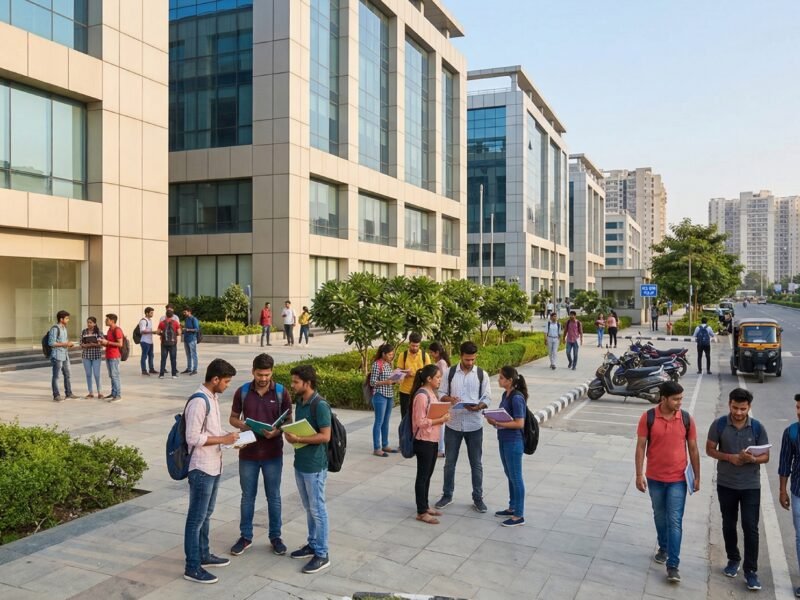
That is especially important in Noida and Greater Noida, where large coaching clusters attract students from across the city and beyond. Some students commute daily by metro or road. Others move into PGs or hostels near preparation hubs such as Sector 62, Alpha 1, Techzone 4, or Knowledge Park. In that situation, the decision is not only academic. It is also about safety, regulation, support, and sustainability.
This Pulse of Noida guide looks at the most important checks parents should make before enrolling a child in a coaching centre in Noida or Greater Noida.
Why this decision needs more caution now
Coaching centres operate in a high-pressure environment. Students often manage long class hours, mock tests, schoolwork, travel fatigue, and emotional pressure at the same time. That is why parents need to go beyond marketing claims and ask practical questions.
Recent district-level enforcement and reporting around coaching regulation, registration, student welfare, and fire safety have made this even more relevant in Gautam Budh Nagar. For families, that means one thing clearly: before paying fees, verify the basics.
1. Check whether the coaching centre is properly registered
The first question parents should ask is simple: is the coaching centre legally registered to operate?
Under the Uttar Pradesh Regulation of Coaching Act, registration is a core requirement. Public reporting and enforcement action in recent years have shown that unregistered centres can face sealing, notices, or FIR-level action. That makes registration more than a paperwork issue. It is a basic credibility test.
Why this matters
- it indicates the institute is visible to the local regulatory system
- it reduces the risk of joining a centre facing enforcement issues
- it gives parents a stronger basis for accountability
What parents should ask
- Is the centre registered under the applicable UP coaching rules?
- Can the institute show its registration certificate?
- Which local authority or DIOS office is linked to the registration?
This check matters even more in well-known coaching hubs, where visibility should make compliance easier, not weaker.
2. Verify fire safety and building compliance
This is one of the most important non-academic checks.
Following national concern around student safety in coaching spaces, enforcement attention on fire safety and building norms has increased. Public reporting from the region has highlighted action against centres over fire safety issues, unsafe use of buildings, and non-compliant class infrastructure.
What parents should look for
- visible emergency exits
- building access that does not feel unsafe or overcrowded
- no risky basement-only class setup
- clear fire-safety preparedness
- general building condition and movement flow during peak class hours
Why this matters
A coaching centre may look academically strong but still fail the most basic safety test. In a student-heavy area, especially where classes run for long hours, even ordinary movement inside the building matters.
If a centre hesitates to answer basic questions about fire safety or building approvals, that itself is a warning sign.
3. Assess student welfare and mental health support
This is often ignored by parents at the admission stage, but it should not be.
Academic stress is real, especially for students preparing for JEE, NEET, and other competitive exams. District-level attention to coaching norms in Gautam Budh Nagar has also reflected concerns around student pressure, counselling, and support systems.
What parents should check
- Does the centre offer counselling support or escalation support?
- Is there any structured pastoral or emotional support system?
- How does the institute handle weak performance or missed targets?
- Is the atmosphere motivating, or fear-driven?
Why this matters
A student does not only need content delivery. They also need a manageable environment. Families should be cautious of setups that market aggressively but offer little support when a student begins to struggle.
Parents should also be aware of broader support options such as public mental-health helplines, including Tele-MANAS, when needed.
4. Look closely at infrastructure and class conditions
A coaching centre should not be judged only by its reception area or wall posters. Parents should inspect the actual class environment.
What to check
- classroom hygiene
- seating comfort
- ventilation and space
- first-aid availability
- washroom condition
- overcrowding during live class hours
Why this matters
A poor classroom environment affects concentration, health, and morale. Even academically serious students can burn out faster in cramped, poorly managed conditions.
This is especially relevant in high-density coaching belts where classroom turnover is fast and infrastructure is pushed hard throughout the day.
5. Ask direct questions about batch size and attention
One of the most common mistakes families make is assuming that a famous brand automatically means better academic attention.
That is not always true.
Questions parents should ask
- How many students are there per batch?
- How often do doubt sessions happen?
- Is there personal tracking or only class delivery?
- How are weak students identified and supported?
- Are test-series discussions actually done in detail?
Why this matters
A student can disappear inside a large batch if the centre is too scale-driven. Parents should understand whether the centre’s model is built around genuine support or only volume.
In practical terms, a smaller, more disciplined academic setup may sometimes suit a student better than a bigger brand with weak feedback systems.
6. Evaluate faculty quality and academic support systems
Parents should also be careful not to rely only on name recall. A centre may be well-known, but the real question is which teachers are handling the student’s batch and what support is available beyond the lecture.
What to ask
- who teaches the actual batch
- whether faculty stability is strong
- how doubts are cleared
- whether there are test reviews and academic mentoring
- whether app support, revision tools, or backup systems are active
Why this matters
Students preparing for demanding exams need continuity and clarity. If the academic model is weak beyond classroom delivery, the burden shifts back to the student.
7. Check commute realistically, not emotionally
Parents often underestimate the cost of daily travel. A centre may look attractive, but if commute becomes exhausting, the student will feel the impact within weeks.
This is why local coaching hubs matter. In Noida and Greater Noida, areas such as Sector 62, Alpha 1, Techzone 4, and Knowledge Park draw students partly because ecosystem convenience matters.
What to evaluate
- metro access
- road congestion at class timings
- last-mile travel
- return timing after evening classes
- whether the student will lose too much time in transit
Why this matters
A poor commute eats into revision, sleep, and emotional stability. Even good coaching may become unsustainable if daily movement is too difficult.
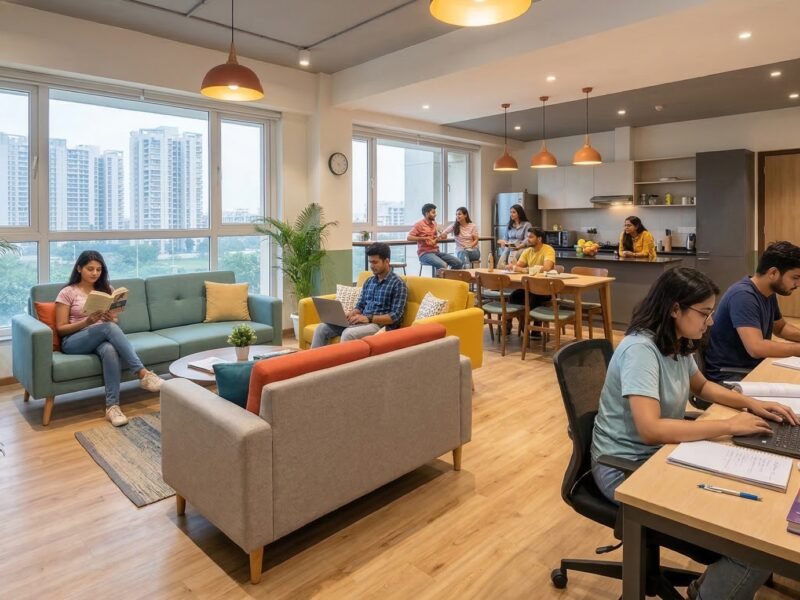
8. If the student is staying in a PG, inspect the PG yourself
For students moving closer to a coaching hub, PG or hostel quality becomes a major decision factor.
Do not rely only on online claims.
What parents should check
- CCTV and entry control
- food quality
- distance from coaching centre
- lighting and street safety
- study environment inside the PG
- WiFi reliability
- noise levels and crowding
Why this matters
A poor PG can damage routine, concentration, and health. In some cases, the PG experience can matter as much as the coaching experience.
This is especially relevant in coaching-heavy or college-adjacent belts where student accommodation is in high demand.
9. Ask whether the centre fits the exam, not just the brand
Not every branch is equally strong for every exam.
Some local belts in Noida appear stronger for JEE and NEET than for CUET or general competitive exams. Parents should not assume a big coaching name means equal depth across all categories.
What to confirm
- Is this branch actually strong for the student’s target exam?
- Is CUET treated seriously or only added as an extra category?
- Does the local centre have real programme strength or only marketing visibility?
Why this matters
Families often choose a centre by reputation, when they should be choosing by exam fit plus local branch strength.
10. Notice the overall culture of the place
This is harder to measure, but very important.
Parents should observe:
- how staff speak to students
- whether the environment feels disciplined or chaotic
- whether pressure is used as a sales tool
- whether the place feels student-first or fee-first
A strong coaching centre does not only teach. It manages routine, communication, and expectations responsibly.
Local context: where these checks matter most
These checks become even more important in the main coaching and student belts of Noida and Greater Noida.
Sector 62, Noida
A metro-linked and student-heavy hub where commute, PG quality, and crowd density matter.
Alpha 1 and nearby Greater Noida commercial zones
Useful for mixed exam prep, but parents should inspect ecosystem depth and stay options carefully.
Techzone 4 and Knowledge Park
Important for students living near educational belts, where transport, co-living quality, and local access become part of the decision.
Final word
Joining a coaching centre in Noida should not be treated as a rushed admission decision. It is a long-cycle commitment that affects study quality, emotional pressure, physical routine, and often daily family life too.
The safest approach is simple:
- verify registration
- check fire safety
- inspect the actual class environment
- ask about batch size and support
- assess commute honestly
- inspect PGs personally if needed
- confirm whether the local branch is truly suited to the target exam
For parents, the right decision is not always the most advertised institute. It is the one where compliance, safety, academic support, and routine fit come together properly.
Official and primary links
Disclaimer
This guide is based on information and recommendations compiled from various publicly available sources, including official pages, legal references, district-level information, and credible reports. Pulse of Noida is presenting this as a curated resident-first reference and advises readers to verify the latest details directly with the concerned institute or authority before making any decision.