Noida’s Hidden Restaurants: Cloud Kitchens Powering a New Dinner Routine
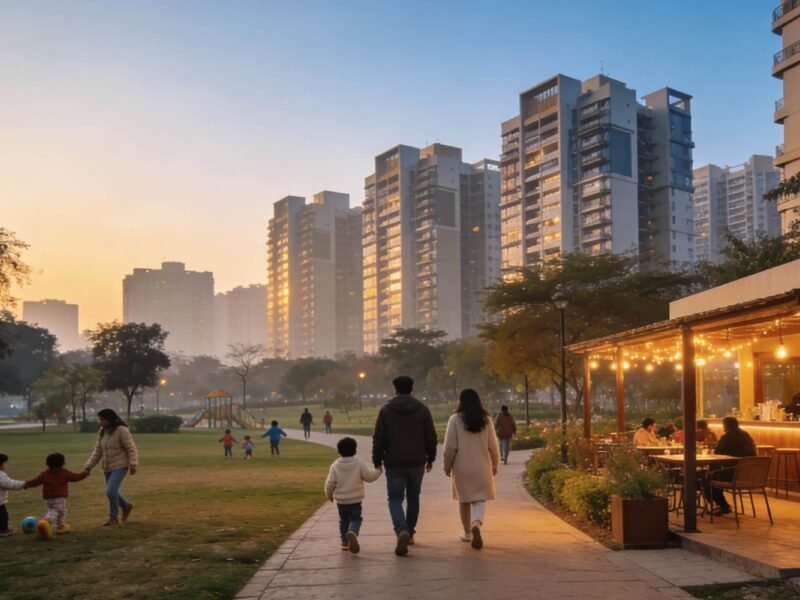
The dining scene around Noida’s expressway sectors is changing in ways that are not visible from the main road. Instead of new signboards or large façades, residents in Sectors 137 and 143 are discovering restaurants that exist almost entirely on their phones. These are cloud kitchens: delivery-only, digital-first food businesses built around logistics, ratings and repeat orders rather than walk-in crowds.
What is happening in these two dense, high-rise corridors mirrors a bigger shift across India. Recent industry reports estimate that India’s cloud kitchen market is already above the one billion dollar mark and is projected to grow at a double‑digit compound annual growth rate over the rest of this decade, supported by rising app-based ordering and lower operating costs compared to dine‑in formats. For Noida’s working professionals and young families, that growth shows up as more choice on food delivery apps and a steady move toward delivery as the default weekday dinner option.
India’s cloud kitchen market is already above the one billion dollar mark and is projected to grow at a strong compound annual rate, according to multiple industry reports that track food delivery and delivery‑only formats. Readers can verify licensing and regulatory details through the Food Safety and Standards Authority of India and official government service portals for food business registration.
The business logic: less frontage, more food
At its core, the cloud kitchen model strips away almost everything that makes a traditional restaurant expensive to run. There is no dining hall to furnish, no large service team and no pressure to pay top‑tier rents in prime retail markets like Sector 18 or Sector 63. Instead, operators take compact commercial or light‑industrial spaces, invest in a functional cooking line, packaging and a stable internet connection, then rely on delivery platforms and direct channels to reach customers.
Because overheads are lower, more of each rupee can go into ingredients, kitchen staff and reliable last‑mile delivery. This is one reason why so many meals from cloud kitchens in and around Sectors 137 and 143 can stay under the ₹500 mark per order while still delivering decent portion sizes and packaging that survives an elevator ride. For apartment residents juggling EMIs, school fees and long office hours, that price‑convenience equation is the key.
Why do Sectors 137 and 143 work so well for cloud kitchens
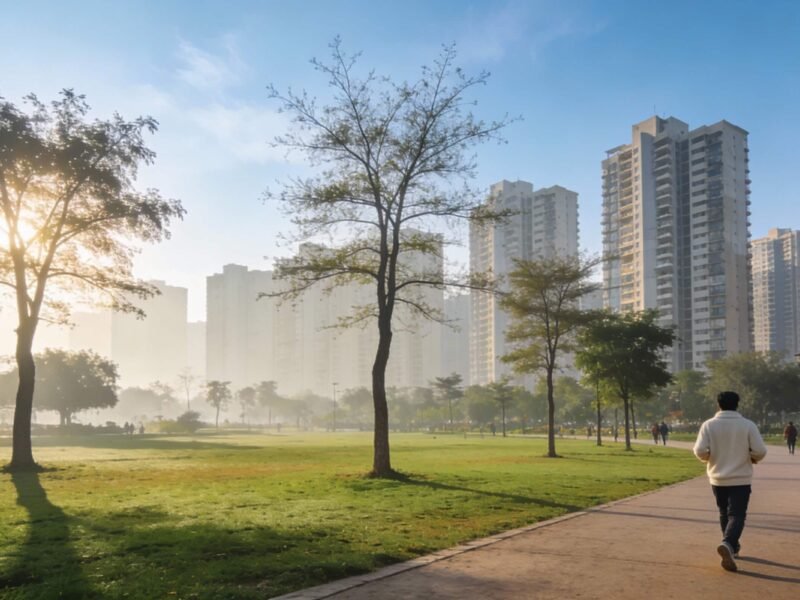
Sector 137 sits along the Noida–Greater Noida Expressway with a cluster of high‑rise societies, offices and support infrastructure packed into a relatively small footprint. Sector 143 and nearby YEIDA (Yamuna Expressway Industrial Development Authority) linked pockets are following a similar pattern, with new towers, growing occupancy and a high share of tech and service sector workers who often return home late.
This density creates an efficient delivery catchment. A single kitchen serving a few adjoining societies can complete multiple orders within a short radius, keeping travel times low and food temperatures stable. On the user side, most decisions begin with filters like “Under ₹500”, “Fast Delivery” or “Home Style”, meaning a strong rating and reliable delivery window matter more than a visible storefront. Over time, families build their own small rituals around certain menus: one place for biryani and curries, another for wraps and a third for salad bowls on “healthy” days.
Three archetypes shaping Noida’s delivery habits
Rather than focus on specific brand names, the cloud kitchen ecosystem around Sectors 137 and 143 can be understood through a few recurring archetypes that residents repeatedly encounter on apps and local groups.
The Gourmet Specialist
These operations pick a focused lane i.e., regional biryanis, handcrafted burgers or Pan‑Asian bowls, and try to do it better than anyone else in their radius. Lower rental and front‑of‑house costs give them room to spend on consistent ingredients and packaging, while their visibility depends heavily on reviews, photos and repeat orders.
“The Health First Kitchen“
Responding to a visible “Fit in Noida” lifestyle, some kitchens build menus around calorie‑counted salads, grilled proteins, grain bowls and customisable diet plans. Their target customer is the resident who does not want to cook after work but still wants to track macros, avoid heavy gravies and maintain a predictable routine.
The Budget Combo and Tiffin Operator
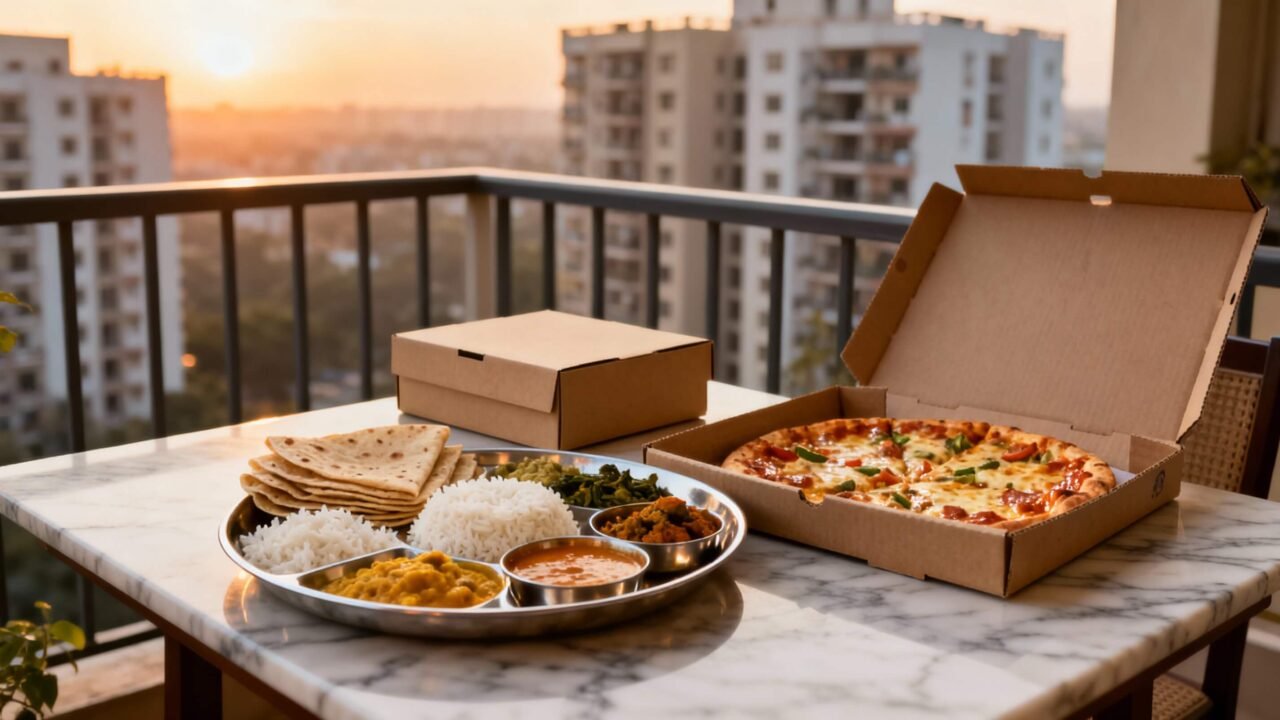
These setups are designed for daily use, often with subscription models or rotating thali‑style menus that echo the traditional tiffin service. Their promise is simple: familiar, hygienic and filling Indian meals at a price that works for five or six days a week, not just a weekend treat.
A single physical kitchen may run multiple such concepts in parallel as separate virtual brands on delivery apps, all sharing the same cooking line and staff.
Logistics: the invisible engine
Behind every “30 to 35 minutes” delivery estimate is a web of small operational decisions. Kitchens catering to Sectors 137 and 143 must coordinate prep times, packaging and hand‑offs with riders who may be serving multiple towers in a single run. In high‑density clusters, that routing can be very efficient: short distances and many potential customers allow operators to complete more orders per hour, which lowers the effective delivery cost per meal.
Delivery platforms also influence visibility and profitability by ranking outlets based on rating, preparation time, cancellation history and user behaviour. For a cloud kitchen, a slip in consistency can quickly push it down the list; maintaining hygiene, on‑time dispatch and accurate orders becomes essential if they want to stay near the top of search results.
Compliance and food safety in a “Hidden Industry”
Even if they lack dine‑in spaces, cloud kitchens are fully regulated food businesses. They must obtain FSSAI registration or licensing before starting operations and are expected to follow the same basic rules on hygiene, storage, labelling and staff practices as any other restaurant. Step‑by‑step guides for Noida emphasise combining FSSAI documentation with GST registration where applicable, Shops and Establishment enrolment and the necessary local trade approvals.
For residents, one simple check is to look for an FSSAI licence number and basic address information on packaging or app listings, which signals that the operator is at least engaging with formal regulation. Over time, consistent quality and transparent communication in reviews and resident groups tend to separate serious, compliant players from short‑lived, purely discount‑driven outlets.
What this shift means for Noida’s everyday life
As more young families and professionals move into Greater Noida and the expressway sectors, the demand for quick, predictable and reasonably priced delivered meals is likely to increase rather than fade. Instead of asking “Where should we go for dinner?”, many conversations in Sectors 137 and 143 now start with “Which kitchen should we order from tonight?”, which is a small but telling change in how the city eats.
For local entrepreneurs, cloud kitchens offer a way to plug directly into this demand without the financial burden of a large dining space. For residents, the upside is more variety at lower price points, provided they remain alert to hygiene, consistency and how responsibly each business engages with safety norms.
If current trends continue, Noida’s most influential restaurants may never be the ones lining a market road. Instead, they will be the unseen kitchens whose reputations are built slowly, one box at a time, in the elevators and doorsteps of Sectors 137 and 143.
Official links for verification
- FSSAI official site (national food regulator): https://fssai.gov.in
- Government of India online FSSAI licence and registration service: https://services.india.gov.in/service/detail/apply-online-for-licence-or-registration-under-food-safety-and-standards-authority
- State Food Safety Commissionerate (Uttar Pradesh contact listed under FSSAI commissioners page): https://www.fssai.gov.in/cms/commissioners-of-food-safety.php
- Noida Authority (city development authority, for local trade, land use and civic context): https://noidaauthorityonline.in
- OneMap Noida GIS (official planning and sector‑level information): https://umd.nic.in/noida/
- YEIDA GIS and regional authority portal for expressway area: https://umd.nic.in/yeida/
Disclaimer
This story is an editorial overview of cloud kitchen trends in Noida based on publicly available market studies, official government websites and local expert explainers. It is not legal, financial or regulatory advice. Readers should refer to the official FSSAI website, state food safety authorities and local development authorities, and should consult qualified professionals before making any business or compliance decisions. Figures and projections mentioned are based on third‑party market research summaries and may change as new data becomes available.