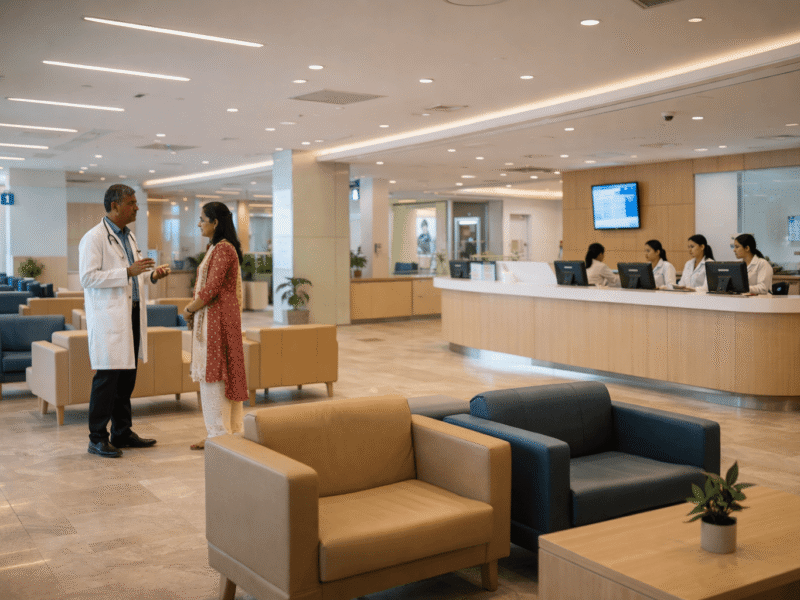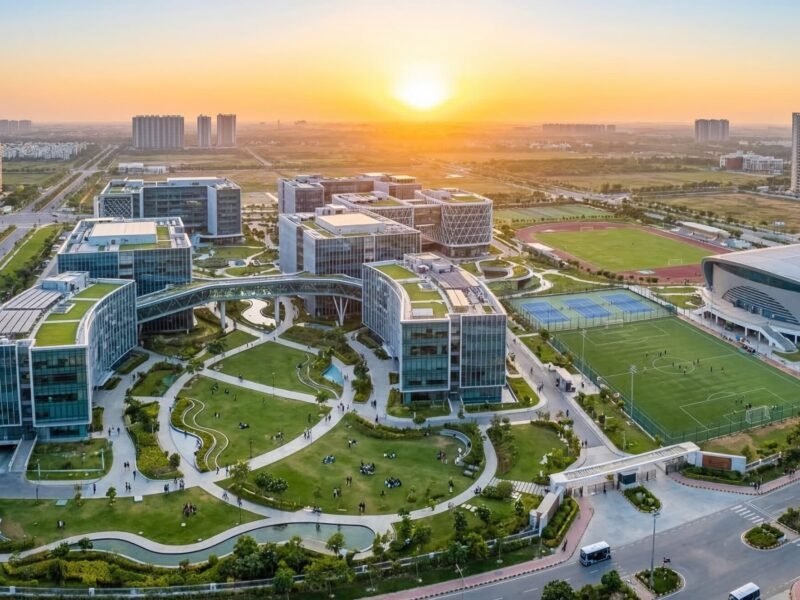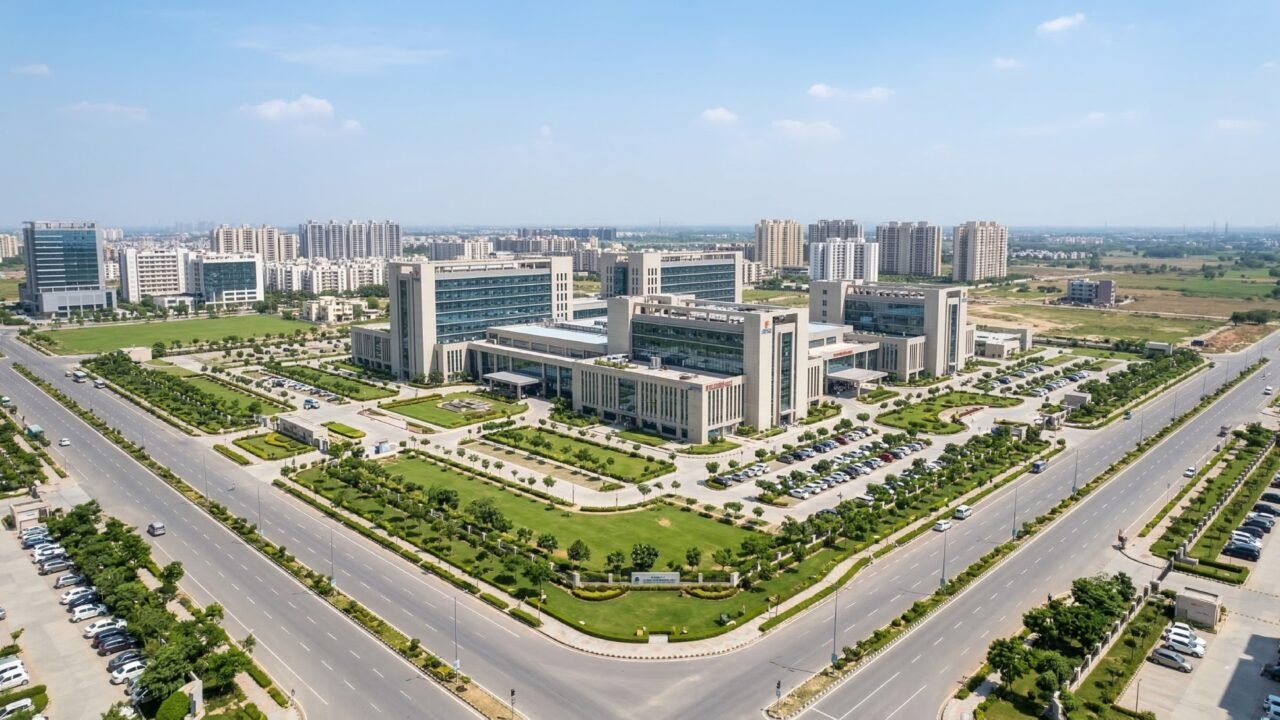
Greater Noida’s healthcare ecosystem is expanding through a mix of private super-speciality hospitals and public institutional care, improving access for residents across Greater Noida and Greater Noida West.
Three institutions stand out in this story for different reasons: KDSG Super-Speciality Hospital as a newer private super-speciality presence, Sarvodaya Hospital as a major tertiary-care hospital in Greater Noida West, and the Government Institute of Medical Sciences (GIMS) as a public institutional and teaching hospital serving the wider district. Together, they help explain how healthcare access in Greater Noida is becoming broader and more layered.
KDSG Super-Speciality Hospital
KDSG Super-Speciality Hospital positions itself as a major private super-speciality hospital in Greater Noida. Its official website positions it as a multi-speciality tertiary-care setup with advanced infrastructure and a broad clinical offering. That makes it relevant to any discussion about how private healthcare capacity is expanding in the region.
The hospital’s department listing shows a wide range of services under one institutional umbrella. These include cardiology, oncology, neurology, nephrology, gastroenterology, emergency and trauma care, internal medicine, paediatrics, obstetrics and gynaecology, orthopaedics, radiology, pulmonology, psychiatry, urology, and other specialist areas. The breadth of departments suggests a hospital designed to handle both routine and advanced care requirements.
Sarvodaya Hospital, Greater Noida West
Sarvodaya Hospital, Greater Noida West adds another major layer to the region’s private healthcare infrastructure. On its official page, Sarvodaya describes this unit as a 220-bed tertiary-care multispeciality hospital in Greater Noida West. For residents of Noida Extension and surrounding sectors, that makes it a significant local healthcare institution rather than a peripheral option.
The hospital highlights multiple specialities including internal medicine, paediatrics, orthopaedics, neurosciences, cardiac sciences, nephrology, oncology, pulmonology, gastroenterology, emergency and trauma care, and mother-and-child services. In practical terms, this means Greater Noida West now has stronger access to a full-service tertiary-care hospital within its own fast-growing catchment area.
GIMS, Greater Noida
Government Institute of Medical Sciences (GIMS) represents the public institutional side of Greater Noida’s healthcare landscape. Its hospital page describes it as a tertiary-care teaching hospital in Gautam Buddha Nagar, located near Kasna and connected to major road corridors including the Yamuna Expressway and Eastern Peripheral Expressway.
GIMS is especially important because it combines hospital services with medical education and public-sector healthcare delivery. The official page highlights OPD and IPD services, emergency and trauma care, surgery, maternity services, diagnostics, and laboratory support. That makes it one of the key public healthcare anchors in Greater Noida and nearby areas.
What This Expansion Means for Residents
The significance of these hospitals is not just institutional. For residents, a growing healthcare landscape means better chances of finding specialist treatment, diagnostics, emergency response, and tertiary care without travelling far outside the region. It also means that Greater Noida is gradually developing a more complete urban support system instead of depending heavily on older NCR healthcare clusters.
KDSG reflects expanding private super-speciality capacity. Sarvodaya strengthens tertiary-care access in Greater Noida West. GIMS continues to serve as a major public and teaching hospital for the district. Together, they show that healthcare growth in Greater Noida is no longer a future promise alone. It is already taking visible institutional shape.
Conclusion
Greater Noida’s healthcare expansion is best understood as a combination of public and private capacity growth. KDSG Super-Speciality Hospital, Sarvodaya Hospital in Greater Noida West, and GIMS each play different roles, but all contribute to stronger medical access across the region. For families, patients, and long-term residents, that growing mix of hospitals is becoming an important part of everyday urban confidence in Greater Noida.