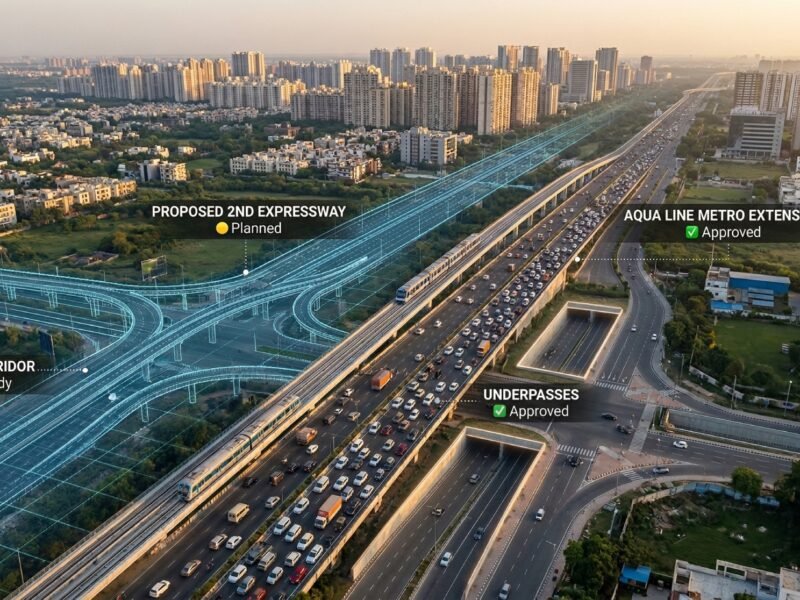
For thousands of people who travel between Delhi and Noida every day, the Mahamaya Flyover area is one of the most important junctions on the map. At peak hours, traffic from Delhi, Noida Expressway, Kalindi Kunj and Sector 37 often converges here, slowing commutes and making even short trips unpredictable. Recent decisions by the Noida Authority to clear a new elevated road near Mahamaya Flyover are aimed at reducing this pressure and creating a smoother connection between Delhi and Noida.
This explainer looks at what has actually been approved, how it links with the ongoing Chilla Elevated Road, and what Delhi–Noida commuters should realistically expect in the next few years.
What Noida Authority Has Approved
According to recent reports quoting Noida Authority officials, the Authority’s board has cleared a plan for a new elevated road that will connect the Mahamaya Flyover area to Sector 94. The proposal will now move into the detailed design and vetting stage, with the detailed project report to be examined by experts at IIT.
Key elements of the approved plan include:
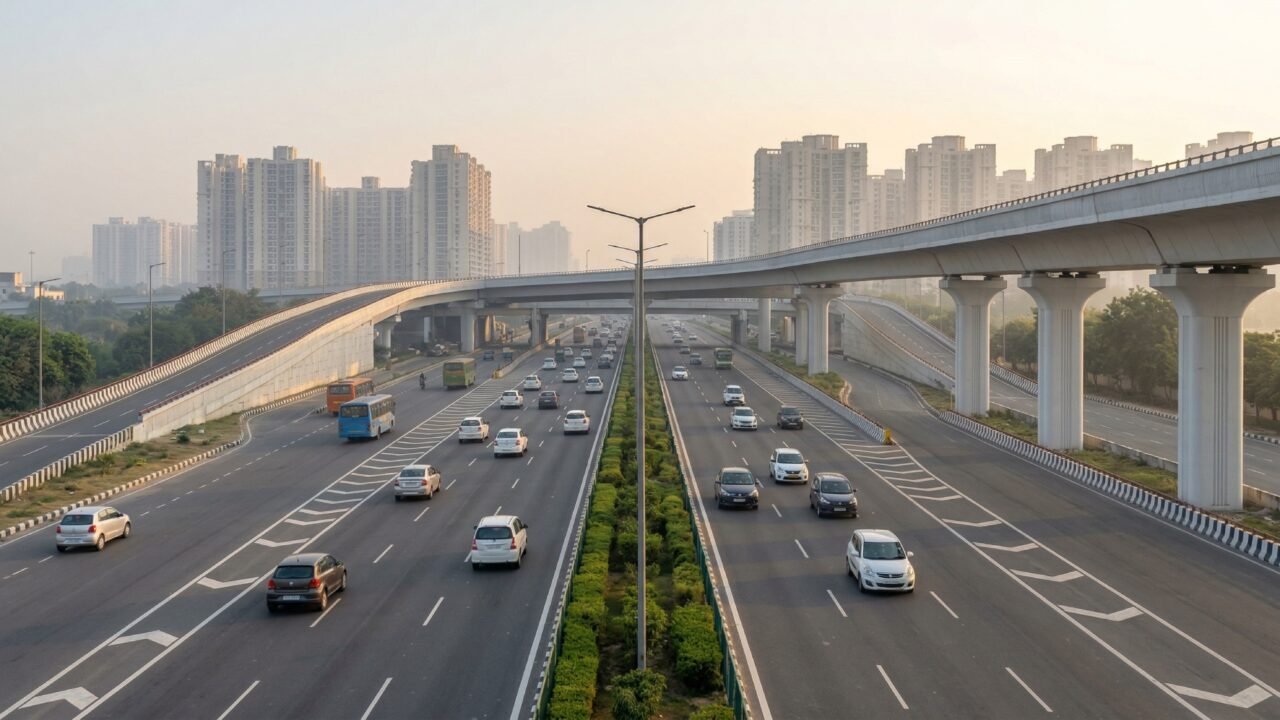
- A new elevated stretch of around 1.5 kilometres near Mahamaya Flyover, positioned above the Noida–Greater Noida Expressway.
- Direct linkage with the Chilla Elevated Road, which is already under construction between Mayur Vihar side in Delhi and Mahamaya.
- A connection towards the roundabout in Sector 94, improving access to the district elevated road network and onward routes into Delhi.
While the project has board-level clearance, it is still moving through the technical review phase, which means designs and details may be refined before construction begins. Commuters can treat this as an upcoming improvement but should be cautious about expecting immediate on-ground work.
How It Links With the Chilla Elevated Road
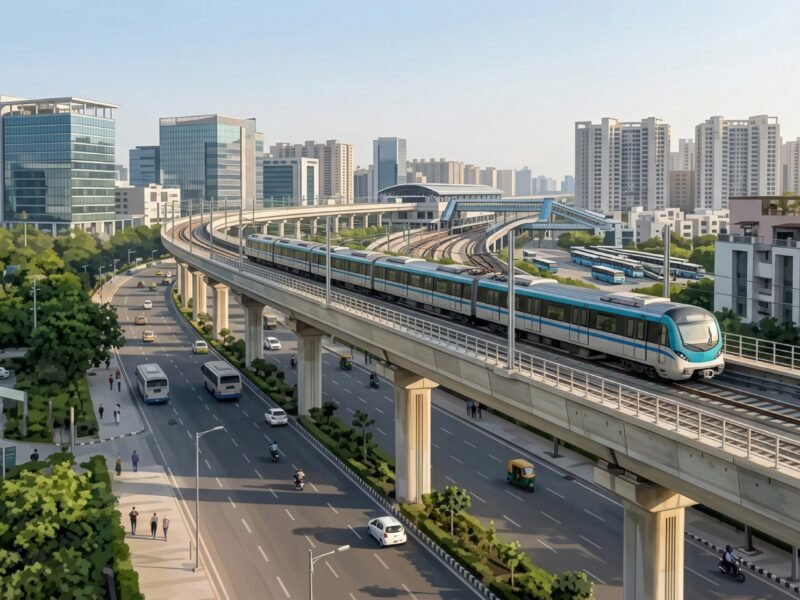
The new link near Mahamaya Flyover does not exist in isolation. It is meant to plug into the larger Chilla Elevated Road project that aims to give a signal-free connection between Mayur Vihar in Delhi and Mahamaya Flyover in Noida.
The Chilla elevated corridor is a 5.6–5.96 kilometre, six lane elevated road being built by Noida Authority and associated agencies. Its goal is to take through-traffic off the existing Delhi–Noida Link Road, which currently faces heavy congestion, especially between Sector 14A and Mahamaya.
Once both projects are in place, the typical movement for many drivers could look like this:
- Vehicles from Mayur Vihar and East Delhi use the Chilla Elevated Road to reach Mahamaya area without getting stuck on the old surface road.
- Instead of having to descend into local traffic at Mahamaya, a section of traffic can directly move onto the new elevated link towards Sector 94.
- From Sector 94, commuters can access the district elevated road network and continue towards Delhi or inner Noida with fewer signal interruptions.
For regular office commuters, the combination of the Chilla corridor and the new Mahamaya–Sector 94 link is meant to cut down time lost in bottlenecks and reduce the number of junctions where merging and lane changes currently cause jams.
What the New Link Means for Daily Commuters
If the project is implemented broadly as described in current plans, several commuter groups stand to benefit.
First, people entering Noida from Delhi via Mayur Vihar and using the expressway towards Greater Noida, Sector 37, Kalindi Kunj or Faridabad may see more predictable travel times. A cleaner connection between Chilla, Mahamaya and Sector 94 should remove part of the stop‑start traffic that now forms near the flyover and its exits.
Second, commuters travelling from central Noida sectors towards Delhi may get more options to join the elevated system rather than weaving through internal sector roads to reach the Delhi–Noida Link Road. The planned ramps and loops are intended to give smoother entry and exit points near Sector 38 and other nodes, reducing abrupt merging on the main expressway.
Third, by drawing some vehicles onto higher capacity structures, the plan aims to leave more room on the surface for local traffic, buses and last‑mile movement. For residents living in sectors close to Mahamaya, this can translate into fewer long queues backed up from the flyover.
However, until the detailed design is frozen and construction contracts are in place, it is safer for commuters to view these benefits as medium‑term possibilities, not immediate changes.
How This Fits into Larger Expressway Decongestion Efforts
The Mahamaya link is only one part of a wider set of ideas to reduce pressure on the Noida–Greater Noida Expressway and related corridors.
- Work on the Chilla Elevated Road resumed after earlier delays, with the goal of delivering a higher‑capacity alternative between Chilla regulator and Mahamaya in roughly three years.
- Separate studies are under way for a much longer elevated road along the Yamuna embankment, from Okhla Barrage near Sector 94 to the Yamuna Expressway near Gharbara village. This 31.2 kilometre six lane corridor is still at the feasibility stage, with consultants examining alignment, environmental issues and cost‑sharing between multiple authorities.
For now, the most concrete developments for everyday travellers are the under‑construction Chilla Elevated Road and the newly cleared 1.5 kilometre link near Mahamaya. The much longer embankment corridor remains a study project that may take several rounds of approvals before turning into construction on the ground.
Timelines and What Not to Expect Yet
Current public information does not provide an official completion date for the new Mahamaya–Sector 94 elevated stretch. The detailed project report still has to be finalised and go through technical vetting, after which Noida Authority would need to clear final designs, budgets and construction contracts.
Because of this, residents should be careful about assuming:
- A specific opening year or month for the new elevated link.
- Exact locations of all ramps, loops or lane counts beyond what is mentioned in Authority statements and city reports.
- Any guaranteed travel time reduction in minutes, as that will depend on how traffic volumes grow and how strictly lane discipline and enforcement are managed once the corridor opens.
A realistic way to look at the project is as a board‑cleared step in a wider redesign of Delhi–Noida connectivity rather than a quick‑fix solution that will eliminate jams overnight.
What Commuters Can Do Now
While these projects move through approvals and construction, commuters can focus on a few practical steps:
- Track official updates from Noida Authority about traffic diversions and construction milestones so that you can plan alternate routes during work phases.
- For people choosing homes or offices near Mahamaya, Sector 94, Sector 37 or Mayur Vihar, factor in both current congestion and the likelihood of future construction activity along key junctions.
- Keep an eye on changes to bus routes and feeder services once the Chilla Elevated Road nears completion, as public transport patterns will often shift alongside major road projects.
For daily travellers, the message is that relief is being planned and some work is already visible, but the full benefit of these elevated links will unfold gradually over the next few years.
Official links (for reference and verification):
Noida Authority (projects and press notes):
https://www.noidaauthorityonline.in/
UTTIPEC project page for Chilla–Mahamaya elevated corridor:
https://uttipec.org.in/ApprovedProject/Project59