How Greater Noida Is Quietly Building One of India’s Most Ambitious Startup Ecosystems in 2026
When people talk about India’s startup cities, they name Bengaluru, Hyderabad, Pune and Mumbai. Increasingly, Delhi NCR gets a mention. But within NCR, the conversation almost always stops at Noida’s Sector 62 or Gurugram’s Cyber City. What rarely gets its due is the entrepreneurial engine quietly humming a few kilometres further down the Yamuna Expressway, in Greater Noida.
That is changing fast. And the numbers being generated from this city’s campuses, incubation centres and co-working spaces in early 2026 are harder to ignore than ever before.
Two Incubation Centres Doing Heavy Lifting
The most concrete evidence of Greater Noida’s startup ambitions sits inside two institutions that have been building quietly for years and are now producing results worth paying attention to.
The AIC-GBU Incubation Centre at Gautam Buddha University recently convened over 50 founders representing 30 startups for a high-impact Startup Meet focused on mentorship, funding strategies, scalability planning and ecosystem collaboration. The centre currently supports 65 active startups, with over 100 additional ventures in the ideation and pipeline phase. Backed by the Atal Innovation Mission of NITI Aayog and the UP Start-In initiative, the centre provides startups with co-working spaces, lab facilities, mentoring, advisory support and initial growth funds.
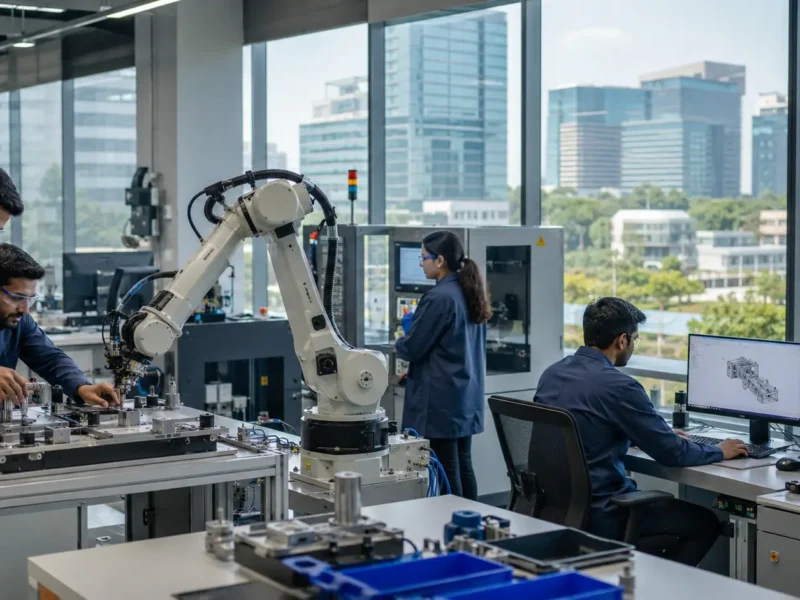
The functional areas supported by the centre span IoT, AI, robotics, microsystems, data analytics, high-frequency applications, integrated circuits, PCB-based solutions, IT and ITES, telecom, gaming and animation, and media and entertainment. For a government-funded university that most people outside Gautam Budh Nagar district know primarily for its engineering programmes, that is a genuinely impressive range of focus areas.
The second institution deserves equal attention. AIC BIMTECH, based in Greater Noida and supported by the Atal Innovation Mission, Startup India, MeitY Startup Hub and the Ministry of MSME, has since its inception supported over 550 startups, enabled more than 5,000 jobs, and facilitated over 200 industry and global partnerships.
In 2025 alone, AIC BIMTECH onboarded over 121 startups into its portfolio and supported the disbursement of Rs 6.7 crore in funding. Entering 2026, the centre has deepened its international footprint significantly. A strategic engagement alongside Expert Dojo, a leading global early-stage accelerator, brought together over 70 founders for sessions focused on investor alignment and global scaling, with Expert Dojo outlining plans to deploy an initial $15 million fund within its first year in the region.
Cross-border collaborations with Bhutan, Chile and the United Arab Emirates have given founders at AIC BIMTECH access to international market exposure that most tier-2 city incubators simply cannot offer.
Why Greater Noida Specifically?
The question worth asking is not whether Greater Noida has startup activity, but why it is growing here and not somewhere else.
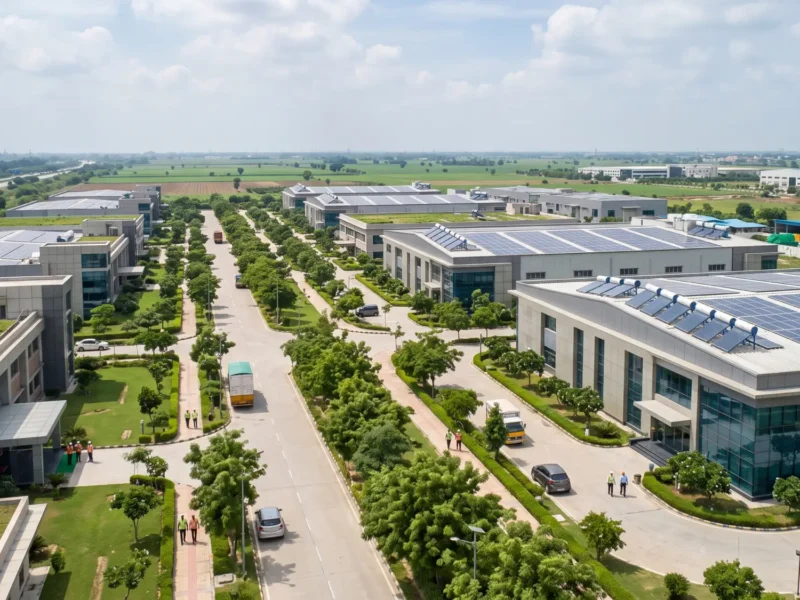
Gautam Buddha University sits on a 455-acre campus with built-up area of 8,000,000 square feet and is fully funded by the Noida and Greater Noida Industrial Development Authorities. That institutional backing matters enormously for startups. Access to land, labs, power infrastructure, and a captive talent pool of engineering and management students creates conditions that purpose-built startup parks elsewhere spend years trying to replicate.
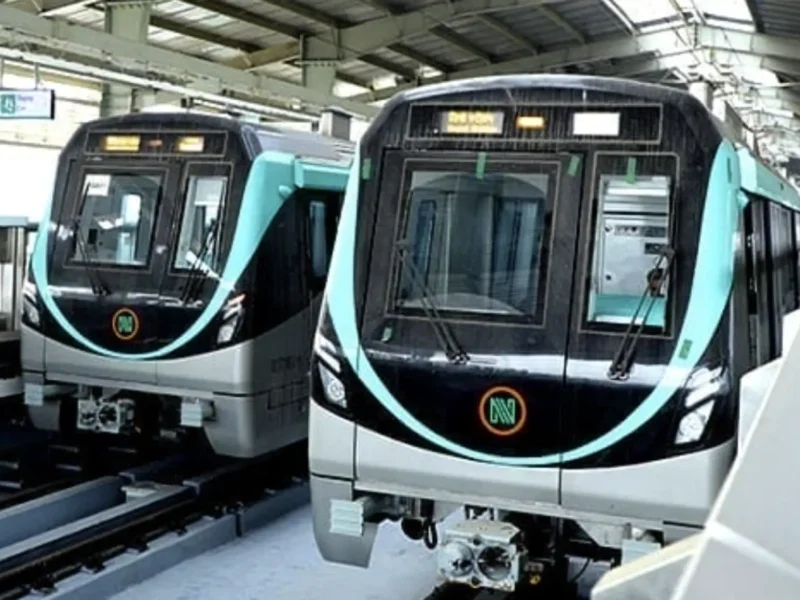
The geography helps too. Greater Noida sits at the intersection of three high-growth corridors: the Noida-Greater Noida Expressway, the Yamuna Expressway towards Jewar Airport, and the Knowledge Park belt that houses some of India’s largest concentrations of private engineering colleges. Noida-based startups together have raised over $2.7 billion across fintech, edtech, agritech and enterprise software. A significant share of that originating talent was educated in Greater Noida’s colleges before moving their headquarters to Sector 62 or beyond.
That pattern is beginning to reverse. As commercial real estate costs in central Noida climb, as metro connectivity improves, and as the Jewar International Airport project draws closer to completion, founders who would previously have defaulted to Sector 62 are reconsidering.
The Anchor Companies That Validate the Ecosystem
No startup ecosystem grows in isolation. It grows when anchor companies create alumni, inspire imitators, and generate the kind of secondhand talent that starts the next generation of ventures.
Greater Noida and its immediate Noida neighbour have that anchor layer firmly in place. Physics Wallah, headquartered in Sector 62 Noida, has raised $275 million and created an edtech platform that serves 46 million users. Its founders, Alakh Pandey and Prateek Maheshwari, built the company on a model of affordable education for competitive exams that deliberately targeted students in tier-2 and tier-3 cities. Through the PW School of Startups, Physics Wallah has established a Rs 100 crore fund aimed at supporting at least 100 startups over the next five years.
Pine Labs, also headquartered in Noida, is one of India’s most heavily funded fintech companies and has created over 15,000 jobs in the fintech sector alone over the past three years. When companies of this scale operate from the NCR’s extended startup belt, they produce a multiplier effect: the engineers, product managers and founders they train eventually leave to start something of their own, and many do not go far.
What the 2026 Funding Climate Means for Greater Noida Founders
The broader Indian startup context matters for understanding what Greater Noida’s emerging founders will face as they scale.
India’s startup ecosystem saw 81 VC, PE, micro and government-backed funds worth over $8.7 billion announced in 2025, with early-stage startups drawing the most investor interest and fintech remaining the top sector of focus.
For 2026, investors project a phase of disciplined investments, with smart capital expected to converge around high-conviction themes including AI infrastructure, India-stack-native B2B solutions, climate and energy transition, and advanced manufacturing in defence and space.
For founders based in Greater Noida, several of those themes align directly with the strengths of the local ecosystem. The IoT, robotics and electronics manufacturing focus at GBU’s incubation centre maps closely onto the deep-tech and advanced manufacturing thesis that investors are backing. The B2B SaaS and fintech expertise concentrated in the broader Noida belt speaks to the India-stack-native opportunity.
The gap that remains is in founder awareness and investor visibility. Many of the best teams coming out of AIC-GBU and AIC-BIMTECH are simply not well known to the Mumbai and Bengaluru-based VC community that controls the majority of early-stage deal flow. Closing that visibility gap is arguably the single most important work for the Greater Noida ecosystem in 2026.
What Still Needs to Happen
Greater Noida’s startup story is real, but it is also incomplete. The ingredients are present, but several things would accelerate the momentum considerably.
A dedicated startup district with its own identity, branding and wayfinding would help. Right now, founders operating out of AIC-GBU and AIC-BIMTECH have no shared neighbourhood, no common café strip, no informal gathering infrastructure of the kind that makes Koramangala in Bengaluru or Hauz Khas in Delhi feel like creative clusters. That social infrastructure is not trivial. It is where deals get done, co-founders meet and ideas survive their earliest and most fragile stages.
Greater visibility in national startup media would help too. The Startup Meets at AIC-GBU deserve coverage beyond the press releases that currently circulate them. The founders coming out of these programmes have stories worth telling, and those stories told well would attract more founders, more investors and more institutional attention to this city.
That, as it happens, is precisely what a hyperlocal publication rooted in this region can do better than anyone else.
A City That Has Not Yet Told Its Own Story
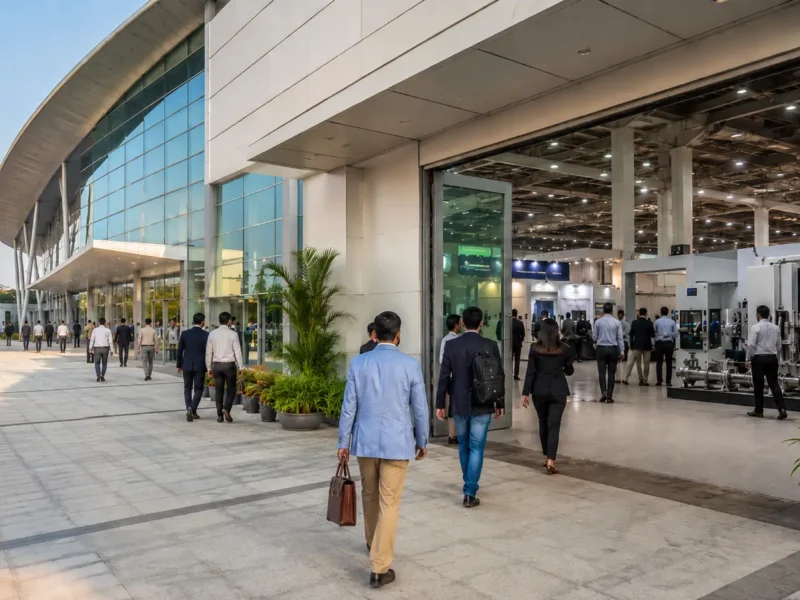
Greater Noida is 35 years old. It has built one of India’s largest concentrations of engineering colleges, a world-class motorsport circuit, one of Asia’s biggest exhibition centres, and a startup ecosystem that is now producing companies with international backing. It has not yet built the narrative infrastructure to match.
The founders working out of Knowledge Park and the GBU campus are not waiting for that narrative to catch up. They are already building. The question is simply how long before the rest of the country notices.
Official Links
- AIC-GBU Incubation Centre: https://gburif.org
- AIC-BIMTECH: https://aicbimtech.com
- Startup India (Government of India): https://www.startupindia.gov.in
- Start-In-UP (UP Startup Policy): https://startinup.up.gov.in