Noida Metro’s next expansion phase has moved into the design-consultancy stage, with NMRC tender documents referencing extension works from Sector 51 to Knowledge Park V, Sector 142 to Botanical Garden, and Depot Station to Boraki. For daily commuters, that makes this a plan worth watching closely.
Noida’s Aqua Line already plays an important role in connecting Noida and Greater Noida. But for many commuters, one question has remained the same: where does the network go next, and how much more useful could it become if key extension links move ahead?
Recent Noida Metro Rail Corporation documents have renewed attention around the next phase of planning. References in tender documents point to extension works from Sector 51 to Knowledge Park V, Sector 142 to Botanical Garden, and Depot Station to Boraki. For daily commuters, that makes this less of a distant idea and more of a project worth watching closely.
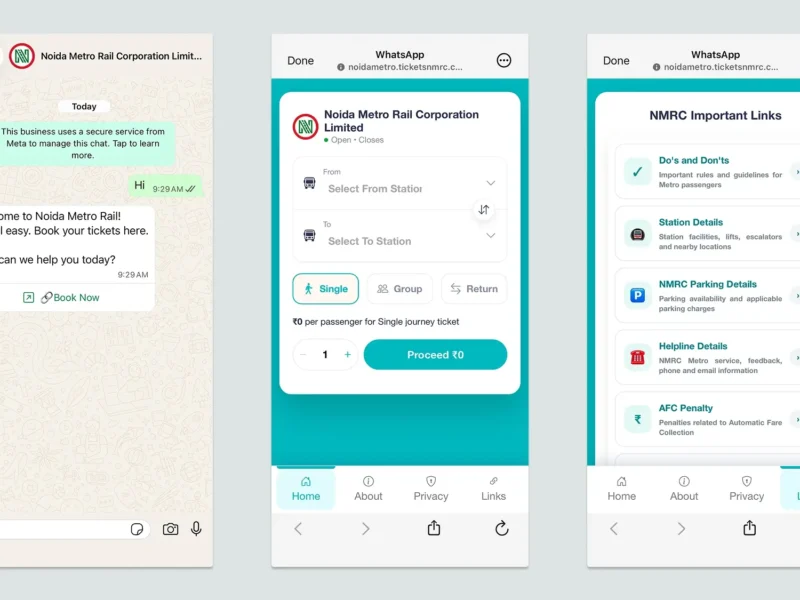
Ticketing update, August 2026: For the existing Aqua Line, NMRC has introduced WhatsApp QR ticket booking and an NCMC-featured City1 MTS card. See PON’s verified guide to Noida Metro WhatsApp ticketing and the new City1 card for the official WhatsApp number, booking steps and the current interoperability caveat.
What is being planned
At the centre of the discussion is the proposed next expansion of the Aqua Line. The corridors being referenced include a link from Sector 51 to Knowledge Park V, another from Sector 142 to Botanical Garden, and an extension from Depot Station to Boraki.
For regular metro users, the most important part of this is not the technical paperwork itself but what these links could eventually solve. The current Aqua Line works well for many trips within Noida and Greater Noida, but interchange convenience and network reach still remain major constraints.
That is especially true for commuters who also compare metro and road options between Noida and Delhi before planning their daily travel. A future Botanical Garden connection could significantly improve that equation.
Why this metro expansion matters
The proposed expansion matters because it could improve both reach and usefulness.
A link to Botanical Garden would be a major commuter upgrade because it would strengthen interchange access with the Delhi Metro Blue Line. For office-goers, students, and residents travelling between Noida, Greater Noida, and Delhi, that would make the Aqua Line a more practical part of the daily commute rather than a limited corridor requiring additional road dependency.
The Sector 51 to Knowledge Park V stretch is equally important in a different way. Greater Noida continues to grow as a residential, education, and employment zone. A deeper metro reach could improve mobility for people living and working in fast-growing parts of the region.
The Depot Station to Boraki side of the proposal also stands out because it ties into the larger long-term growth story of Greater Noida and the wider Yamuna-side corridor. It is still part of a proposed expansion package, not an operational reality, but it reflects the direction in which future connectivity planning is moving.
What is officially visible right now
This is the part commuters should read carefully.
What is visible right now is not an immediate service launch announcement. What is visible is movement in the planning, consultancy, and design stage. That means the project has crossed beyond casual speculation and entered an official preparation phase, but it is still not close enough to be mistaken for a confirmed near-term opening.
That distinction matters. A lot of infrastructure stories create excitement too early. In this case, the right framing is simple: the proposed Aqua Line expansion is active in official planning documents, but commuters should not read that as an indication of immediate operational change.
What commuters could gain if the links move ahead
If these links progress further, the biggest gain for commuters will be better network utility.
A metro system becomes meaningfully stronger when it improves two things:
- interchange convenience
- first- and last-mile efficiency
That is why the proposed Botanical Garden connection is so significant. It is not just another station-level addition. It has the potential to make journeys across the Noida-Delhi corridor far more integrated.
Similarly, stronger metro reach into Greater Noida would help a wider commuter base rely less on road-based travel for access to workspaces, institutions, and residential clusters. This becomes even more relevant when seen alongside Noida’s wider transport infrastructure story, where roads, flyovers, underpasses, and metro systems together shape how the city actually moves.
What commuters should keep in mind
At this point, commuters should treat the expansion as visible official planning, not as a finished or commissioned project.
Tendering and design work are meaningful steps, but they are still early compared with actual construction and opening timelines. That means the best reader takeaway right now is this: the next Aqua Line push is no longer just a conceptual talking point, but it is also not at a stage where riders should expect immediate service changes.
So if you use the Aqua Line regularly, this is a development to track closely, not a change to plan your commute around yet.
Why this fits into Noida’s bigger mobility story
Metro expansion is not a standalone story. It is part of a wider question about how Noida and Greater Noida are trying to match infrastructure with a growing commuter base.
As the region expands, residents increasingly judge urban convenience not just by where homes or offices are located, but by how efficiently they can move between them. That is why transport infrastructure continues to influence decisions around work, housing, education, and quality of life.
In that sense, the proposed metro expansion is part of the city’s broader connectivity push. The more usable Noida’s transport network becomes, the more livable and better connected the wider region becomes for residents.
For now, the right way to read this story is clear: the next phase of Aqua Line expansion has visible official movement behind it, and commuters should watch these corridors closely because they could become some of the most important future connectivity upgrades in Noida and Greater Noida.