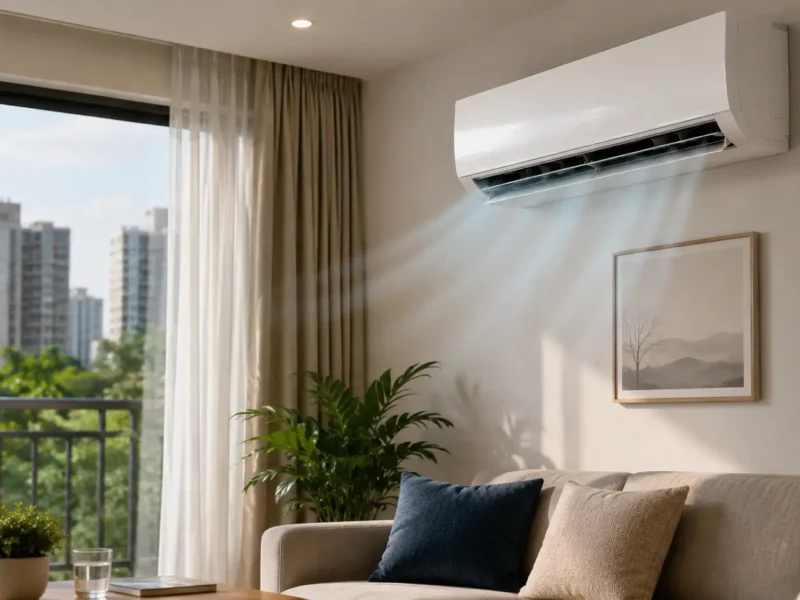
Every summer in Noida, many residents hear the same line: “AC ki gas kam ho gayi hai.” Sometimes that may be true. But in many cases, poor cooling gets blamed on gas even when the real issue is a dirty filter, a choked outdoor unit, weak installation, high room heat, or an unresolved leak that was never properly repaired.
This matters in Noida because peak summer heat, dust, and long AC run-times make weak cooling very noticeable. But that does not mean ACs “consume” gas as a routine summer expense. Heat and dust can increase cleaning and servicing needs, but they do not normally make refrigerant disappear on their own.
This is a curated utility guide, not a paid ranking. It is meant to help residents understand what is normal, what is a red flag, and what to check before paying for repeated gas filling.
The Most Important Fact First: AC Gas Is Not a Routine Consumable
An air conditioner is a closed-loop system. Refrigerant is not supposed to get “used up” like fuel.
If refrigerant is low, the real issue is usually a leak somewhere in the system, such as:
- copper tubing
- joints
- valves
- coil damage
That is why repeated top-ups without fixing the leak are a red flag, not normal maintenance.
What Often Causes Weak Cooling in Noida Homes
Before assuming “gas is low,” residents should first look at the more common reasons an AC underperforms.
1. Dirty Air Filters
A clogged filter reduces airflow and makes cooling feel weak even when refrigerant is fine.
2. Dirty Condenser or Evaporator Coils
If coils are covered in dust, the AC cannot transfer heat efficiently. In a dusty city environment, this becomes a very common cause of poor cooling.
3. Extreme Summer Heat
When outdoor temperatures rise sharply, the AC has to work harder to throw heat out. Cooling may feel slower in the afternoon, but that is not proof that the gas has “finished.”
4. Poor Room Sealing and High Heat Gain
If the room gets direct sun, has leaky windows, poor curtains, or frequent door opening, the AC may struggle even if the machine itself is healthy.
5. Wrong AC Size or Weak Installation
An undersized AC or a badly installed unit can create chronic weak cooling. That is often mistaken for a gas issue.
So What About the Noida Claim: “Open Nala Sulphur Causes Gas Leakage”?
This claim should be handled carefully. It is not completely false, but it is also not a universal explanation.
Technical literature does show that harsh corrosive environments can damage HVAC components over time. In places where outdoor units sit very close to open drains or sewage exposure, corrosive gases may contribute to faster metal and coil degradation.
In practical terms, this means a nearby open drain may become a contributing factor in some homes.
But that does not mean every poor-cooling complaint or every gas refill issue in Noida is caused by nala gases. In many homes, the more immediate cause is still:
- dirty filters
- clogged outdoor coils
- poor airflow
- weak installation
- unresolved leakage
- misdiagnosis
So the technician claim has some technical basis in specific cases, but should not be used as a blanket excuse.
When Gas Is Actually the Problem
Residents should be more open to a refrigerant issue when poor cooling comes with signs of an actual leak or wrong charge.
More credible warning signs include:
- cooling that keeps dropping after a recent refill
- ice formation on coil or piping
- hissing or bubbling sounds
- oily residue near joints or copper connections
- a technician showing measured low charge and identifying the leak point
If none of these checks are done, a blind gas refill should be treated cautiously.
What Residents Should Do Before Paying for Gas Filling
Step 1: Clean First
Ask for the indoor filters and outdoor unit to be cleaned first. Dust choking and weak airflow are common and often mistaken for low gas.
Step 2: Ask for Measurement, Not Guesswork
If a technician says gas is low, ask how that was checked. A proper diagnosis should involve measurement, not assumption.
Step 3: Ask Where the Leak Is
If gas is really low, ask where it leaked from. A refill without leak detection is usually a temporary patch.
Step 4: Ask What Repair Is Being Done
A proper fix may include:
- leak detection
- brazing or part replacement
- evacuation
- recharge
A simple top-up alone is not enough if the same unit has had repeat gas issues.
Step 5: Keep Records
Save invoices and note the service date. If the same AC needs refill again soon, that helps you judge whether the earlier work was incomplete.
What to Do If You Have a New AC
With a newer AC, the focus should be on correct setup and prevention:
- ensure installation is done properly
- keep filters clean
- keep the outdoor unit unobstructed
- do not assume weak cooling in peak heat means low gas
- if the outdoor unit faces a harsh environment, ask whether the model includes anti-corrosion protection
If a new AC is being told it needs gas filling unusually early, residents should be extra cautious and insist on proper diagnosis.
What to Do If You Have an Old AC
With an older AC, the issue is not just repair. It is also value for money:
- if cooling improves after cleaning and servicing, continue using it
- if the same unit has repeat leaks, repeated gas filling, and coil or copper trouble, ask whether repair still makes financial sense
- if the outdoor unit sits in a corrosive environment, older unprotected coils may degrade faster
- compare expected repair cost versus replacement before summer gets worse
New vs Old AC: A Simple Resident Rule
- New AC: insist on correct diagnosis, proper installation checks, and cleaning before anyone pushes gas filling.
- Old AC: evaluate whether repeated refill and leak repair are turning the unit into a money pit.
Final Word
The clearest picture is this: Noida’s heat and dust do increase AC stress and servicing needs, but they do not normally “consume” AC gas. If refrigerant is low, a leak or charge problem is usually the real issue.

The open nala or sulphur explanation has some technical basis in corrosive environments, but it should be treated as a possible factor in specific locations, not as a universal excuse for every weak-cooling complaint.
For most residents, the smartest approach is simple: clean first, ask for measurement, ask where the leak is, and avoid repeated blind top-ups. That one change in approach can save money and reduce unnecessary servicing.
For Service Providers
Pulse of Noida publishes resident-first local utility stories across housing, city updates, and everyday services. If you are a local business looking to reach Noida audiences through relevant brand visibility, visit our Advertise With Us page.
Official and Technical Links
- EPA: Refrigerant Leak Repair Requirements
- U.S. Department of Energy: Air Conditioner Maintenance
- U.S. Department of Energy: Common Air Conditioner Problems
- U.S. Department of Energy: Operating and Maintaining Your Heat Pump
- CED Engineering: HVAC Design Considerations for Corrosive Environments (PDF)