Quick Summary
- SADRAG’s SARTHAK for Women programme in Nagla Charandas, Noida Phase 2 trains migrant women in stitching and tailoring.
- The programme uses donated and discarded cloth to create eco-friendly products such as bags, pouches, and table linen.
- In 2025–26, over 120 women were trained, more than 25 women were engaged in livelihood activities, 5 women-led groups were formed, and over 800 products were created.
- The initiative links women’s livelihood and financial confidence with practical environmental sustainability.
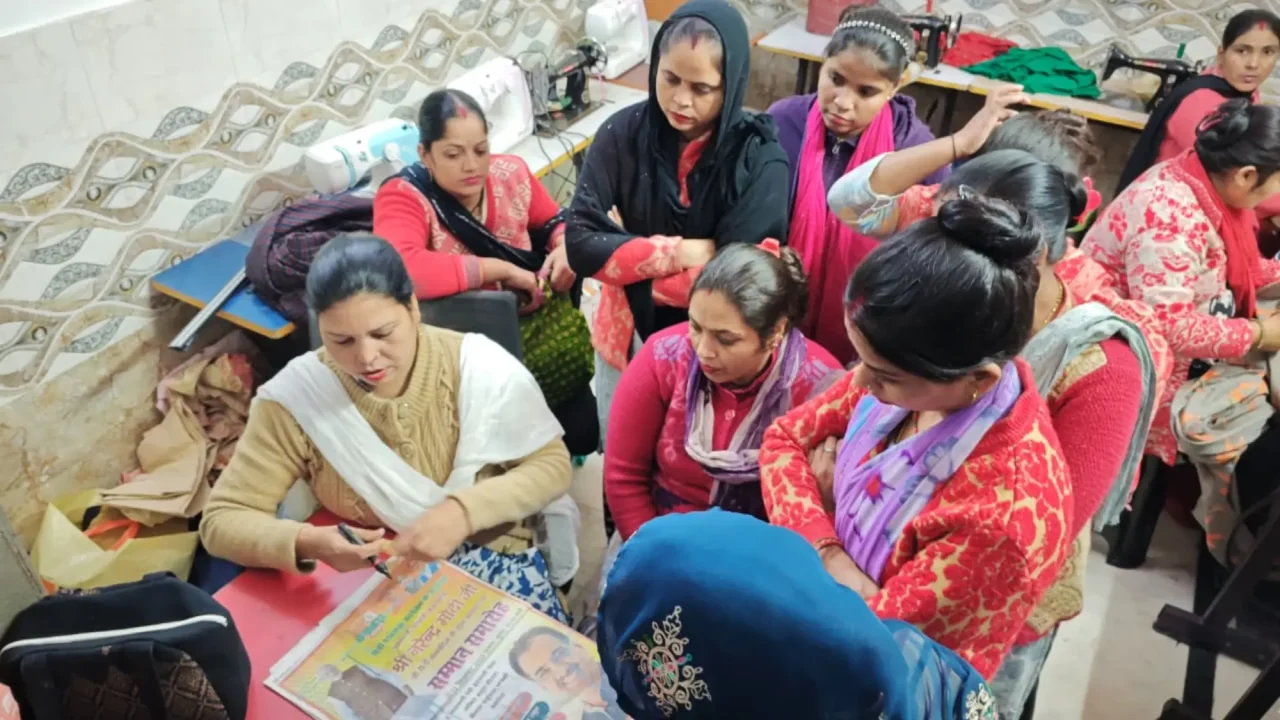
In a modest room lined with sewing machines in Nagla Charandas, Noida Phase 2, a group of women gathers six days a week to learn stitching and make useful products from donated and discarded cloth. What might otherwise have been thrown away is turned into tote bags, pouches, table linen, lunch bags, file folders, and other everyday items. For the women here, this is not just a stitching class. It is a pathway to income, confidence, and a more independent role within their households. It is also a practical example of how sustainability can be built into livelihood itself.
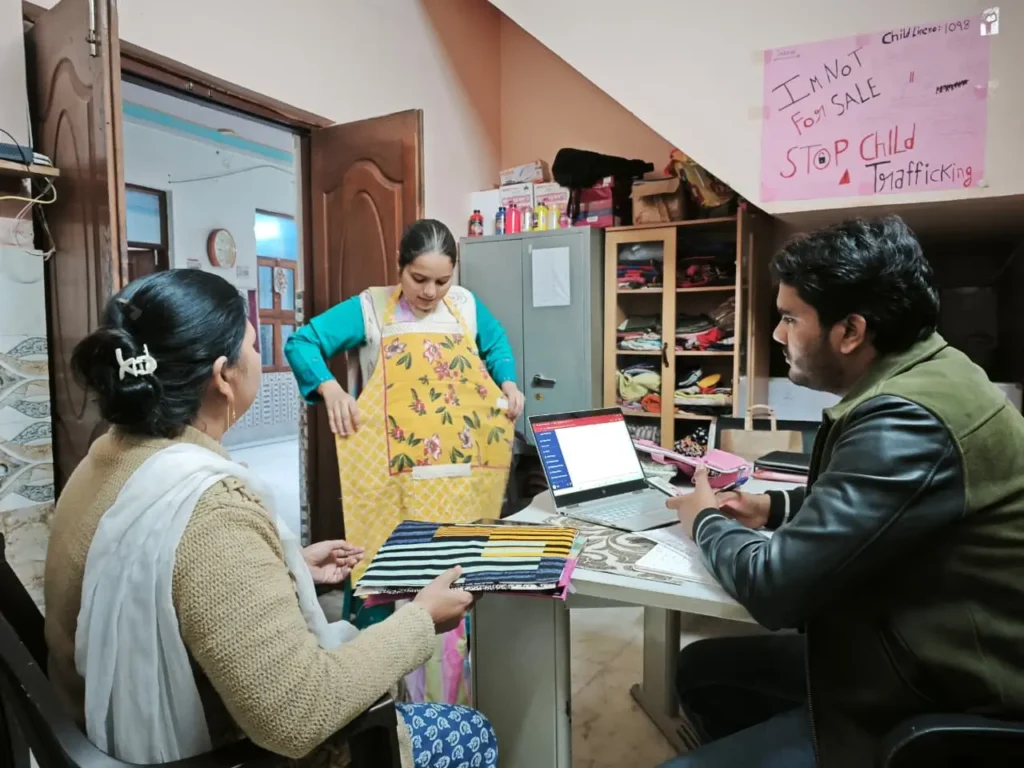
This is the core of SARTHAK for Women, a programme run by the Social and Development Research and Action Group, or SADRAG, in Noida. SADRAG was established in 2004 and works on education, protection, and livelihoods for marginalised communities. At Nagla Charandas, that larger mission takes shape through a programme that combines skill-building, income generation, reuse, and environmental responsibility in one grounded local model.
Opportunity in Noida’s migrant settlements
In many of Noida’s peri-urban and migrant-dense pockets, daily life is shaped by uncertainty. Families often live with irregular work, limited access to opportunities, and constant financial pressure. For women, these constraints are often intensified by restricted mobility, domestic responsibilities, and fewer pathways into paid work. SADRAG’s programme responds to that reality in a direct and practical way. It helps women learn a marketable skill while also working with materials that are already available through donation and reuse.
That makes the programme relevant not only as a women’s livelihood initiative, but also as a local example of how sustainable production can emerge from everyday necessity.
Pulse of Noida has previously covered other grassroots initiatives working with underserved communities in the city, including Pehchaan The Street School
What SARTHAK for Women does
At the centre of the programme is stitching and tailoring. Women begin with the basics, learning how to handle fabric, understand measurements, and practise simple stitches. Over time, they move towards making finished products that can actually be sold. Alongside the technical skill, they are also introduced to pricing, quality, and customer interaction. That is what makes the transition from learning to earning possible.
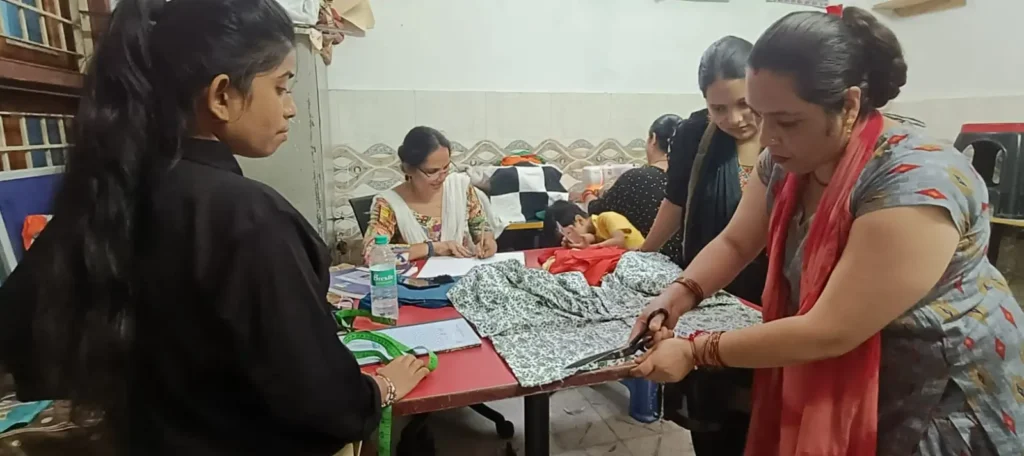
The programme is designed to be practical and accessible. It does not stop at training for its own sake. It aims to create livelihood pathways that women can continue through the centre, through piece-based work, or through small independent orders from home.
The programme also fits into a wider set of Noida stories where training is being used as a pathway to independence, much like our earlier coverage of Noida Deaf Society’s work in education, skill training, and jobs for deaf youth
Where waste cloth becomes useful work
One of the strongest aspects of SARTHAK for Women is that reuse is built into the daily process. Inside the centre, donated and discarded cloth such as sarees, bedsheets, curtains, jeans, and t-shirts is repurposed into practical, saleable products. These include tote bags, lunch bags, pouches, table linen, and other stitched items.
This does two things at once. It lowers material costs and makes production more viable for women who are just beginning to earn. It also gives waste cloth a second life at a time when textile waste is becoming a growing concern in urban regions such as Delhi-NCR. In this model, sustainability is not a side message. It is part of how the work functions every day.
One stitch at a time, from learning to earning
The scale of the programme becomes clearer in the numbers. In the last financial year alone, over 120 women were trained in stitching and tailoring. More than 25 women were engaged in livelihood activities, 5 women-led groups were formed, and over 800 eco-friendly products were created from donated materials. Collectively, the women earned nearly Rs 40,000.
These may not sound like dramatic numbers in the abstract, but in households where even modest earnings matter, the change is real. Small amounts of income can support children’s education, ease pressure on household budgets, and give women a stronger voice in financial decisions at home.
What confidence looks like on the ground
The SARTHAK for Women model also works because it offers flexibility. After completing the basic three-month stitching course, women can continue with product stitching at the centre. Some contribute when work is available and are paid per piece. Others begin taking independent orders from home as their confidence grows. That flexibility matters in communities where women often balance domestic responsibilities with any effort to earn.
SADRAG shared two examples that help bring this to life. Zeenat used the training she received at SARTHAK to begin tailoring from home. She now earns a steady income and supports her children’s education. Ambika came to the centre to learn stitching, later took up a teaching position at a local school, and still continues to take work from the centre to support her family’s needs.
These examples matter because they show that the programme is not only about technical skill. It is about women beginning to see themselves differently, and being seen differently within their homes and communities.
Practical, not performative sustainability
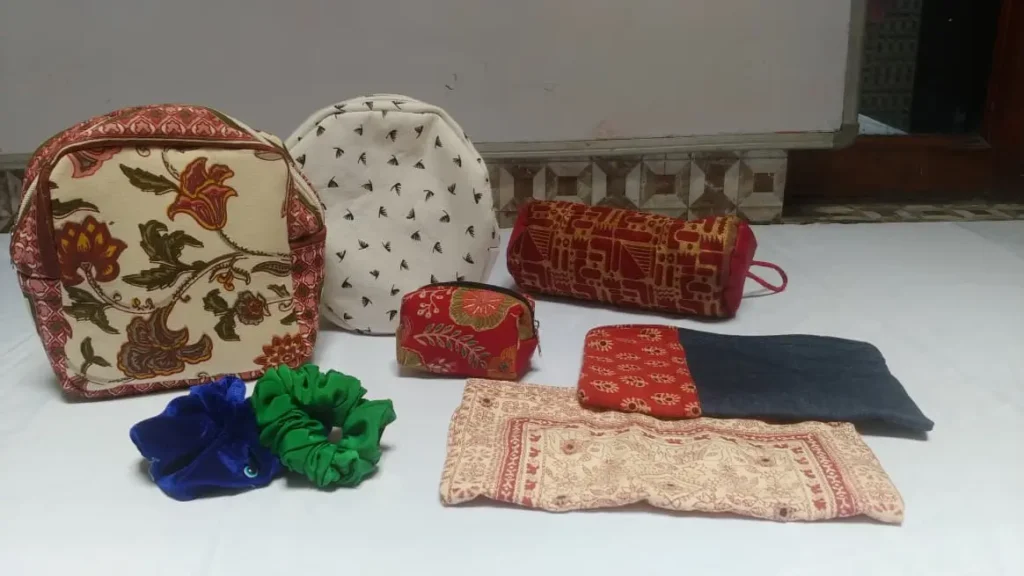
There is a tendency to speak about sustainability in abstract terms. What makes this story stronger is that the sustainability angle is practical and rooted in everyday work. Discarded fabric becomes usable products. Waste is reduced. Input costs stay lower. Women learn to work with the materials available to them.
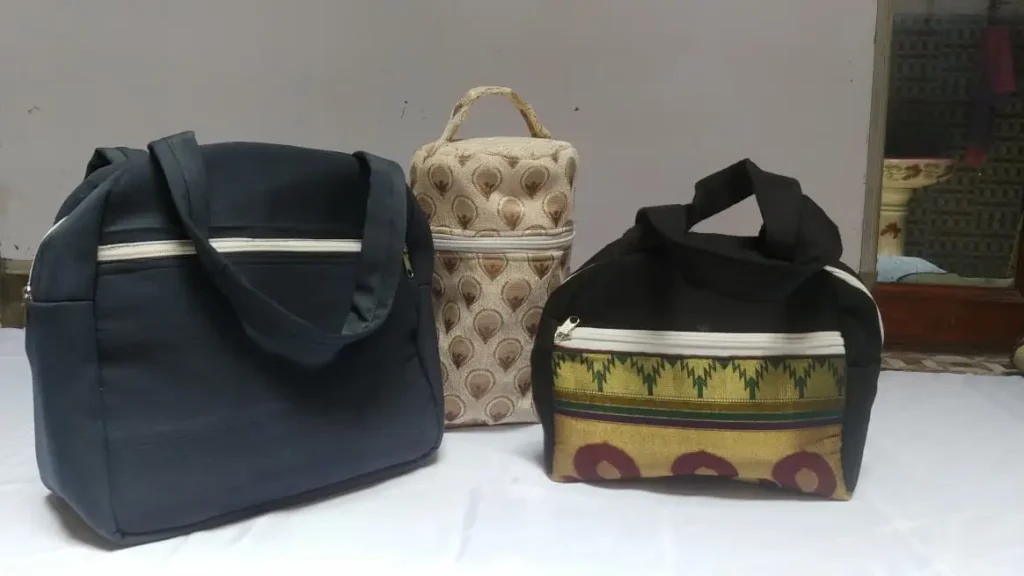
SADRAG also says each item is carefully checked for quality, and regular feedback is given so that products made from reused materials remain functional, durable, and market-ready. That quality focus matters because it turns reuse into a viable livelihood pathway rather than a one-off craft activity.
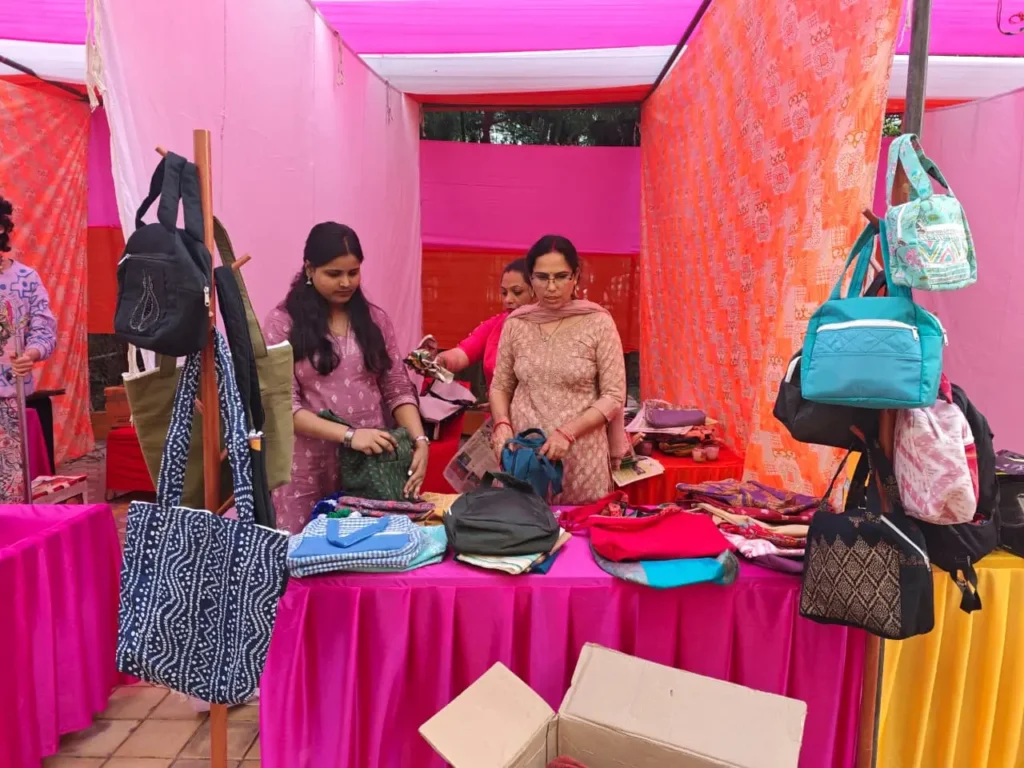
Not just livelihoods, but a shared space
Over time, the centre has become more than a training room. Women who were initially hesitant to step out now attend regularly. Some come while their children are at school. Others are encouraged by family members. Gradually, the centre becomes a shared space for learning, exchange, and mutual support.
That social dimension matters just as much as the income story. In many such communities, the ability to step out, learn collectively, interact with customers, and speak more freely can shift how women see themselves and how they are seen inside their households. The result is that the programme supports not only earning, but also confidence, visibility, and a greater sense of participation in economic and social life.
It also reflects a wider pattern in Noida, where local organisations are building practical pathways from support to livelihood, similar to what we have seen in stories around inclusive education and readiness for work.
Why this matters for Noida
Noida is often discussed through the language of expressways, infrastructure, industrial growth, and real estate. But another city exists alongside that visible story. It is the city of migrant settlements, hidden labour, uncertain work, and uneven access to opportunity.
The SARTHAK for Women programme matters because it operates in exactly that space. It offers a practical, local example of what community-rooted change can look like when it starts with real constraints and works with available resources. It is about women’s livelihoods. It is about waste being turned into value. It is about sustainability being made practical. And it is about how small, consistent interventions can create room for greater independence.
At Nagla Charandas, donated and discarded cloth is not just being reused. It is being turned into income, dignity, and possibility.
How to Connect with SADRAG
If you would like to know more about the SARTHAK for Women programme, volunteer, support their work, or explore their products, you can reach out to SADRAG directly:
Address: G21 Basement, Near Prayag Hospital, Sector 41, Noida 201303.
Phone: 0120-4129831
Email: mail@sadrag.org
Website: sadrag.org
Instagram: @sadrag.ngo
Facebook: SADRAG NGO
LinkedIn: SADRAG
X: SADRAG
Want more useful Noida stories like this?
Subscribe for resident-first updates, local explainers, and changemaker stories from Pulse of Noida.