Noida’s public transport network is set for a major electric push, with Noida Authority and UPSRTC preparing to roll out 50 electric buses across four key routes from Botanical Garden.
The planned routes are expected to connect Botanical Garden with Greater Noida West, Sector 62, Surajpur Collectorate and Noida International Airport. The rollout is aimed at improving last-mile and inter-city connectivity while reducing pressure on Noida’s congested roads.
The buses are expected to begin operations in May 2026, though the exact launch date has not yet been publicly announced.
For residents, the significance is simple: if implemented well, this could give commuters a cleaner and more structured alternative to private vehicles, autos, cabs and fragmented bus options.
- Noida Authority and UPSRTC are preparing to roll out 50 electric buses from Botanical Garden.
- The proposed routes will connect Greater Noida West, Sector 62, Surajpur Collectorate and Noida International Airport.
- A Sector 90 depot is planned with charging, parking and service facilities.
- Final fares, exact launch date, stop-wise routes and frequency are still awaited.
The Four Proposed E-Bus Routes
The new e-bus plan is centred around Botanical Garden, one of Noida’s most important public transport hubs because of its Metro connectivity and location near major residential, office and institutional corridors.
The four proposed routes are:
Reported route-level details suggest that the airport route may receive the highest allocation, followed by Sector 62, Gaur Chowk and Surajpur. However, the final public route schedule, stop list and frequency are still awaited.
Why Botanical Garden Is The Starting Point
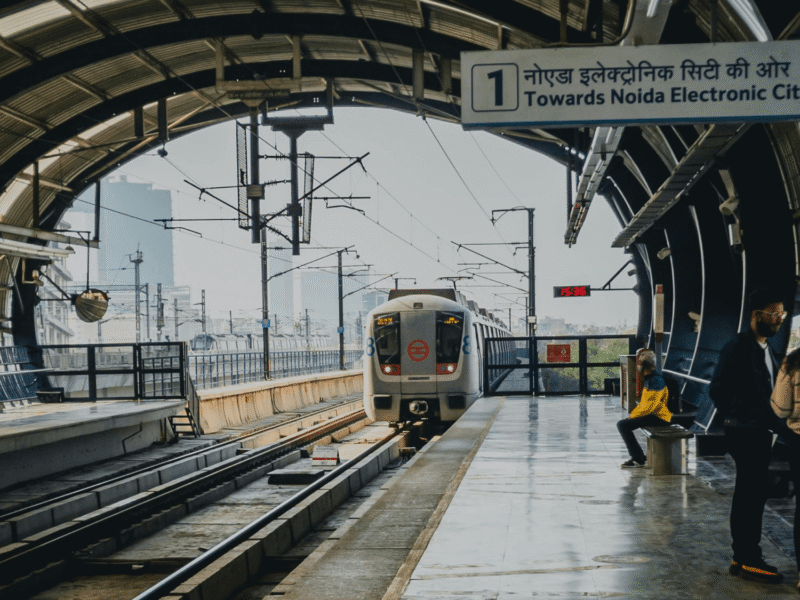
Botanical Garden is already one of Noida’s strongest transport nodes. It connects with the Delhi Metro network through the Blue Line and Magenta Line and is used by commuters travelling between Noida, Delhi, Greater Noida and nearby residential sectors.
Starting the e-bus routes from Botanical Garden makes sense because it allows the buses to work as an extension of the Metro system rather than as isolated routes.
For a commuter, this could mean a more predictable chain:
Metro to Botanical Garden → e-bus to Sector 62 / Greater Noida West / Surajpur / airport corridor
That is the kind of integration Noida needs if it wants to reduce dependence on private vehicles.
While the Sector 90 depot will function as the parking, charging and maintenance base, Botanical Garden is expected to serve as the main commuter-facing starting point for the planned routes. This distinction matters because the depot supports operations, while Botanical Garden is where many passengers are likely to board or transfer.
Sector 90 Depot And Charging Plan
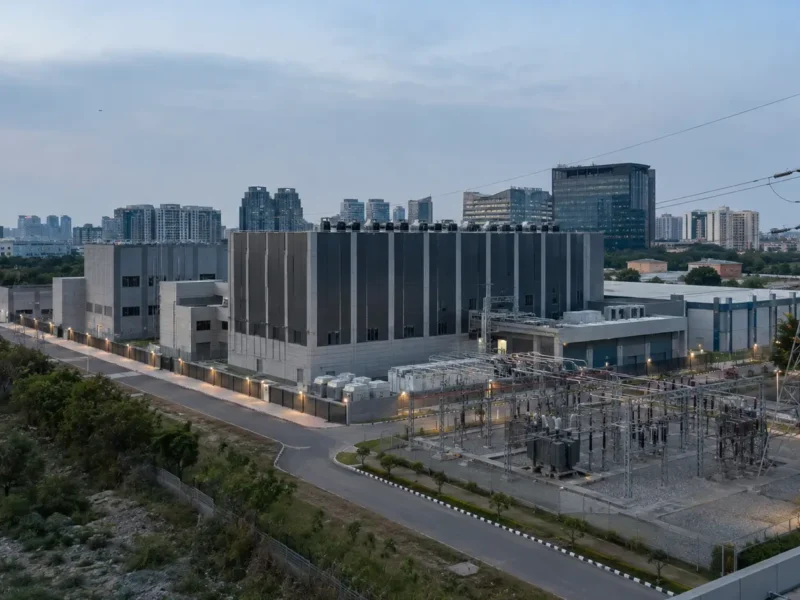
The e-bus rollout will depend heavily on charging and depot infrastructure.
Noida Authority is developing a dedicated depot in Sector 90. The depot is expected to include:
- 20 charging points
- Bus parking space
- Service station facilities
- Driver and conductor facilities
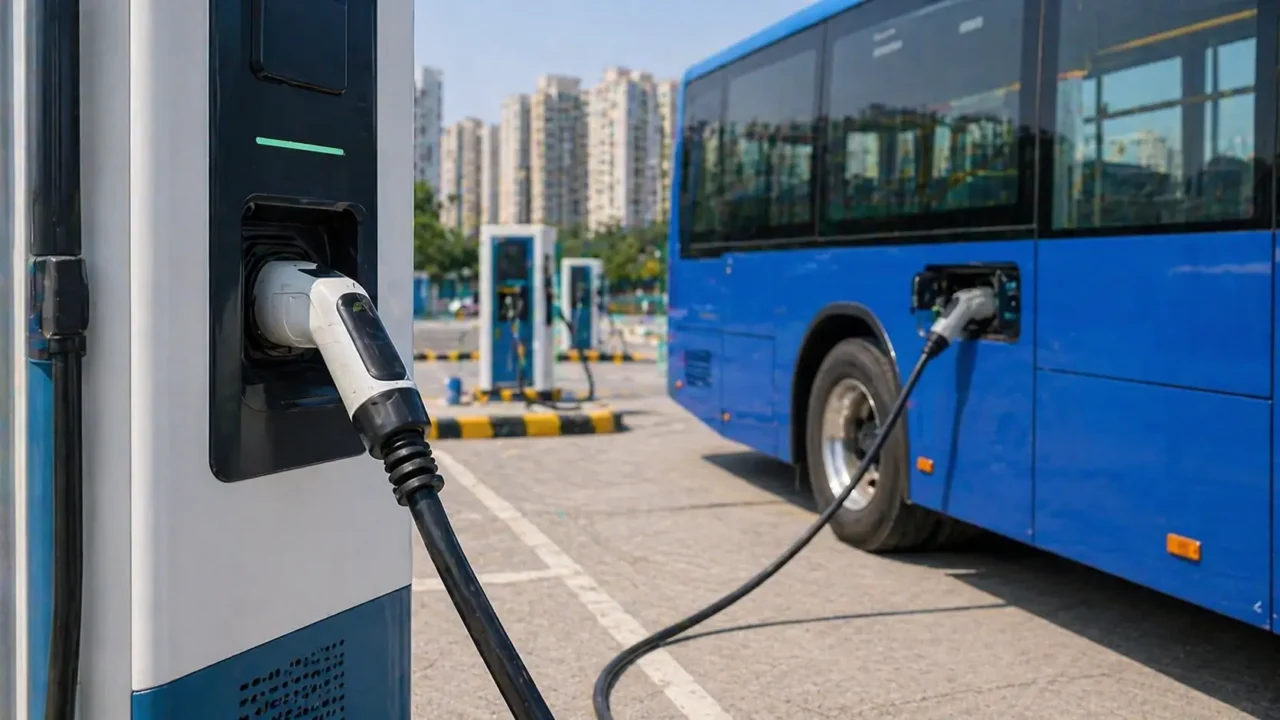
In addition, four opportunity charging stations are planned at Botanical Garden bus stand. These will allow buses to top up charge during operations instead of depending only on depot-based charging.
This matters because electric bus systems do not work only by buying buses. They require charging capacity, route planning, maintenance support, trained staff and predictable scheduling.
Who Will Operate The Buses?
The buses are expected to be operated by UPSRTC, while Noida Authority will bear the viability gap funding.
In simple terms, this means UPSRTC will run the buses at its prescribed ticket fares, while Noida Authority will cover the financial gap if operations are not commercially viable on their own.
This is important because public transport often requires support in its early stages, especially when routes are being built for public convenience and long-term mobility planning rather than immediate profit.
However, exact ticket fares remain undisclosed. Residents should expect UPSRTC standard rates once announced.
Why Noida Needs This Now
Noida’s road pressure has been rising sharply.
Publicly available data cited in recent reports puts Noida’s registered vehicle count at around 12 lakh, including about 7.1 lakh two-wheelers and 3.7 lakh private cars. The city also has thousands of buses, cabs, autorickshaws and e-rickshaws already operating across different corridors.
Despite this, public transport remains uneven. Many residents still depend on private vehicles because last-mile options are inconsistent, routes are fragmented, and direct connections between residential sectors, office clusters, Metro stations and Greater Noida corridors remain limited.
The 50 e-bus plan is not large enough to solve Noida’s congestion problem by itself. But it can become an important pilot if the routes are reliable, frequent and easy to use.
The Airport Route Is The Most Strategic
Among the proposed routes, the Botanical Garden to Noida International Airport connection is the most strategic.
The airport is still emerging as a major transport and economic node for the region. Direct public transport connectivity from Noida will become increasingly important as airport operations, logistics, hospitality and commercial activity grow along the Yamuna Expressway corridor.
For residents with regular work, business or travel needs towards Jewar and the airport corridor, this route could help fill a major public transport gap.
Reported route details indicate that the airport route may receive the highest bus allocation among the four routes. That suggests the authorities are already looking at future travel demand between Noida and Jewar.
But residents should wait for the final route schedule before assuming exact stops, timings or frequency.
This Is A Smaller Start To A Bigger 500-Bus Plan
The 50-bus rollout should also be seen in the context of the larger e-bus plan for the Noida, Greater Noida and Yamuna Expressway region.
A larger 500 electric bus plan had earlier been discussed, but it faced delays due to infrastructure-related issues, including depot and charging preparedness.
That makes the current 50-bus rollout a phased start rather than the full solution.
This is the right approach if the authorities use the pilot to test ridership, charging reliability, operational gaps, frequency and route demand before scaling up.
Key Questions Before Launch
Several practical details are still awaited.
For commuters, the most important unanswered questions are:
- What will the exact fares be?
- What will be the final launch date in May?
- What will be the full stop-wise route map?
- What will be the bus frequency during peak and non-peak hours?
- Will the buses be AC or non-AC?
- Will there be real-time tracking?
- How will the routes connect with autos, e-rickshaws and Metro stations?
- What will be the daily ridership target?
These details will decide whether the project becomes a useful commuter service or just another limited public transport experiment.
A Parallel Update: Double-Decker AC Buses
Alongside the 50 e-bus plan, there is also a separate initiative involving 8 double-decker AC buses linked to Switch Mobility and operations from the Morna depot in Sector 35.
This should be treated as a separate mobility update, not part of the 50 e-bus route plan.
For residents, the larger signal is clear: Noida’s public transport system is entering a new phase, with electric buses, depot upgrades and route-based planning becoming more visible.
What This Means For Residents
For Noida residents, the 50 e-bus plan matters for three reasons.
First, it could improve access to major commuter points such as Botanical Garden, Sector 62, Greater Noida West and Surajpur.
Second, it could reduce dependence on private vehicles for some daily trips if fares, frequency and reliability are strong.
Third, it could create the foundation for a larger electric public transport system across Noida, Greater Noida and the airport corridor.
But the project will succeed only if it is designed around commuter behaviour, not just vehicle deployment.
Noida does not only need electric buses. It needs buses that arrive on time, connect useful points, run at practical frequencies, and give residents a reason to leave private vehicles behind.
Sources and References
This story is based on multiple media reports published between April 24 and April 26, 2026, including reported details on proposed routes, depot planning, charging infrastructure and the operating model.
Final public route schedules, stop-wise details, fares, frequency and exact launch date are awaited. Residents are advised to track updates through official public channels as May 2026 approaches.
Official portals:
- Noida Authority: https://noidaauthority.in
- UPSRTC: https://upsrtc.up.gov.in
- Noida Authority helpline: 0120-2425025 / 26 / 27
- X: @noida_authority
Key reports reviewed:
- NDTV Hindi, April 26, 2026
- Economic Times Auto, April 26, 2026
- Hindustan Times, April 24, 2026
- Hindustan Times, December 2, 2025
- Times of India, April 24, 2026