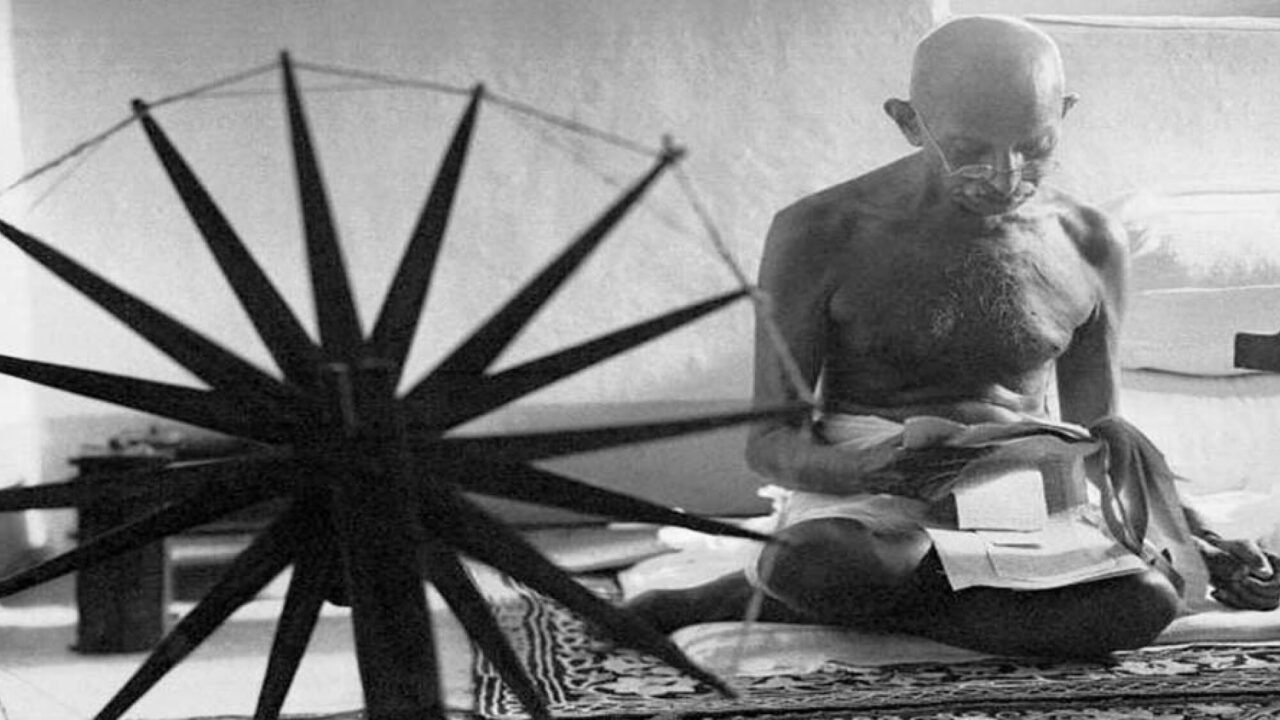
You recognise the round spectacles and the name. But how did a lawyer become one of the central figures in India’s struggle for freedom, and why does his birthday carry a message beyond India?
Gandhi Jayanti on October 2, 2026 marks Mahatma Gandhi’s 157th birth anniversary. He was born as Mohandas Karamchand Gandhi on October 2, 1869, in Porbandar, in present-day Gujarat. The anniversary count comes from subtracting his birth year from 2026.
For young readers across Noida and Delhi NCR, his story offers a way into questions about protest, fairness, work and the responsibility that comes with public influence. It is also a story you can explore through records and memorials close to home.
This guide draws its historical account from government publications, Gandhi Smriti and Darshan Samiti, and NCERT. The links let you read beyond the familiar portrait.
Why is Gandhi Jayanti celebrated on October 2?
Gandhi Jayanti commemorates Gandhi’s birth. October 2 is also observed internationally as the International Day of Non-Violence.
The Press Information Bureau’s backgrounder explains that the UN General Assembly adopted the resolution establishing the international observance in June 2007. The date connects Gandhi’s life with the wider promotion of peace and non-violence.
Who was Mahatma Gandhi before he became a national leader?
Gandhi’s parents were Karamchand Gandhi and Putlibai. His family moved to Rajkot, where he attended school. He married Kasturba in 1883.
As a young man, he went to England to study law. He returned to India in 1891 and began legal work in Bombay, now Mumbai, and Rajkot.
The official Gandhi Smriti chronology traces these early stages. They help place his later public life in context: the leader remembered for mass movements began with schooling, family life and a legal career.
South Africa: discrimination and the development of satyagraha
Gandhi travelled to South Africa in 1893 for legal work. His experience of racial discrimination became an important part of his political development.
PIB recounts the incident in which he refused to move out of a first-class railway compartment and was forced to spend the night at Pietermaritzburg station. His response eventually extended beyond his own treatment to organising resistance to discrimination.
The official chronology records the organisation of the Natal Indian Congress in 1894 and the beginning of a satyagraha campaign in 1906.
Satyagraha links satya, meaning truth, with agraha, meaning insistence. In Gandhi’s political practice, it became a method of non-violent resistance. Understanding the term helps explain why his approach involved both challenging injustice and placing limits on the methods used to challenge it.
Returning to India and building a public movement
Gandhi returned to India in 1915. That year, he established an ashram at Kochrab, near Ahmedabad. The ashram moved to the Sabarmati site in 1917.
His campaigns in India brought him into contact with people facing specific problems in their working lives, including farmers and textile workers.
Champaran, 1917: listening to indigo cultivators
In Champaran, Bihar, Gandhi investigated the grievances of cultivators forced to grow indigo for British planters.
The PIB account of Champaran’s centenary describes the Tinkathia system, under which tenants had to grow indigo on three out of every twenty parts of their land. It also records the role of cultivator Rajkumar Shukla in persuading Gandhi to investigate.
Gandhi gathered evidence about the cultivators’ conditions. The subsequent inquiry committee recommended abolishing Tinkathia, and the government accepted the recommendation.
This episode is useful to read as a sequence: a local grievance, patient investigation, public resistance and an institutional response.
Ahmedabad and Kheda, 1918: workers and farmers
NCERT’s account of Gandhi and the nationalist movement records his involvement in an Ahmedabad textile labour dispute and the Kheda peasants’ demand for tax remission following a failed harvest.
These campaigns show how his growing political role was connected to wages, working conditions and agricultural hardship.
Non-Cooperation: expanding participation, then calling a halt
The Non-Cooperation Movement of 1920–22 asked Indians to withdraw cooperation from British rule. NCERT describes participation by students, lawyers, workers and peasants.
In February 1922, Gandhi called off the movement following the violence at Chauri Chaura, where a police station was burned and policemen were killed.
That decision is central to understanding his approach: non-violence was a condition of the struggle, even when a movement had gathered momentum. His politics involved difficult decisions about both the objective and the means.
The Dandi March, 1930: making salt a political issue
Gandhi left Sabarmati on March 12, 1930 and broke the salt law at Dandi on April 6.
The dates are recorded in the Ministry of Tourism’s account of Gandhi, Ahmedabad and the Salt March.
The march challenged the colonial salt law and became a defining episode of civil disobedience. An everyday substance became the focus of a public challenge to British authority.
For a reader approaching this history for the first time, the important distinction is between the walk to Dandi and the breaking of the salt law. The departure and the act of defiance happened on different dates.
Gandhi, Ambedkar and the Poona Pact
Gandhi’s opposition to untouchability did not mean that he and Dr B. R. Ambedkar agreed on political representation.
The government’s profile of Ambedkar describes Gandhi’s opposition to separate electorates for the communities then officially described as the “Depressed Classes”. Negotiations led to the Poona Pact on September 24, 1932, replacing separate electorates with a different arrangement for representation.
This disagreement belongs in a serious reading of Gandhi’s life. Remembering a historical leader also means examining the debates surrounding his decisions.
Quit India, 1942: the demand for British withdrawal
The All India Congress Committee adopted the Quit India resolution in Bombay on August 8, 1942. Gandhi’s call is remembered through the words “Do or Die”.
The Ministry of Culture’s account of the National Archives exhibition records the resolution and the arrest of Gandhi and other prominent leaders on August 9.
The official account also describes other participants, including Aruna Asaf Ali and Usha Mehta. Gandhi’s leadership was important, but the movement’s history includes the work of many people beyond him.
Independence, communal violence and his final months
India became independent in 1947, amid Partition and communal violence. NCERT describes Gandhi’s efforts to restore peace, including his work in Calcutta and Delhi.
His final residence was Birla House in New Delhi, now Gandhi Smriti. He was assassinated there on January 30, 1948, while going to an evening prayer meeting. The official chronology identifies his assassin as Nathuram Vinayak Godse. Gandhi was 78.
Gandhi Smriti’s account of his last 48 hours records his final day and the shooting. The anniversary of his birth and the date of his assassination commemorate different moments in his life.
Gandhi’s ideas went beyond political protest
The Constructive Programme published by Gandhi Smriti sets out a wider social agenda. Its subjects include communal unity, ending untouchability, khadi, village industries, sanitation, education, women’s emancipation, health and economic equality.
Several connections help a young reader understand that agenda:
- Truth and non-violence: These shaped the methods through which Gandhi sought social and political change.
- Khadi and village industries: His vision gave importance to local production and livelihoods.
- Sanitation and health: Everyday living conditions formed part of the work of social improvement.
- Education: His programme included both basic and adult education.
- Equality and dignity: It addressed economic inequality and the exclusion caused by untouchability.
The programme connects the pursuit of freedom with questions about how people live together. Those concerns extend beyond a single march or campaign.
What did Gandhi write, and where can you read more?
Gandhi’s life is documented through books, articles, letters and speeches.
The Ministry of Culture’s introduction to the Gandhi Heritage Portal identifies key works including:
- An Autobiography or The Story of My Experiments with Truth
- Hind Swaraj
- Satyagraha in South Africa
- Constructive Programme: Its Meaning and Place
It also describes the Collected Works of Mahatma Gandhi and journals including Indian Opinion, Navajivan, Young India and Harijan.
The ministry commissioned the Gandhi Heritage Portal through the Sabarmati Ashram Preservation and Memorial Trust. It is a government-supported primary archive, rather than a government department website.
For a first reading, choose one work or historical episode and follow its documents. That gives a firmer understanding than a quote card without a source.
The Delhi connection: Gandhi Smriti, Raj Ghat and Gandhi Darshan
For Noida and NCR readers, these places connect the historical account with physical sites in Delhi.
Gandhi Smriti: his final residence
Gandhi Smriti, at 5, Tees January Marg, is the former Birla House. Gandhi lived there from September 9, 1947 to January 30, 1948, the last 144 days of his life.
Its official account describes the preserved room, prayer ground, personal belongings and Martyr’s Column marking the assassination site.
The entrance sculpture is credited to Ram Sutar, whose work PON has explored in its profile of the sculptor’s Noida connection.
Raj Ghat and Gandhi Darshan: remembrance and interpretation
Raj Ghat is Gandhi’s samadhi. Gandhi Darshan is the separate campus adjacent to it. Its official description includes exhibitions with photographs, documents and models interpreting Gandhi’s life and the freedom struggle.
Gandhi Smriti, Raj Ghat and Gandhi Darshan have different roles. Knowing which place you want to see helps you plan a more purposeful visit.
Confirm current visitor access and October 2 arrangements before travelling. This article does not establish holiday opening hours or admission arrangements. For other ideas across the region, see PON’s October 2–4 Delhi NCR long-weekend guide.
Mahatma Gandhi: a short timeline
| Year | Event |
|---|---|
| 1869 | Born in Porbandar on October 2 |
| 1893 | Travelled to South Africa for legal work |
| 1915 | Returned to India; established the Kochrab ashram |
| 1917 | Champaran campaign |
| 1918 | Ahmedabad labour dispute and Kheda campaign |
| 1920–22 | Non-Cooperation Movement |
| 1930 | Dandi March and salt-law defiance |
| 1932 | Poona Pact |
| 1942 | Quit India resolution and arrests |
| 1947 | Independence; Gandhi worked for communal peace |
| 1948 | Assassinated in Delhi on January 30 |
Timeline sources are the official accounts linked in the corresponding sections above.
Gandhi Jayanti: common questions
Which birth anniversary falls in 2026?
The 157th. Gandhi was born in 1869, and 2026 minus 1869 equals 157.
What was Mahatma Gandhi’s full name?
Mohandas Karamchand Gandhi.
Is Gandhi Jayanti the same as the International Day of Non-Violence?
Both are observed on October 2. Gandhi Jayanti commemorates his birth; the international observance promotes non-violence.
Are Gandhi Smriti and Raj Ghat the same place?
No. Gandhi Smriti is his final residence and assassination site. Raj Ghat is his samadhi. Gandhi Darshan is adjacent to Raj Ghat.
One way to make the day meaningful
PON’s suggestion for young readers is simple: choose one episode, read its source and discuss the decision it involved. You could begin with Champaran’s investigation, the suspension of Non-Cooperation or the salt-law challenge.
If you share a Gandhi quote, look for the original work, speech or a reliable archival reference first. A small act of checking is a useful place to begin a conversation about truth.
Historical sources checked for this October 2, 2026 feature. Visitor arrangements require separate confirmation.