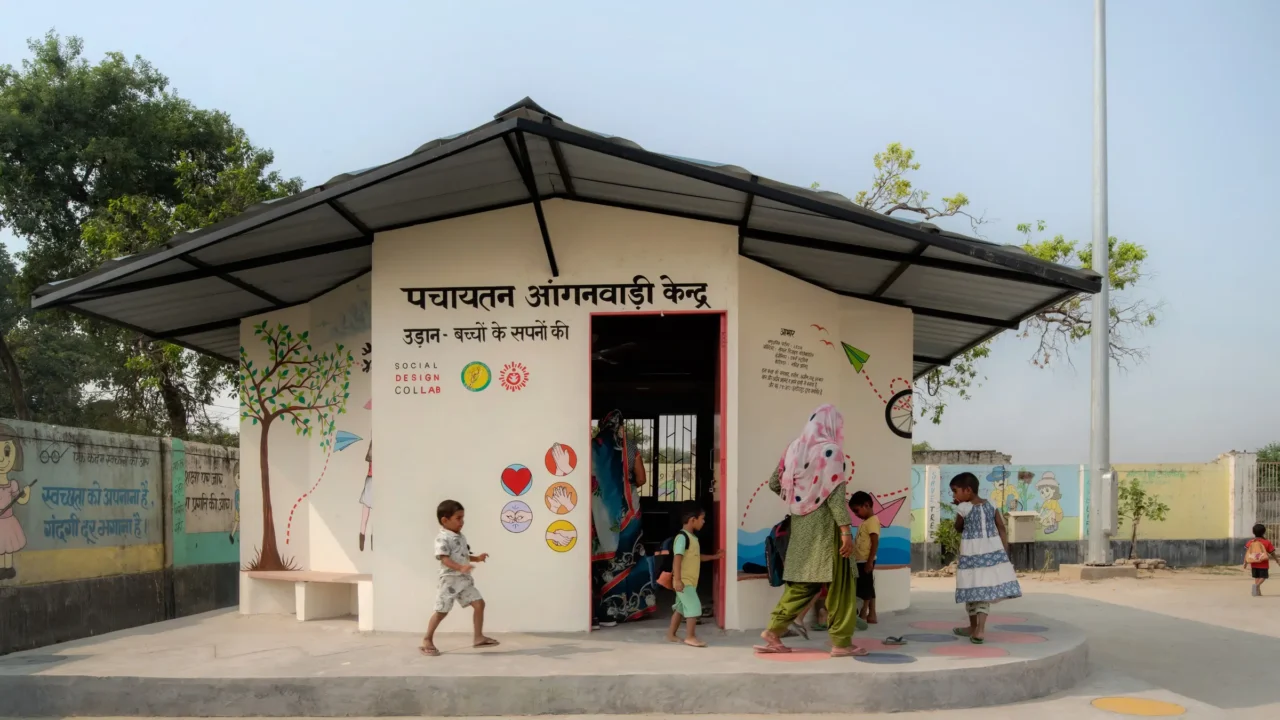
In Pachaytan village of Greater Noida, a group of young children once attended their Anganwadi classes under a tree. There was no dedicated classroom, but the learning sessions continued.
For nearly one and a half years, an educator associated with Let’s Educate Children In Need (LECIN) conducted activities in that setting. In October 2024, the village’s UDAAN Anganwadi was inaugurated, providing children with a purpose-built learning space inside a government primary school.
For Nupur Bhardwaj, who leads LECIN, the transformation represents an important part of a journey that began more than a decade ago with a group of college students who wanted to help children learn.
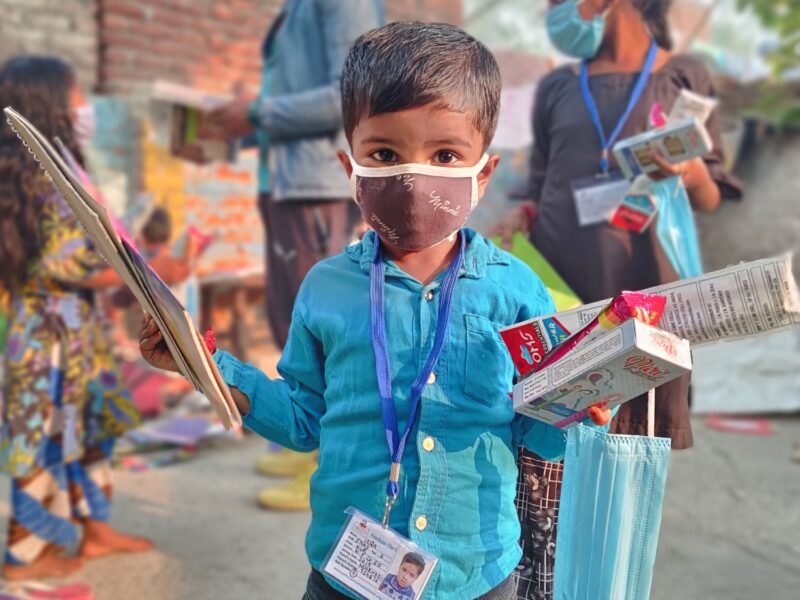
Today, LECIN works in six Greater Noida villages, focusing on foundational education, training women from rural communities as educators, and helping parents understand how young children learn.
How a Student Volunteer Became an Education Changemaker
Nupur’s interest in helping others began during childhood. She remembers participating in a school fundraising initiative for children undergoing cancer treatment when she was in Class 4.
Her involvement in education developed during her college years, when she joined the National Service Scheme and participated in social initiatives.
A visit to a settlement near Sanjay Lake in Delhi became a turning point.
There, she met children from migrant families whose education was frequently interrupted because their parents moved between construction sites in search of work.
Pulse of Noida has also documented similar educational challenges through SADRAG’s Ugta Suraj programme in Noida and Greater Noida, which supports children from migrant and low-income communities in preparing for formal schooling.
She subsequently began volunteering with a student-led nonprofit, teaching children in an underserved community in Delhi.
The experience exposed a problem that would shape her future work. Some children were progressing through school without developing the basic reading, writing and comprehension skills expected at their grade levels.
Nupur also realised that many children needed more than academic instruction. They needed supportive environments where they could ask questions, build relationships and develop confidence.
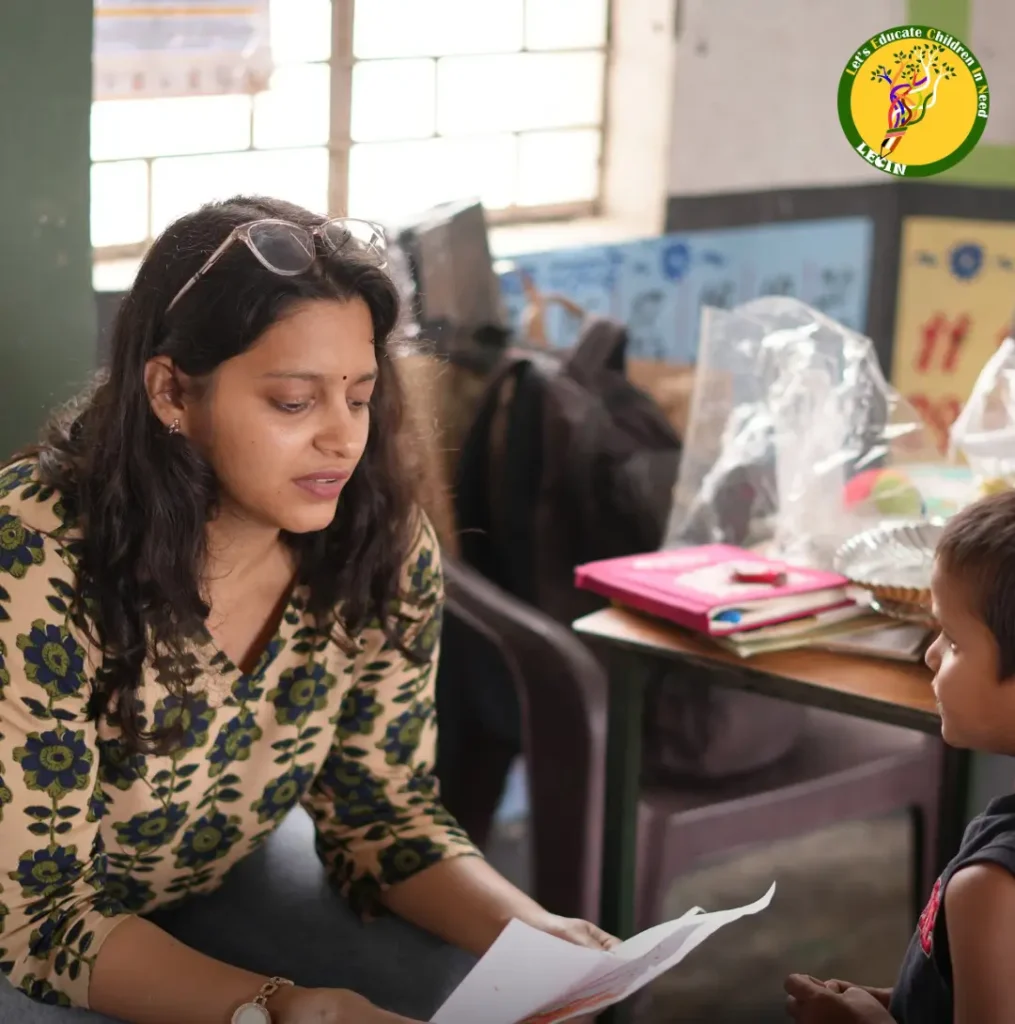
On 31 May 2015, when Nupur was 19, she and a group of fellow students began working under the name Let’s Educate Children In Need.
What started as a volunteering initiative gradually developed into an organisation focused on improving learning opportunities for children from underserved communities.
Why LECIN Shifted Its Focus to Early Childhood Education
During its initial years, LECIN worked with children aged approximately 3 to 15, addressing different educational challenges.
Over time, Nupur and her colleagues concluded that learning gaps often began much earlier than the grades in which they became visible.
“If children don’t develop strong foundations in their earliest years, these gaps become increasingly difficult to address later,” Nupur told Pulse of Noida in a written interview.
The organisation consequently shifted its attention towards children aged 3 to 8, covering Anganwadi education and the first two grades of primary school.
Instead of concentrating on building independent learning centres, LECIN began working more closely with existing government Anganwadis and schools.
This approach is consistent with the foundational stage described in India’s National Education Policy 2020, which covers children aged 3 to 8 and emphasises activity-based and experiential learning.
LECIN describes its educational approach through three connected abilities:
- Thinking: Helping children observe, ask questions, reason and develop curiosity.
- Expression: Encouraging children to communicate through conversations, drawing, movement, storytelling and writing.
- Connection: Helping children develop relationships with themselves, other people, their communities and the natural environment.
Reading, writing and numeracy remain important, but the organisation aims to develop these abilities through meaningful experiences rather than memorisation alone.
LECIN’s Work Across Six Greater Noida Villages
LECIN began its work in Greater Noida in 2023.
According to Nupur, the organisation currently operates in six villages in Gautam Buddha Nagar:
- Kasna
- Azampur Garhi
- Khanpur
- Ladpura
- Pachaytan
- Rauni
In five villages, its current work is primarily centred on Anganwadi education. In Pachaytan, the organisation has also introduced a Grade 1 pilot during 2026.
The programme is designed to support children’s learning from the Anganwadi stage through Grade 2, providing greater continuity during their foundational years.
Nupur says LECIN has deliberately chosen to work intensively with a smaller number of communities rather than expand rapidly across hundreds of schools.
“We have consciously chosen depth over scale,” she explains.
The objective is to understand individual children’s needs, strengthen teaching practices and maintain relationships with families over several years.
From Classes Under a Tree to UDAAN Anganwadi in Pachaytan
One of the most significant milestones in LECIN’s Greater Noida work came in Pachaytan.
When the organisation began working in the village in 2023, the government Anganwadi did not have a dedicated classroom. According to Nupur, learning activities took place under a tree.
Despite the absence of a permanent space, LECIN’s educator continued conducting sessions with the children.
The situation changed through a collaboration involving LECIN and Social Design Collaborative, with support from Re:Arc Institute and the Uttar Pradesh Department of Women and Child Development.
The resulting UDAAN Anganwadi was designed as a child-friendly learning environment within a government primary school.
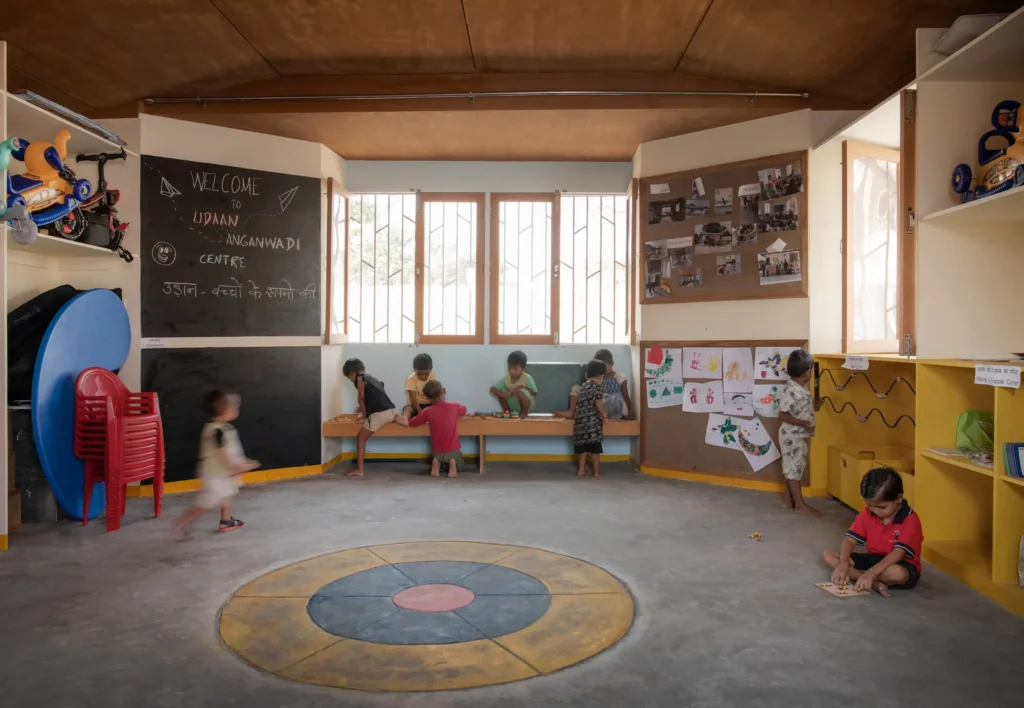
Its architecture incorporated elements intended to encourage exploration and independent learning, including accessible learning areas and surfaces that could be used for educational activities.
The centre was inaugurated in October 2024 by the then District Magistrate of Gautam Buddha Nagar, according to the project team’s account.
The partnership and design of the centre are documented by Re:Arc Institute in its account of the UDAAN project.
For Nupur, the change was particularly meaningful because she had witnessed the children learning without a permanent classroom.
She remembers the inauguration as a milestone in the organisation’s work and an example of what collaboration between educators, designers, government institutions and local communities can achieve.
Why Learning Can Begin With an Insect Walk
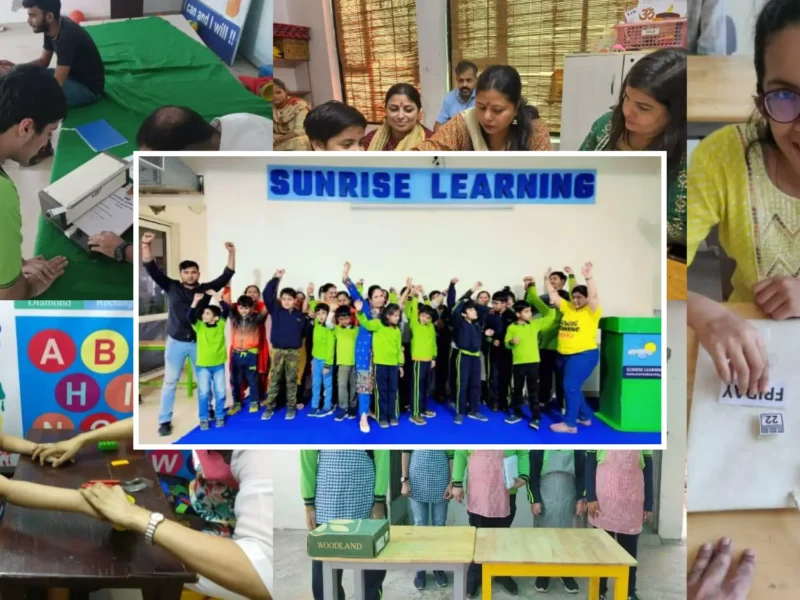
LECIN’s teaching approach places considerable emphasis on learning through direct experience.
Nupur describes a classroom activity in which children were taken on a walk around their school to observe ants and other small creatures.
Instead of memorising names from a textbook, the children observed their surroundings and returned with questions and experiences to discuss.
Educators then connected those observations with storytelling, vocabulary, drawing, beginning sounds and early writing exercises.
According to Nupur, a single outdoor activity can create opportunities to practise language, observation, curiosity and communication.
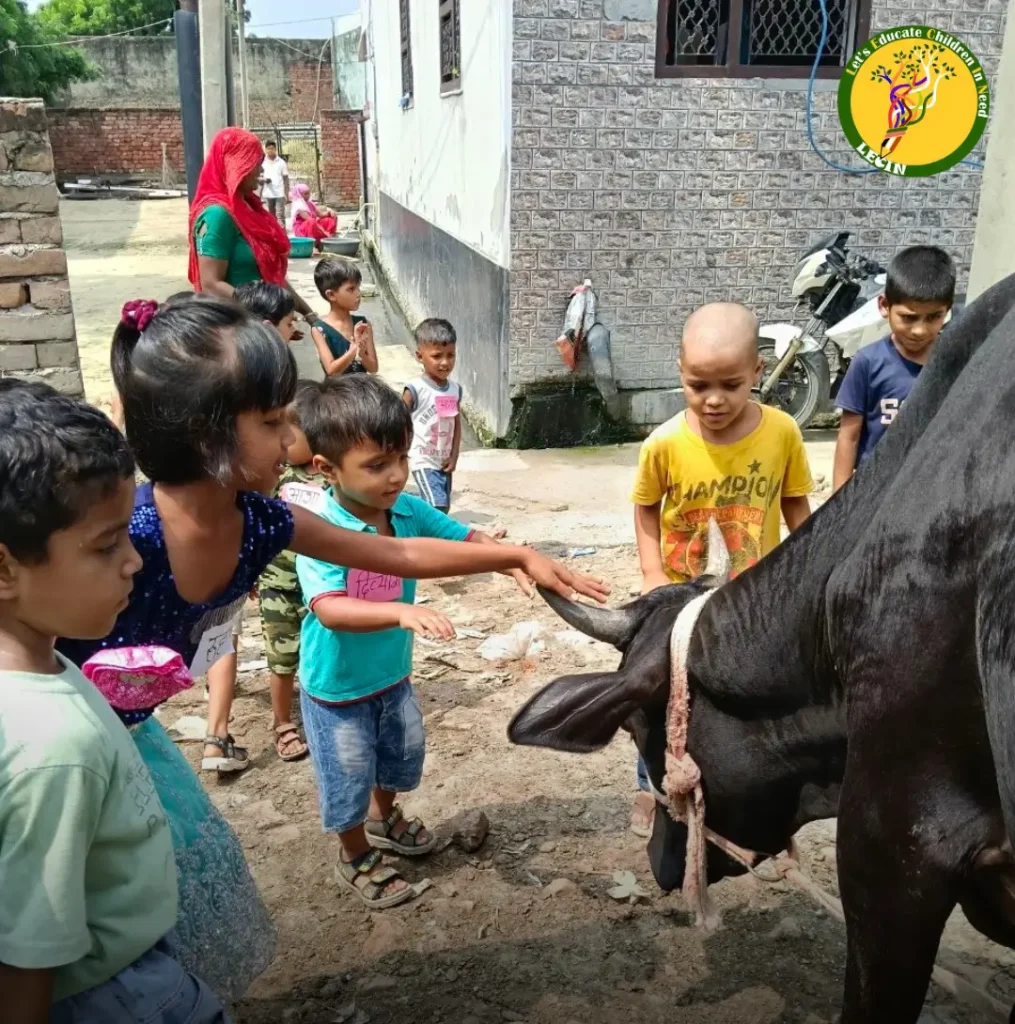
She says such activities also help children understand the relationship between classroom lessons and their everyday surroundings.
However, introducing play-based teaching has not always been easy.
Some parents initially question whether children are studying when they see them engaged in games, conversations and outdoor activities rather than completing written exercises.
Nupur says the challenge is helping families recognise the difference between memorising information and understanding it.
For example, a child may be able to recite numbers up to 100 but still struggle to count a small group of objects correctly.
LECIN attempts to address these gaps by combining activity-based lessons with regular observations and assessments of individual learning needs.
Training Local Women to Become Educators
An important part of LECIN’s model is its decision to recruit and train women from the same rural communities where it works.
Nupur explains that many educated women in these villages have limited opportunities to pursue professional careers after marriage or childbirth.
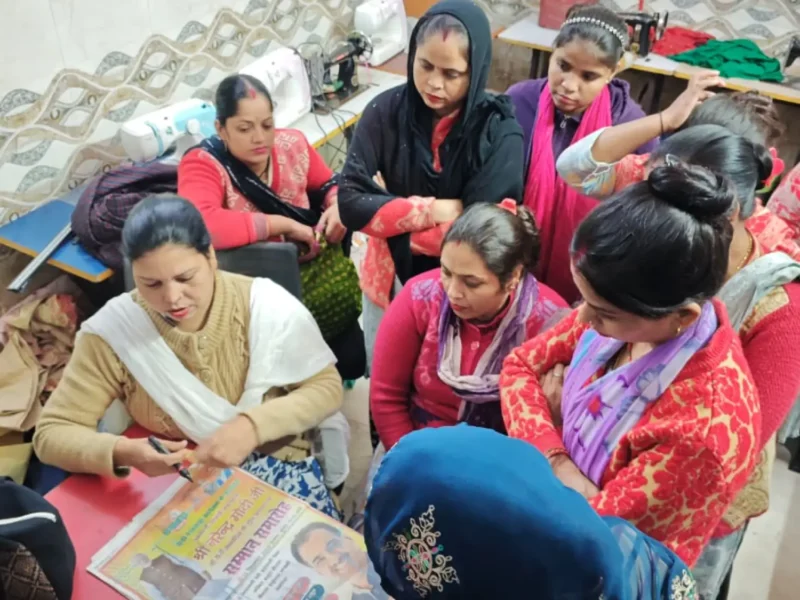
LECIN provides opportunities for selected women to work as early childhood educators while receiving training and classroom support.
This gives the programme two connected objectives: improving educational experiences for children and creating livelihood opportunities for local women.
Because these educators belong to the communities they serve, Nupur believes they are better placed to understand children’s family circumstances and maintain relationships with parents.
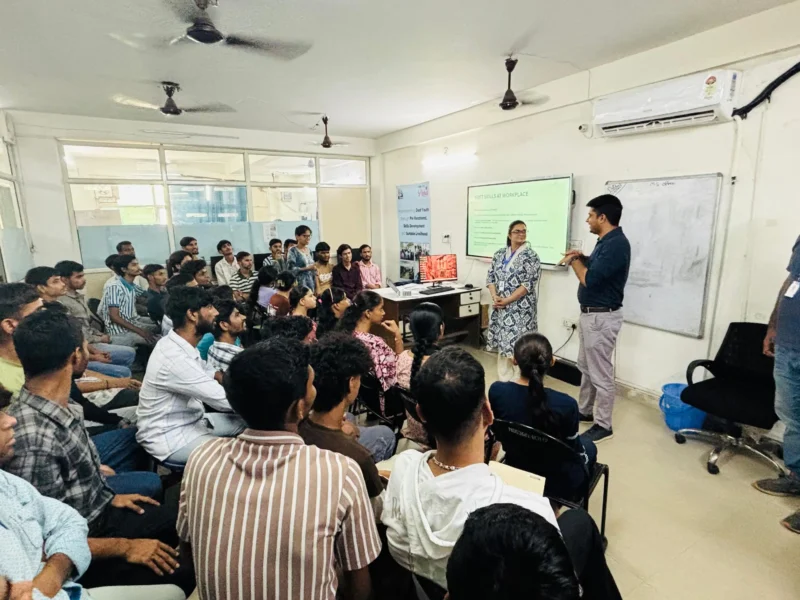
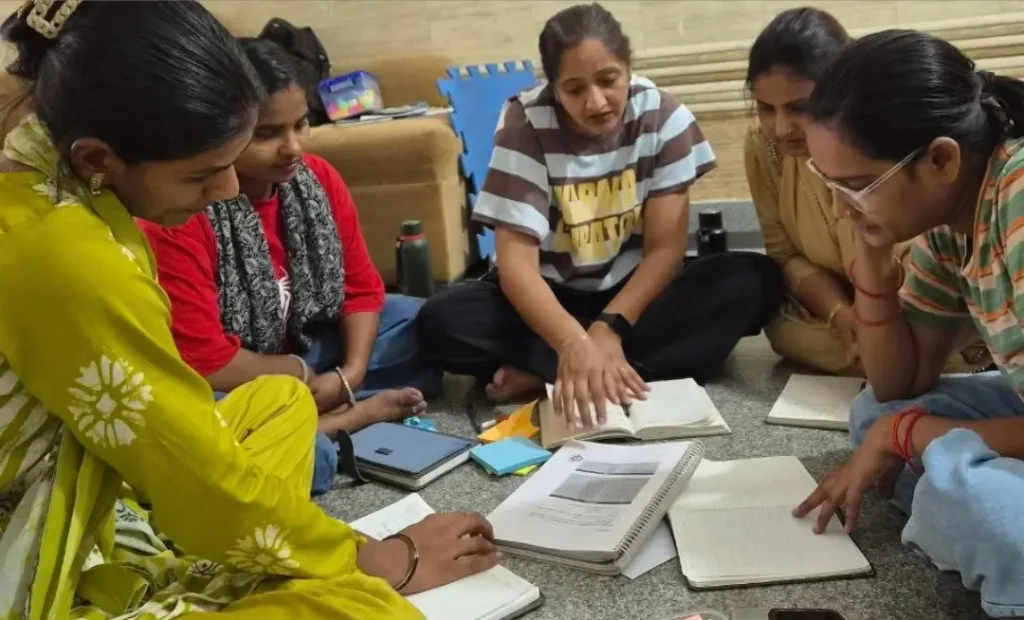
The organisation also conducts monthly capacity-building workshops for Anganwadi workers and government school teachers.
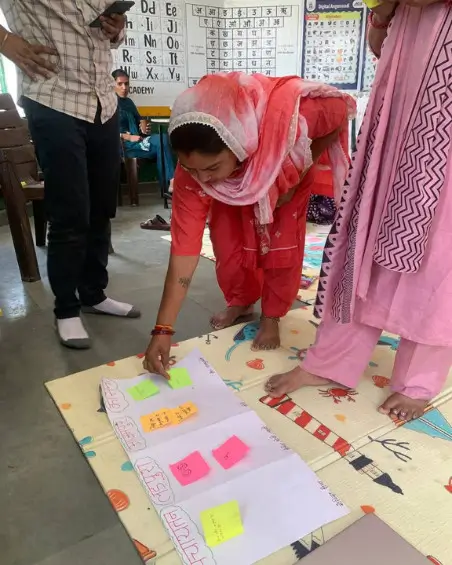
These sessions include classroom demonstrations, discussions about teaching practices and opportunities for educators to share their experiences.
Community-based education is also central to other initiatives in the city. Pulse of Noida previously featured Chhaya Sharma’s work with underserved children in Noida, highlighting how local educators can support children’s learning and access to mainstream education.
Parents Are Part of the Learning Process
LECIN’s work extends beyond classrooms.
According to Nupur, the organisation conducts monthly meetings with parents to discuss children’s progress, demonstrate learning activities and understand concerns at home.
Its educators also undertake monthly home visits to maintain contact with families and encourage participation in children’s education.
During parent meetings, individual learning portfolios are used to explain children’s development and identify areas requiring attention.
The organisation has also introduced an Early Learning Festival in Pachaytan, where families and community members can participate in activities demonstrating how young children learn through play and exploration.
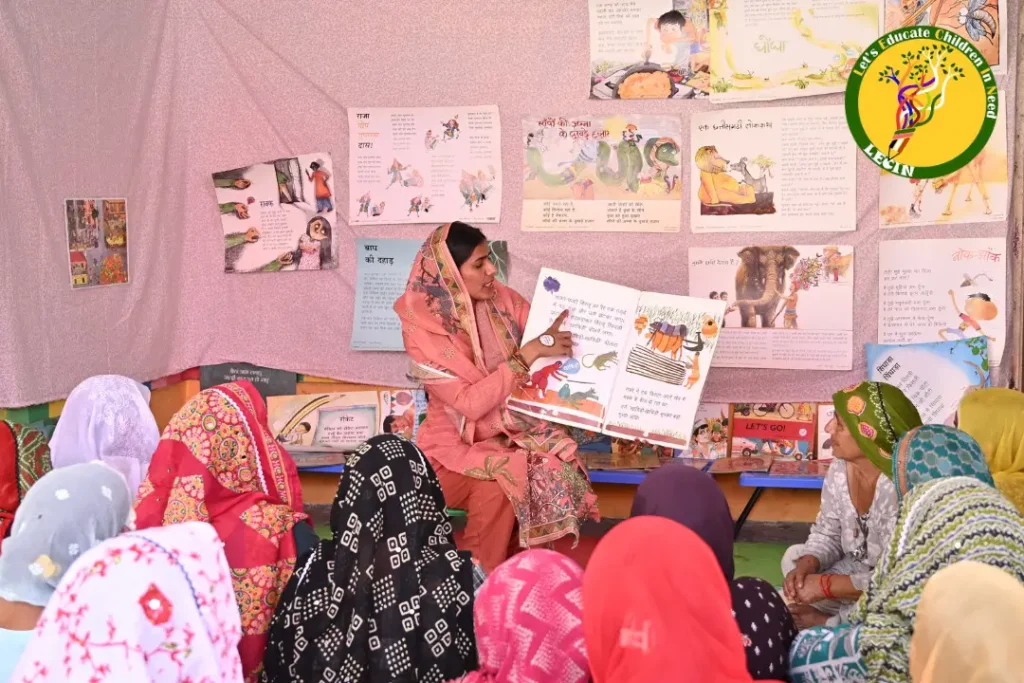
Nupur says building trust with parents is essential because changes in classroom practices can initially appear unfamiliar to families accustomed to more conventional teaching methods.
Measuring Learning Beyond Classroom Attendance
LECIN says it uses a competency-based assessment framework to monitor children’s development.
According to Nupur, children are assessed at three stages during the academic year: baseline, midline and endline.
Individual learning profiles record assessment results, classroom observations and educators’ remarks.
These records are intended to help educators identify learning gaps and adapt activities to each child’s needs.
Nupur also describes changes that are harder to capture through test scores alone, including children becoming more confident in conversations, participating in group activities and developing stronger relationships with educators.
These observations reflect LECIN’s experience within its classrooms. They should not be interpreted as independently established improvements across all children or participating centres.
The Challenge of Sustaining Long-Term Educational Work
Building and sustaining LECIN has involved financial and organisational challenges.
Nupur says the early years depended heavily on student volunteers, limited resources and the commitment of people willing to contribute their time.
A significant development came in 2019, when the organisation established a partnership with Wipro Foundation.
The relationship is documented on Wipro Foundation’s official partner page.
Nupur says fundraising remains challenging because LECIN’s model requires sustained engagement with children, families and educators rather than short-term interventions designed to reach large numbers.
The organisation is now exploring ways to build longer-term relationships with individual supporters, institutional partners and people who can contribute professional expertise.
What Comes Next for LECIN in Greater Noida?
Over the next two to three years, LECIN intends to strengthen its existing programmes rather than expand rapidly into new locations.
One priority is extending the Grade 1 pilot in Pachaytan to Grade 2, supporting a continuous learning pathway from Anganwadi through the early primary years.
The organisation also plans to introduce its approach in another government school and recruit four to five additional women from rural communities as educators.
These are future plans, not completed programme expansions.
Another area of focus is identifying children who have never attended school or whose education has been interrupted, and working with their families to support enrolment and regular participation.
Another example of this challenge is Pehchaan The Street School’s work helping children move into formal education in Noida, which Pulse of Noida covered earlier in 2026.
Nupur believes that improving foundational education requires sustained support from educators, parents, communities and institutions.
For residents of Noida and Greater Noida, LECIN’s work offers an example of how local participation can contribute to early learning within existing government education facilities.
Parents can also apply a broader lesson from the initiative: early education involves more than recognising letters, writing numbers or completing worksheets. Opportunities to play, ask questions, explore and communicate are important parts of a child’s development.
Families looking at early-years education options can also read Pulse of Noida’s guide to choosing a preschool in Noida and Greater Noida.
For Nupur, the journey from volunteering with children in Delhi to working with Anganwadis in rural Greater Noida has reinforced a central belief: educational change requires consistency, patience and attention to how individual children learn.
The classroom in Pachaytan is one visible example of that journey. The longer challenge is helping children develop the confidence and foundational abilities they need as they progress through school.
About LECIN
Let’s Educate Children In Need (LECIN) is a nonprofit organisation working on foundational education and community participation. Its Greater Noida initiatives focus on government Anganwadis, early primary education, training local educators and engaging parents in children’s learning.
Official website: lecinindia.org
LECIN on LinkedIn: Let’s Educate Children In Need (LECIN)
Editor’s note: This Change Makers feature is based on written responses provided by Nupur Bhardwaj to Pulse of Noida, supplemented by publicly available documentation from project partners and official educational sources. Statements about LECIN’s programme coverage, classroom observations and future plans are attributed to the organisation.