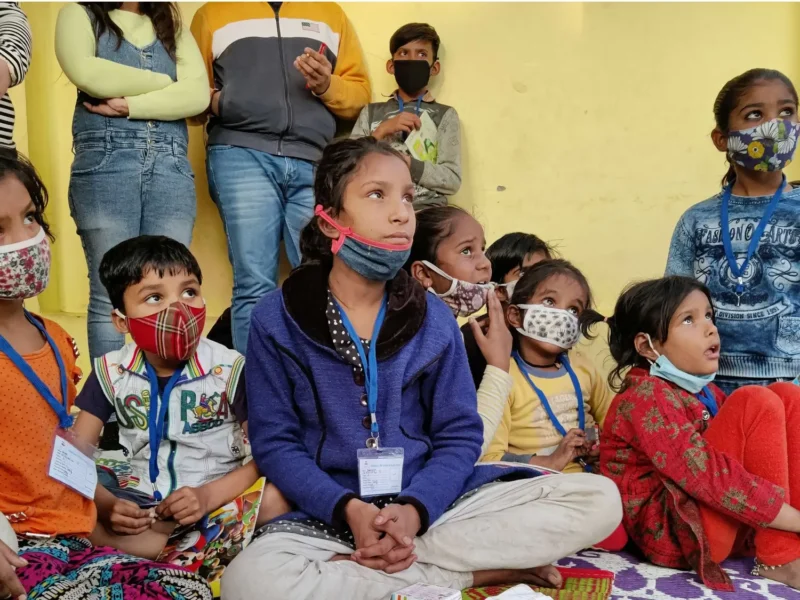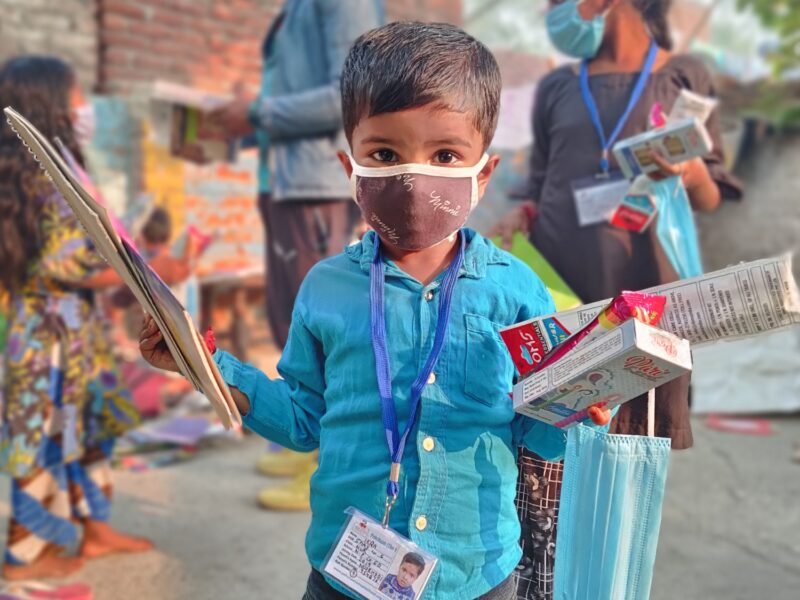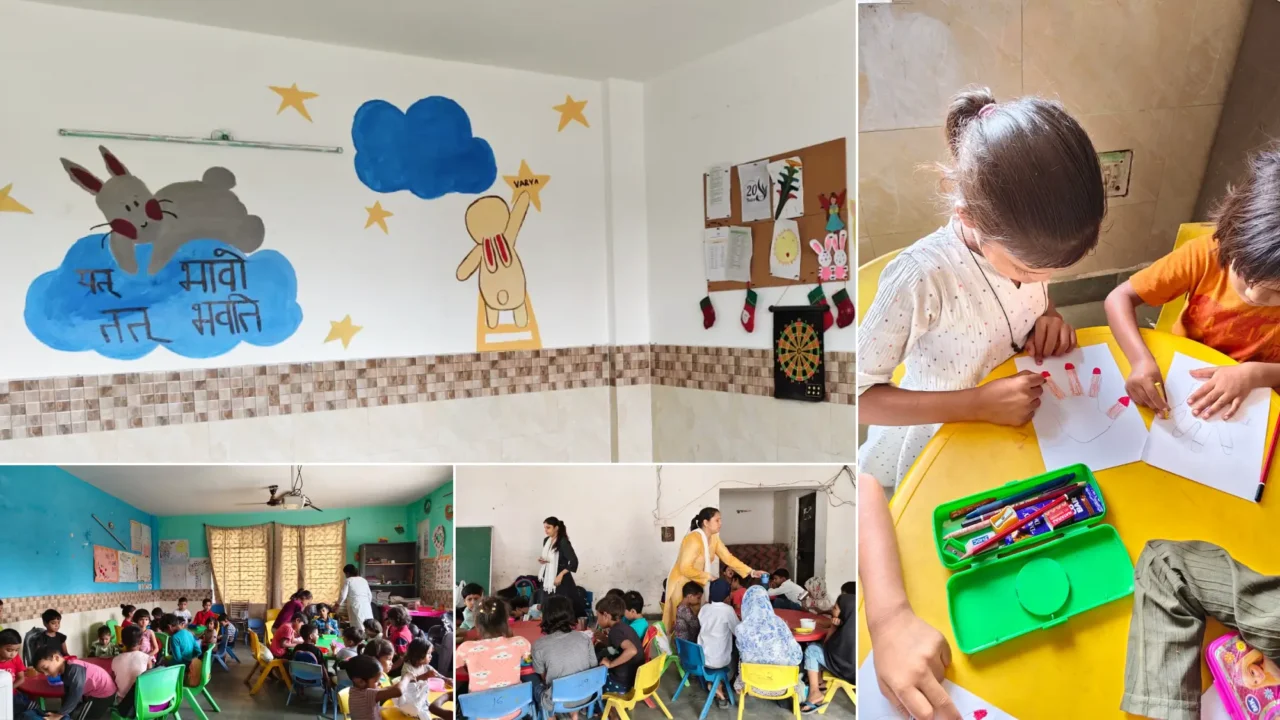
For many children in Noida and Greater Noida’s migrant and low-income settlements, school is not always the automatic first step of childhood.
Migration, unstable livelihoods, poverty, lack of awareness and limited support systems at home often push children away from formal education. Some never enter school. Others drop out early. Many grow up around classrooms, uniforms and books, but remain outside the formal schooling system.
This is the gap that Ugta Suraj, a programme run by Social and Development Research & Action Group (SADRAG), has been trying to address.
Started in 2007, Ugta Suraj works with out-of-school and vulnerable children from peri-urban and migrant communities, helping them build foundational learning skills and gradually transition into formal schools.
Today, the programme operates through three centres in Noida and Greater Noida: Nagla Charandas in Noida Phase 2, Tugalpur in Greater Noida, and Haldoni in Greater Noida. While Nagla Charandas and Tugalpur are older centres, the Haldoni centre was started in June 2025.
Each centre enrols around 50 children every year, mostly from migrant and low-income families. The children are usually in the 6–14 age group, depending on their learning level and readiness for school.
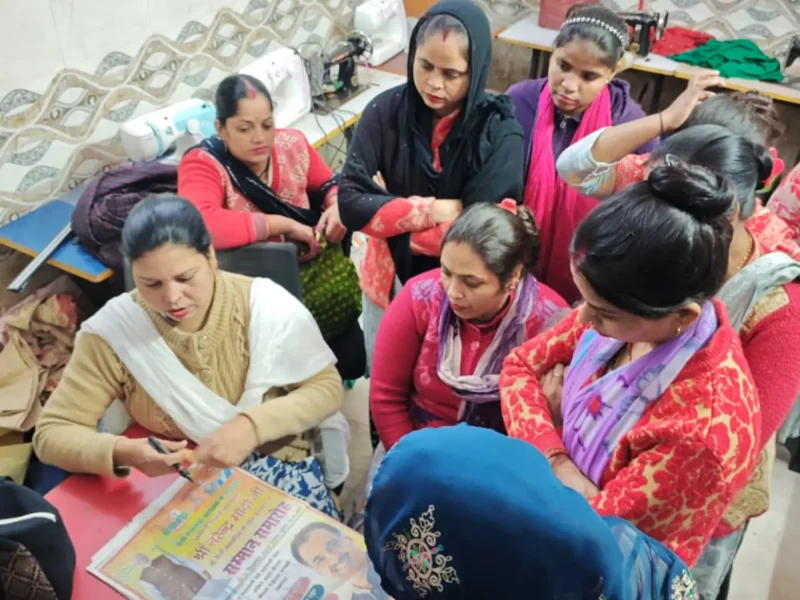
Pulse of Noida had earlier featured SADRAG’s work with women through its Sarthak initiative, which focuses on livelihood, stitching and sustainability. Read that story here: SADRAG Sarthak Women feature
Why Ugta Suraj Matters
For SADRAG, the programme is not only about teaching children alphabets and numbers. It is about helping them enter a system from which they have often been excluded.
Dr Mala Bhandari, who has led SADRAG since its inception, describes Ugta Suraj as a response to the disruption faced by migrant children.
“Ugta Suraj – The Rising Sun symbolizes a literate childhood. It was born from the vision of the Right to Education Act, 2009 — a commitment that no child between the ages of 6 and 14 should remain deprived of formal education. Yet, forced domestic migration often disrupts the lives of families and deprives children of their most basic right — school education. Why should the search for livelihood come at the cost of a child’s future?”
She adds that in Noida’s industrial ecosystem, where migrant labour contributes significantly to the city’s growth, children of migrant workers must not be left behind.
“In the industrial hub of Noida, where migrant labour drives the city’s growth and progress, Ugta Suraj stands as a beacon of hope — striving to ensure that every migrant child becomes literate, aware of their right to education and empowered to build a brighter tomorrow because a literate childhood is the foundation of a brighter future.”
How The Programme Works
Ugta Suraj begins with community outreach.
SADRAG facilitators conduct surveys and identify children who are out of school, vulnerable, or at risk of dropping out. Families are counselled, and children are gradually brought into the centre environment.
Once enrolled, the children receive bridge learning support focused on:
- Foundational literacy and numeracy
- Language development
- Early childhood learning
- Reading and writing practice
- Creative activities
- Social interaction
- Classroom discipline and school readiness
The goal is to prepare children for formal schooling in the following academic session.
According to SADRAG, the academic cycle usually begins around April-May, and children are mainstreamed into formal schools in the next session. The support does not end with admission. Every child who enters school through the programme is tracked for one full year to monitor attendance, adjustment, continuity and progress.
In the previous year alone, 150 children across the centres were mainstreamed into formal schools, according to details shared by SADRAG.
The Three Centres
Each Ugta Suraj centre is managed by two community facilitators or teachers. SADRAG says these facilitators come from the communities themselves, allowing them to build trust with families and remain closely involved in the children’s progress.
At Nagla Charandas, the centre is managed by Ranjana and Mohini.
At Tugalpur, the facilitators are Archana and Kumkum.
At Haldoni, the newest centre, the programme is managed by Zeenat and Jahan Bano.
The Haldoni centre began at a Baraat Ghar in June 2025. At Tugalpur, attendance is recorded digitally on an iPad, along with details related to food requirements at the centre. Across centres, the daily rhythm combines learning, nutrition, discipline and care.
A Day At An Ugta Suraj Centre
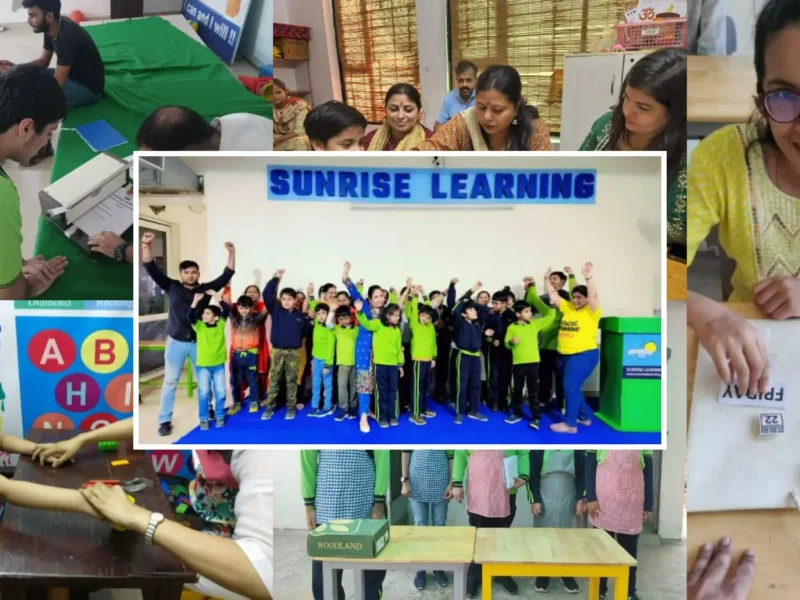
A typical day at an Ugta Suraj centre includes morning assembly, attendance, foundational learning sessions, reading and writing exercises, storytelling, group activities, drawing, art, play-based learning and nutrition breaks.
Since March 2026, SADRAG has partnered with Feeding India to provide nutritious meals, including breakfast, lunch and snacks, to children attending the programme.
According to SADRAG, this support has helped improve attendance, participation, concentration and overall well-being among children.
Parent engagement is also central to the programme. Facilitators conduct regular home visits and follow-ups with families to encourage continuity in learning and eventual school enrolment.
Sanjana’s First Step Towards School
Sanjana’s journey reflects the challenge faced by many children who grow up without education being a regular part of family life.
Before joining Ugta Suraj, studies were unfamiliar to her. She did not fully understand what school meant, and education was not a part of everyday conversation at home.
That began to change when she joined the Ugta Suraj centre.
At first, sitting regularly in a learning space, recognising alphabets and understanding basic studies were all new experiences. Gradually, with the support of teachers and the centre environment, she began to take interest in learning.
One important milestone came in 2022–23, when SADRAG helped her get admission into a government school in Class 4.
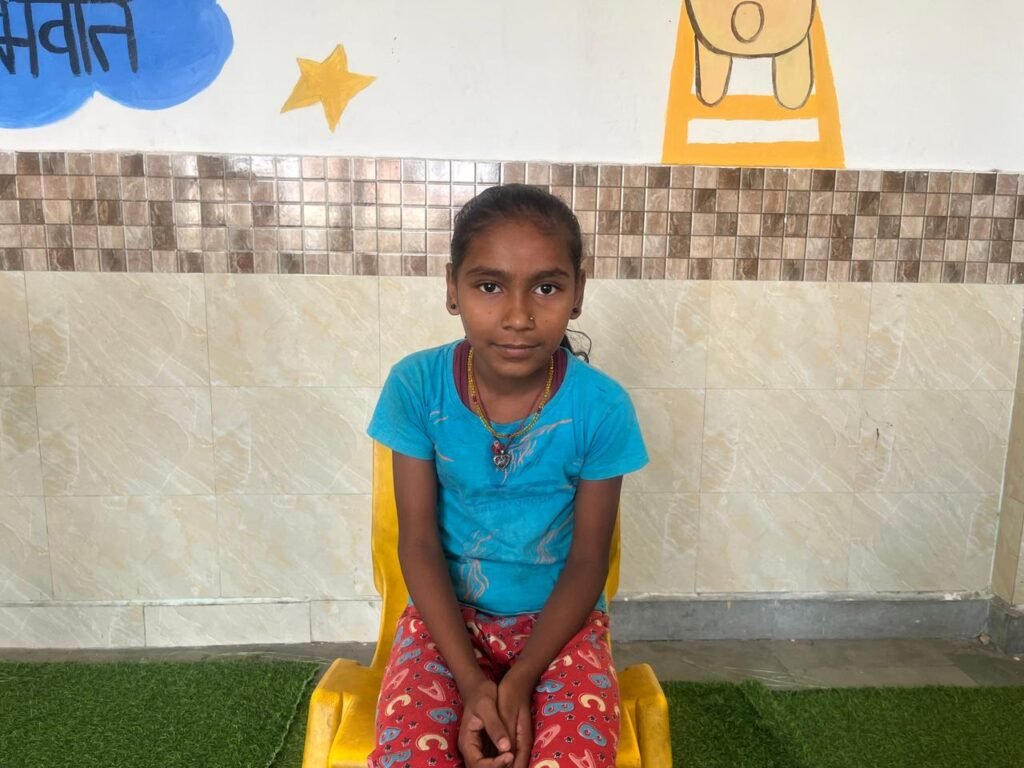
For Sanjana and her family, it was more than a school admission. It was a first step into a future that had earlier felt distant.
Abhishek’s New Chapter
Abhishek’s story began from a similar place of exclusion.
Before joining Ugta Suraj, he had never been to school. He had not experienced classrooms, books, uniforms or structured learning like many children his age.
At the centre, even small things were new: learning alphabets, using a computer, understanding what education could mean for his future.
Over time, studies began to feel less difficult and more familiar. The teachers helped him ask questions, learn without fear and believe that he was capable of continuing his education.
SADRAG later supported his admission into a government school in Class 5. Since he had no previous school background, the admission process was not easy. There were delays and difficulties, but the organisation continued supporting him until he was enrolled.
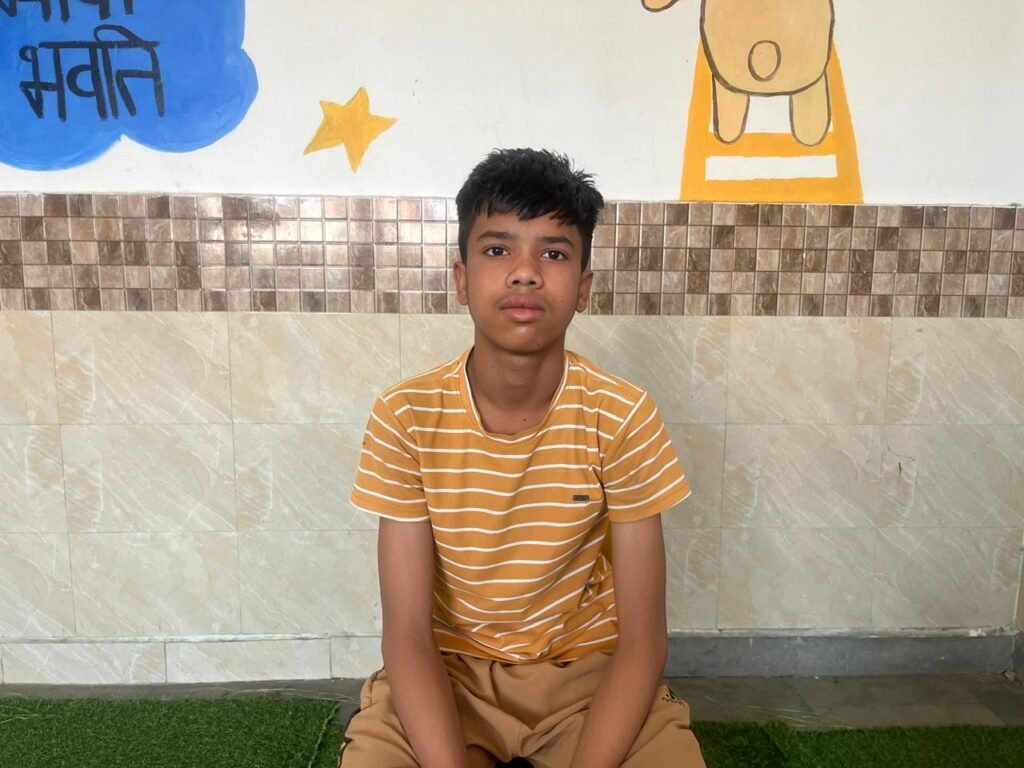
For Abhishek, school admission marked the beginning of a new chapter.
The Challenge Ahead
Grassroots education work is long-term and resource intensive. SADRAG says several challenges remain, including reaching children in highly mobile migrant communities, ensuring continuity after school admission, limited classroom space, the need for teaching-learning material, sustaining nutrition support and expanding access to more vulnerable settlements.
The organisation is seeking support through CSR partnerships, nutrition support, teaching-learning materials, volunteer engagement, classroom infrastructure enhancement, and institutional or philanthropic collaborations.
Programmes such as Ugta Suraj show that mainstreaming out-of-school children is not a one-time admission exercise. It requires identification, trust-building, bridge learning, nutrition, family counselling, school enrolment and sustained follow-up.
In Noida and Greater Noida, where rapid urban growth depends significantly on migrant labour, the future of migrant children is also part of the city’s story.
Ugta Suraj’s work is a reminder that education access often begins not inside a formal school, but in small community classrooms where a child first learns to sit, read, write, ask questions and believe that school is meant for them too.
How to Connect with SADRAG
If you would like to know more about SADRAG’s Ugta Suraj programme, volunteer, support their work, or explore partnerships, you can reach out to SADRAG directly:
Address: G21 Basement, Near Prayag Hospital, Sector 41, Noida 201303.
Phone: 0120-4129831
Email: mail@sadrag.org
Website: sadrag.org
Instagram: @sadrag.ngo
Facebook: SADRAG NGO
LinkedIn: SADRAG
X: SADRAG
Want more useful Noida stories like this?
Subscribe for resident-first updates, local explainers, and changemaker stories from Pulse of Noida.