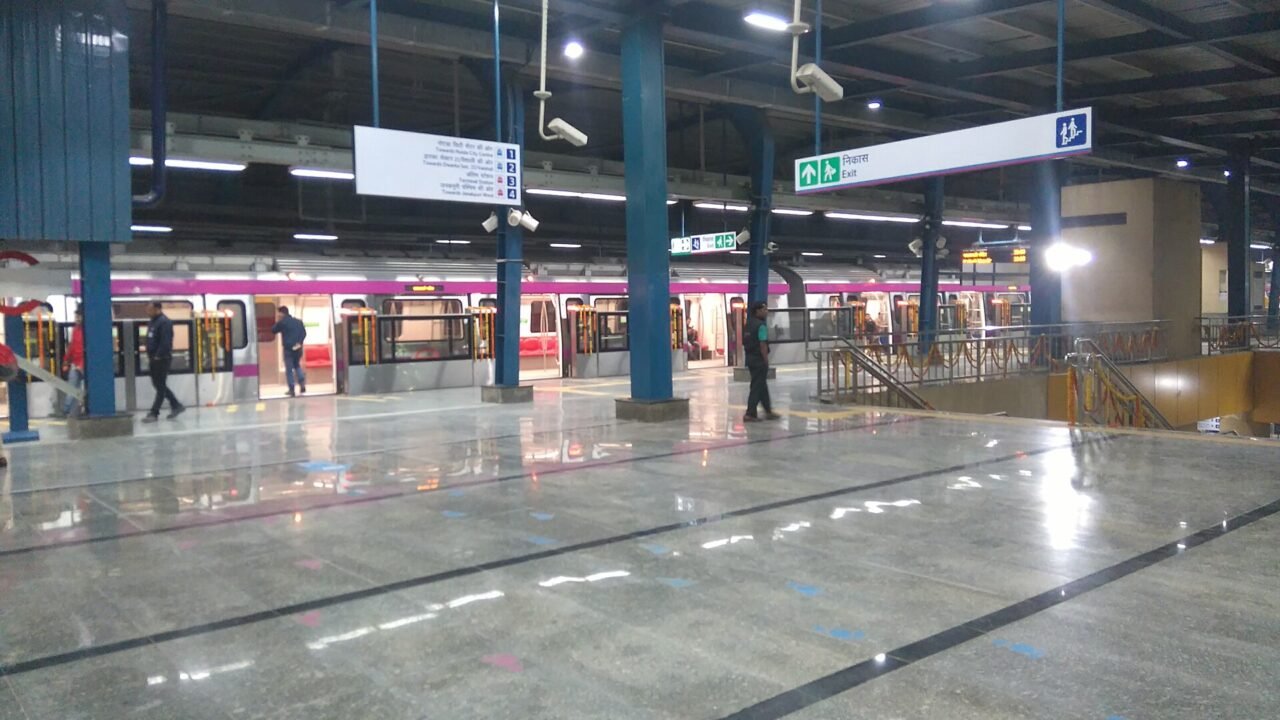
Noida’s Botanical Garden Metro station remained the busiest station in the Delhi Metro network for the fourth consecutive month, reflecting its growing importance for passengers travelling between Noida, Delhi and other parts of the National Capital Region.
Station-wise Delhi Metro Rail Corporation data, as reported by The Times of India on 20 July, shows that Botanical Garden handled average daily footfall of approximately 2.7 lakh in June 2026.
Kashmere Gate ranked second with around 2.6 lakh average daily footfall, while Rajiv Chowk recorded approximately 2.1 lakh. Kashmere Gate is an interchange for the Yellow, Red and Violet lines, making Botanical Garden’s position at the top particularly significant.
The figures represent station footfall and should not automatically be interpreted as 2.7 lakh unique commuters. Metro footfall calculations may include entries, exits and interchange movements, depending on the reporting methodology.
Botanical Garden has led the rankings since March
The June figure was not an isolated monthly spike.
According to the reported DMRC data, Botanical Garden recorded average daily footfall of approximately:
- 2.6 lakh in March
- 2.8 lakh in April
- 2.6 lakh in May
- 2.7 lakh in June
The four-month pattern suggests that Botanical Garden’s position as a leading Metro interchange is sustained rather than a temporary spike.
Why Botanical Garden attracts so many commuters
Botanical Garden connects Delhi Metro’s Blue Line and Magenta Line.
The Blue Line connects Noida with East Delhi, Central Delhi, Rajiv Chowk, Karol Bagh and Dwarka. The Magenta Line provides access towards South Delhi, Hauz Khas, the domestic airport area and western parts of Delhi.
This makes the station important for several types of passengers:
- Noida residents travelling to Delhi
- Delhi residents working in Noida
- Passengers changing between the Blue and Magenta lines
- Office workers travelling towards the Noida-Greater Noida Expressway
- Commuters using buses, office shuttles, cabs and autorickshaws for the final part of their journey
For many office-goers, Botanical Garden functions as the transfer point for workplaces in Sectors 125, 126, 127, 132, 135, 142 and other commercial areas along the Noida Expressway.
Residents comparing the available Metro, road and travel options can also refer to Pulse of Noida’s Noida-to-Delhi travel guide.
High footfall raises last-mile questions
Botanical Garden’s growing passenger numbers are a positive indicator for public transport use, but they also highlight pressure on the mobility network outside the station.
Passengers arriving at Botanical Garden frequently depend on:
- office shuttle services
- autorickshaws and e-rickshaws
- app-based cabs and bike taxis
- city buses
- private pickups
Noida has also been expanding its surface transport options, including the proposed AC electric bus network for Noida and Greater Noida.
The rising number of passengers increases the need for:
- clearly marked pickup and drop-off zones
- organised autorickshaw stands
- dependable bus and shuttle information
- safe pedestrian movement
- better peak-hour traffic management
- accessible connections for elderly and disabled passengers
For residents, the important question is not only how many people use the station. It is whether the surrounding transport system can handle that volume safely and predictably.
Botanical Garden could become an even larger interchange
The Union Cabinet has approved an 11.56-km extension of the Noida Metro Aqua Line from Botanical Garden to Sector 142.
The elevated corridor is planned with eight stations and an implementation period of 48 months.
Once completed, Botanical Garden is expected to connect the Delhi Metro Blue and Magenta lines with the Noida Metro Aqua Line. This could improve public transport access for Expressway sectors and passengers travelling between Greater Noida, Noida and Delhi.
However, this remains a medium-term infrastructure project. Cabinet approval does not mean the Aqua Line connection is already operational or will open within the next few months. Construction, station development, testing and system integration will take time.
Readers can see the approved route, proposed stations and timeline in Pulse of Noida’s Botanical Garden to Sector 142 Aqua Line extension guide.
A broader overview is also available in the Noida Metro expansion guide for commuters.
What commuters should watch next
Botanical Garden’s rise to the top of the Delhi Metro station rankings makes it an important mobility indicator for Noida.
The improvements that will matter most to daily passengers include:
- Better peak-hour crowd management
- More dependable last-mile bus services
- Organised pickup and drop-off zones
- Safer pedestrian access around the station
- Clearer information about buses and office shuttles
- Progress on the future Aqua Line interchange
The ridership figures show how important Botanical Garden has become. The next test is whether the station and its surrounding transport network can continue to support this growth without making daily travel more difficult.
Source attribution
The March-to-June 2026 footfall figures are based on DMRC station-wise data reported by The Times of India on 20 July 2026.
Pulse of Noida did not locate a separate public DMRC bulletin containing the complete station-wise table at the time of publication.
The Botanical Garden to Sector 142 Aqua Line details are based on the Union Cabinet approval and Pulse of Noida’s earlier reporting on the approved Metro extension.