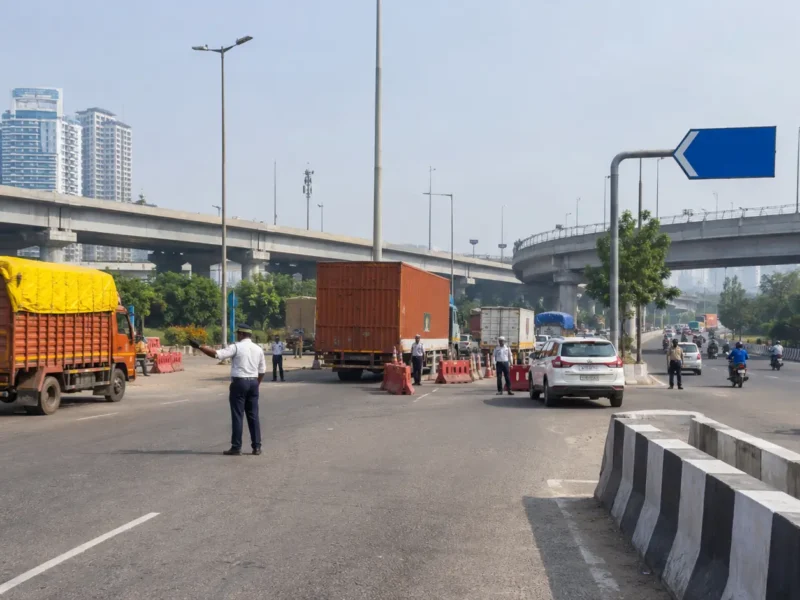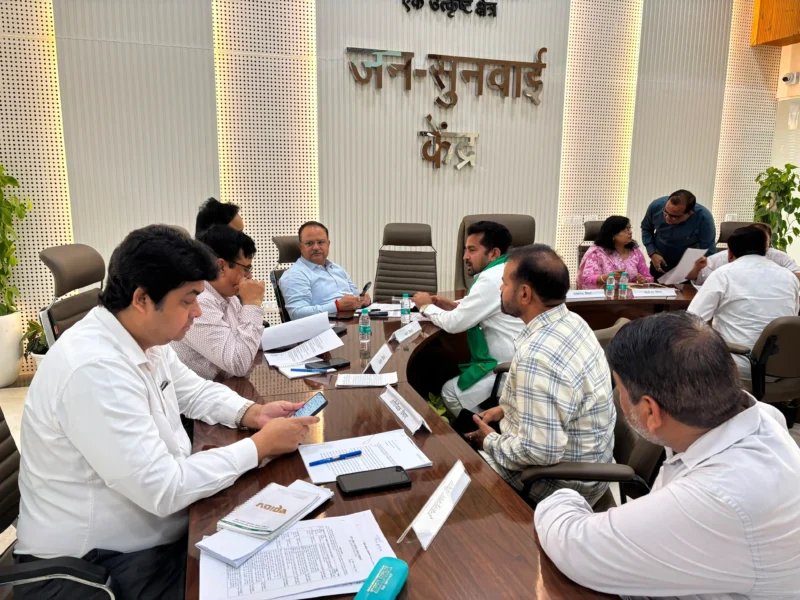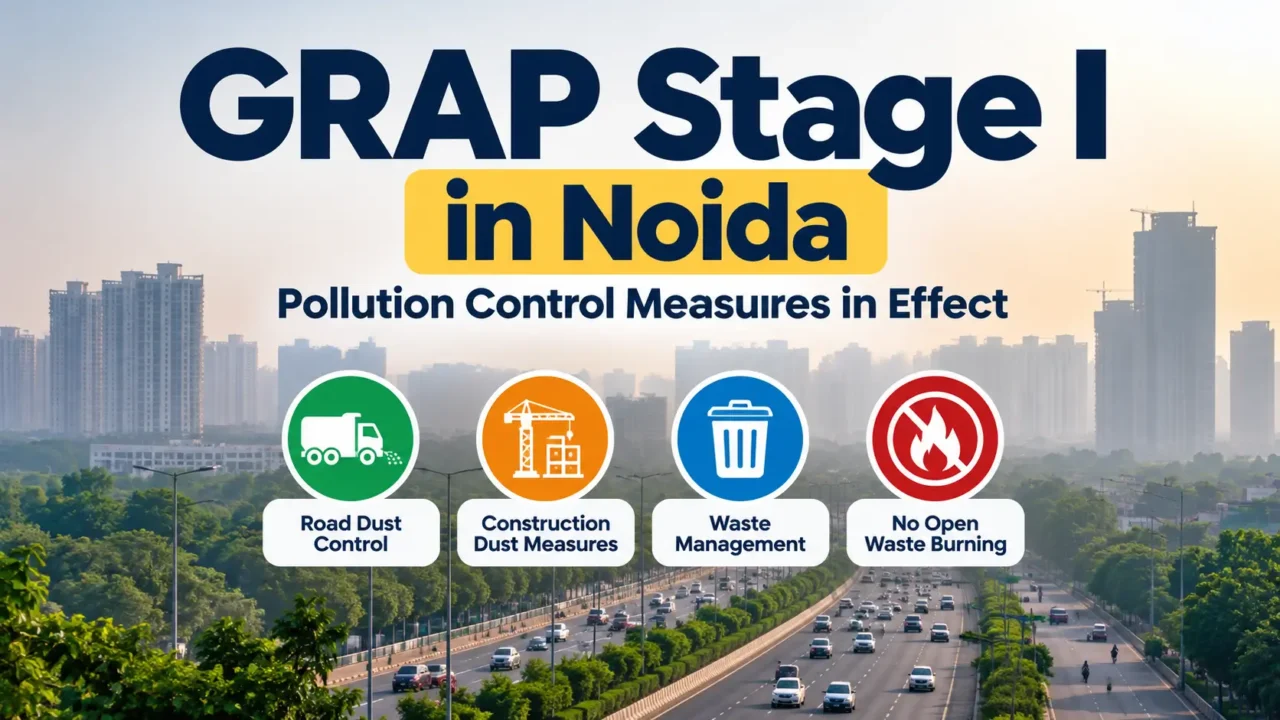
Pollution-control measures under Stage I of the Graded Response Action Plan (GRAP) are in effect across Delhi-NCR, including Noida. The measures focus on controlling road dust, construction-related pollution, waste burning and other sources of air pollution.
The Commission for Air Quality Management (CAQM) issued its latest Stage I implementation order on 21 October 2026. Noida Authority has also informed residents that the measures apply locally.
For residents, construction contractors, businesses and housing societies, the immediate concern is compliance with existing pollution-control requirements.
What does GRAP Stage I mean?
GRAP is a graded system of measures designed to address deteriorating air quality in Delhi-NCR.
Stage I corresponds to the Poor air quality category, with an Air Quality Index (AQI) between 201 and 300.
The current order activates Stage I actions across Delhi-NCR. These measures are intended to address pollution sources before air quality deteriorates further.
What measures apply in Noida?
The official Stage I framework includes several measures relevant to the city.
Road dust control
The action plan calls for mechanised road sweeping and water sprinkling to control dust.
Construction and demolition sites
Construction and demolition activities must follow applicable dust-mitigation requirements. The emphasis is on preventing dust from spreading into surrounding areas.
Waste collection and disposal
The measures include regular collection of municipal solid waste and construction and demolition waste.
Open waste burning
Open burning of waste is prohibited under the applicable pollution-control framework.
These provisions concern both public enforcement responsibilities and activities carried out by private individuals, contractors and businesses.
Does GRAP Stage I mean construction must stop?
The Stage I measures identified in the official framework require construction dust controls. They should not be interpreted as a blanket order stopping all construction activity.
Residents and contractors should distinguish the Stage I requirements from restrictions that may apply under other GRAP stages or separate regulatory orders.
What residents should know
Residents can help limit pollution by avoiding waste burning and ensuring household or commercial waste is handed over through the appropriate collection system.
Housing societies and construction contractors should pay particular attention to dust-producing activities and waste handling.
For vehicle owners, keeping pollution-control documentation current is also important. Pulse of Noida has previously explained the NCR rules concerning valid Pollution Under Control Certificates in its report on PUCC requirements for Noida motorists.
People following local pollution conditions should consult official AQI updates rather than assuming the same reading applies to every sector or neighbourhood.
What happens next?
Stage I measures remain subject to CAQM’s subsequent orders and air-quality assessments.
Residents should follow the latest official directions for any changes in restrictions.
The current announcement confirms implementation of Stage I measures. It does not, by itself, establish that stronger restrictions, school closures or a blanket construction ban have been introduced.