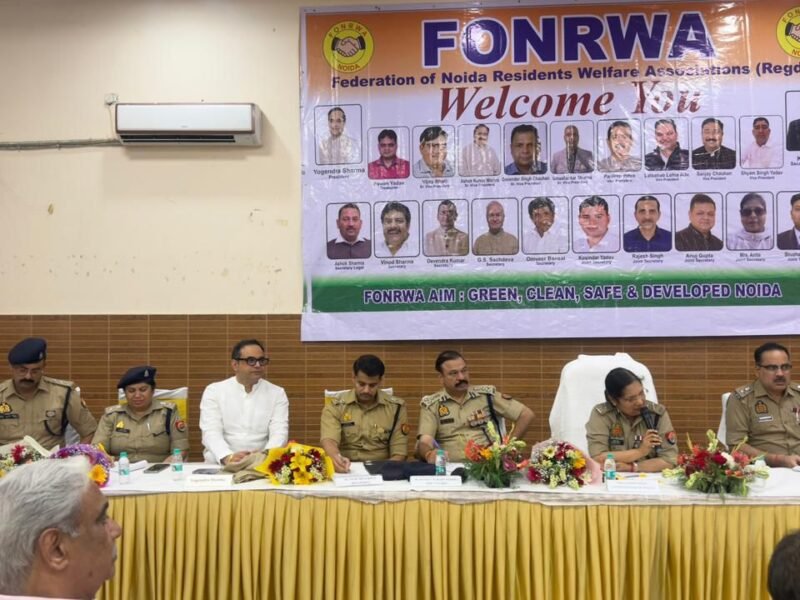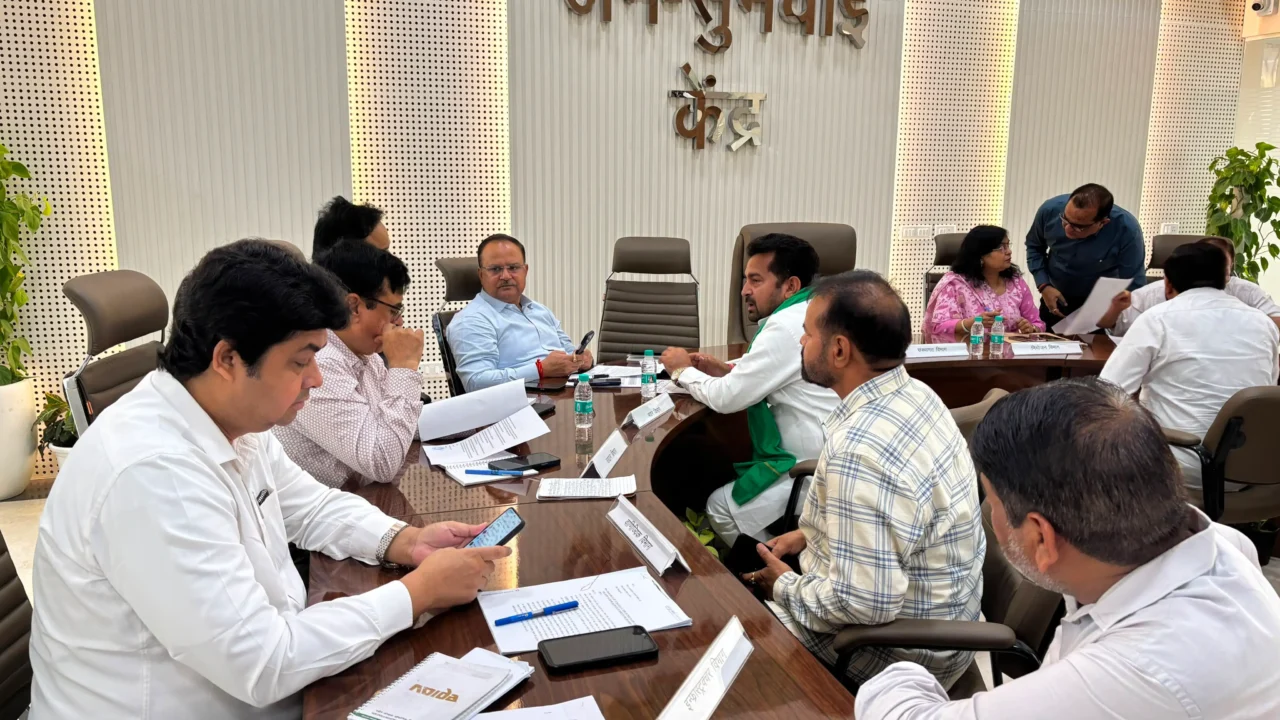
According to an official post published by the Authority on X, Additional Chief Executive Officers Satish Pal and Vandana Tripathi attended the hearing along with senior departmental officers.
General Managers from the Water, Sewer, Planning and Institutional departments were present to hear grievances raised by residents.
The Authority did not disclose how many complaints were received, how many were resolved during the hearing or the deadlines given to departments for further action.
Jan Sunwai at a glance
| Detail | Information |
|---|---|
| Hearing | Noida Authority Jan Sunwai |
| Date | 17 July 2026 |
| Venue | Sector 96, Noida |
| Senior officers present | ACEOs Satish Pal and Vandana Tripathi |
| Departments represented | Water, Sewer, Planning and Institutional |
| Complaints received | Not disclosed |
| Complaints resolved | Not disclosed |
| Next hearing date | Not announced |
What is a Jan Sunwai?
A Jan Sunwai is a public grievance-hearing format through which residents can present pending complaints directly before officials of a government department or public authority.
Such hearings can help residents explain cases that may involve documents, previous complaints or coordination between more than one department.
A hearing does not automatically mean that every complaint will be resolved on the spot. Some matters may require inspection, document verification, departmental review or further communication with the complainant.
Which Noida Authority departments attended?
The official post identifies senior officers from four departments.
Water Department
Residents may approach the Water Department for matters such as water-supply disruption, low pressure, pipeline leakage, billing concerns or related infrastructure problems.
Sewer Department
This department generally deals with sewer blockages, overflowing lines, damaged infrastructure and other sewerage-system complaints.
Planning Department
Planning grievances may involve land-use issues, layouts, development plans, building-related matters or cases requiring interpretation of planning records.
Institutional Department
The Institutional Department deals with matters connected to institutional plots, allotments, leases and related documentation.
These examples explain the general functions of the departments. The Authority’s post did not disclose the subjects or outcomes of individual complaints heard on 17 July.
What residents should carry to a future Jan Sunwai
Residents attending a future grievance hearing should consider carrying:
- Previous complaint or grievance numbers
- Copies of letters, emails and acknowledgements
- Photographs showing the problem
- Relevant water, property, plot or lease documents
- A brief written summary of the complaint
- Dates of earlier submissions and follow-ups
- Contact information for future communication
Residents should normally retain original documents and submit copies unless an authorised official specifically asks to inspect the originals.
It is also useful to request an acknowledgement, diary number or grievance reference that can be used for follow-up.
How to file a complaint with Noida Authority online
The official Noida Authority website provides a Lodge Grievances Online service under its Citizen Services section. The service links to the Authority’s grievance-redressal portal.
The complaint form allows residents to select details such as:
- Department
- Complaint type
- Area type
- Sector, village or main road
- Complainant name and mobile number
- Complaint location and description
- Supporting information or documents, where applicable
Residents should provide a precise location, a short factual description and clear photographs wherever these help explain the issue.
After submitting the complaint, save:
- The complaint or request number
- A screenshot of the submission
- The date of filing
- Copies of documents and photographs uploaded
- Any SMS or email acknowledgement received
How to track or escalate a complaint
Residents should first use the complaint number provided by the Noida Authority grievance system to check the status of their submission.
Where a complaint remains unresolved, residents may also use the Uttar Pradesh Jan Sunwai–Samadhan portal. The state portal allows citizens to register grievances, track their status, send reminders for complaints crossing service timelines and submit feedback on disposal.
When escalating a matter, include the earlier Noida Authority complaint number and filing date. This creates a clearer documentary trail and helps show that the local complaint process was already used.
Other Noida Authority contact information
The Authority’s official contact page identifies its Administrative Complex in Sector 6, Noida, and lists public-dealing hours from 9:30 AM to 6 PM, Monday to Friday. It also lists 9205559204 for sending a complainant’s name, address and complaint details.
However, that contact page was last updated in 2022. Residents should verify the latest office location, timings and complaint channel on the official website before visiting or sharing sensitive documents.
The Sector 96 location mentioned in this story was the venue of the 17 July Jan Sunwai. It should not automatically be treated as the Authority’s regular public-dealing office.
How to write a useful civic complaint
A concise complaint is usually easier for an official to understand and assign.
Include:
- The exact sector, road, block or landmark
- A clear description of the problem
- When the problem began
- Whether it is recurring or continuous
- Any safety, health or access risk
- Earlier complaint numbers
- Photographs or documents, where relevant
- The specific action being requested
Avoid vague statements such as “the whole area is in bad condition.” Instead, identify the location and problem precisely.
For example:
A sewer chamber outside Block C, Sector XX, has been overflowing since 15 July. Complaint number XXXXX was filed on 16 July, but the overflow continues and is obstructing pedestrian access.
What information has not been released?
For the 17 July hearing, Noida Authority has not publicly stated:
- How many residents attended
- How many complaints were registered
- Which sectors were represented
- How many matters were resolved immediately
- How many cases were sent for inspection
- Which departments received follow-up instructions
- The deadlines for resolving pending cases
- The date of the next Jan Sunwai
Publishing this information would help residents evaluate whether public hearings are producing measurable grievance redressal.
Why this matters for Noida residents
Water supply, sewerage, planning and property-documentation complaints can remain pending when they require action from multiple departments.
A Jan Sunwai can provide residents with direct access to senior officers and an opportunity to present documents and earlier complaint records together.
Its effectiveness, however, depends on what happens after the hearing. Complaint acknowledgements, clear departmental ownership, response deadlines and publicly reported disposal figures are necessary for residents to track actual outcomes.
Residents who could not attend the 17 July hearing can continue to use the Authority’s online grievance system and the UP Jan Sunwai–Samadhan portal.
Important note
Residents should use official government websites and verified Authority accounts when filing complaints or sharing personal documents.
Do not send identity, property or financial documents to unverified phone numbers, social-media accounts or unofficial intermediaries.