A medicine that looks unusual, has unfamiliar packaging or does not carry a QR code should not automatically be described as fake.
India’s drug regulator, the Central Drugs Standard Control Organisation, or CDSCO, has issued official guidance on identifying and verifying suspected spurious drugs. Uttar Pradesh’s Food Safety and Drug Administration, or UP FSDA, also provides residents with a pharmacy-licence search and channels for reporting drug-related complaints.
For residents of Noida, Greater Noida and Greater Noida West, the practical first step is therefore to verify rather than assume.
One important distinction: QR or barcode requirements apply to specified categories of medicines and pharmaceutical products. The absence of a QR code alone does not prove that a medicine is counterfeit or spurious.
At a glance
- Do not declare a medicine fake from packaging alone.
- Not every medicine is required to carry a QR code.
- QR or barcode requirements apply to specified pharmaceutical products and brands.
- UP FSDA provides an online search to check drug establishments by details such as firm name or licence number.
- Suspected drug-related problems can be reported to UP FSDA.
- Spurious, substandard, recalled and damaged medicines are not interchangeable regulatory terms.
- If an essential prescription medicine appears suspicious, seek verification from a pharmacist, doctor, manufacturer or drug regulator rather than stopping treatment on your own.
Can you identify a fake medicine just by looking at it?
Not conclusively.
Damaged packaging, printing differences, an unfamiliar pack or a failed QR scan may give a consumer a reason to investigate further, but these observations do not by themselves establish that a medicine is spurious.
CDSCO’s official guidance provides a regulatory framework for the identification and verification of suspected spurious drugs.
A definitive determination may require verification by the manufacturer, regulator or an appropriate laboratory.
That is why consumers should be cautious about forwarding photographs on social media with claims that a medicine or pharmacy is selling “fake drugs” before the allegation has been established.
Does every medicine need a QR code?
No.
This is an important consumer-safety point because a missing QR code can easily be misunderstood.
According to CDSCO’s guidance, QR requirements apply to specified categories.
The regulator says QR-code requirements for active pharmaceutical ingredients, or APIs, manufactured or imported in India became effective from January 2023.
Separately, the top 300 drug formulation brands specified under Schedule H2 are subject to barcode or QR-code requirements that took effect from August 2023.
This means a consumer should not use “no QR code” as a standalone test for whether a medicine is fake.
Where a QR or barcode requirement does apply, the code provides another route for checking product information.
What should you do if a medicine has a QR code?
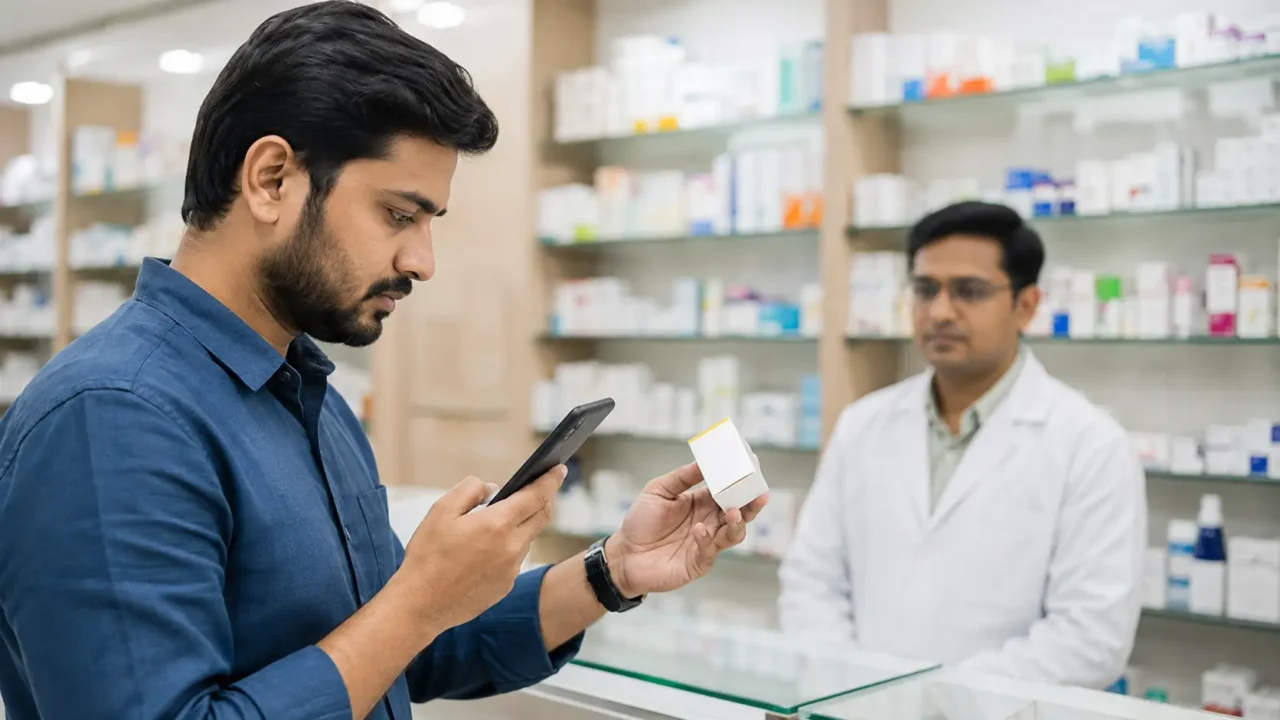
Where a medicine carries a QR code intended for product verification, scan it and compare the information returned with the medicine in your hand.
If the information does not correspond with the pack, the code does not work as expected or something else appears inconsistent, treat that as a reason to seek further verification rather than as proof of counterfeiting.
You can ask the dispensing pharmacist for clarification and, where necessary, contact the manufacturer or drug regulator.
Keep the packaging, invoice and other purchase details available if you intend to raise a complaint.
How can Noida residents check a pharmacy or drug establishment?
UP FSDA operates an official online licensing system that includes a Quick Search facility.
The system allows users to search available licensing records using details including:
- Firm name
- Licence number
- Registration number
This can help residents check whether the establishment details provided by a pharmacy or drug business correspond with information available through the State’s licensing system.
An online result should be treated as one verification step. If there is a discrepancy, residents can contact UP FSDA rather than reaching a conclusion themselves about the legality of an establishment.
Where can a suspected medicine be reported in Uttar Pradesh?
UP FSDA publishes the following contact channels for drug-related grievances:
- Toll-free grievance number: 1076
- Drug-section email: fsdahq-drug@up.gov.in
- WhatsApp: +91 87561 28434
- Published working hours: Monday to Friday, 10 AM to 6 PM
Residents can use these channels when they need official guidance or want to report a suspected problem involving a medicine or drug establishment.
Before contacting the regulator, it may help to keep the following information available:
- Name of the medicine
- Manufacturer shown on the pack
- Batch and expiry information shown on the package
- Where and when it was purchased
- Purchase invoice, if available
- Photographs of the packaging
- Details of the pharmacy or seller
- The reason the medicine appears suspicious
These details do not prove that a medicine is spurious, but they can make it easier for the appropriate authority to examine the complaint.
Why keeping the pharmacy bill matters
A proper purchase record can help establish where and when the medicine was obtained.
When buying prescription medicines, retain the invoice or electronic bill wherever possible. It may help if the medicine later needs to be traced, reported or verified.
Buying from a drug establishment whose licensing details can be checked also gives the consumer an additional verification trail.
Spurious does not mean the same thing as substandard
Consumers may see several different terms used in medicine-safety alerts, but they should not be treated as synonyms.
Spurious
“Spurious” is a regulatory classification under India’s drug laws. A suspected medicine should not be publicly described as spurious simply because its appearance seems unusual.
Not of Standard Quality
A medicine classified as Not of Standard Quality, or NSQ, has failed an applicable quality specification or test.
That does not automatically mean the medicine is counterfeit.
Recalled
A medicine may be recalled by a manufacturer or regulator for a particular reason. A recall also does not automatically establish that the product was counterfeit.
Damaged or tampered packaging
Damage or apparent tampering may justify caution and further verification, but it is not by itself a laboratory or regulatory finding that the medicine is fake.
Using these distinctions correctly matters because allegations about counterfeit medicines can have serious consequences for patients, pharmacies and manufacturers.
What if the medicine is part of an essential prescription?
Do not abruptly stop an important prescribed medicine solely because its packaging looks different or a QR code cannot be scanned.
Instead:
- Contact the dispensing pharmacist.
- Speak to the prescribing doctor if treatment decisions may be affected.
- Seek manufacturer verification where appropriate.
- Report serious concerns through UP FSDA or the relevant drug-control authority.
If replacement medicine is required, obtain medical or pharmacy guidance rather than making an unsupervised change to treatment.
Should residents rely on online posts about fake medicines?
Treat them cautiously.
A viral photograph or message may not establish:
- Whether the medicine shown is genuine.
- Whether the pack is from the same batch sold locally.
- Whether the product has been officially recalled.
- Whether a regulator has tested it.
- Whether the pharmacy named in the message was involved.
Before sharing an allegation, look for a CDSCO, State drug regulator, manufacturer or other authoritative notice.
What to do before leaving the pharmacy
A simple routine can make later verification easier:
- Buy from an identifiable pharmacy or licensed drug establishment.
- Ask for and retain the invoice.
- Check that the medicine name and strength match the prescription.
- Look at the batch and expiry information on the pack.
- Where an applicable QR code is present, use it as an additional verification tool.
- Do not accept visibly damaged or apparently tampered packaging without clarification.
- Keep the original pack if you later need to raise a complaint.
The goal is not to turn consumers into drug inspectors. It is to make it easier to notice inconsistencies and pass genuine concerns to the authorities that can investigate them.
The key point for Noida residents
There is no single visual trick that can prove whether a medicine is counterfeit.
QR codes can help where the regulatory requirement applies, pharmacy licensing information can be checked through UP FSDA, and suspected problems can be reported through the State’s official grievance channels.
The safest approach is therefore:
Check the seller, retain the purchase record, verify product information where possible, and escalate genuine concerns instead of making a conclusion from packaging alone.