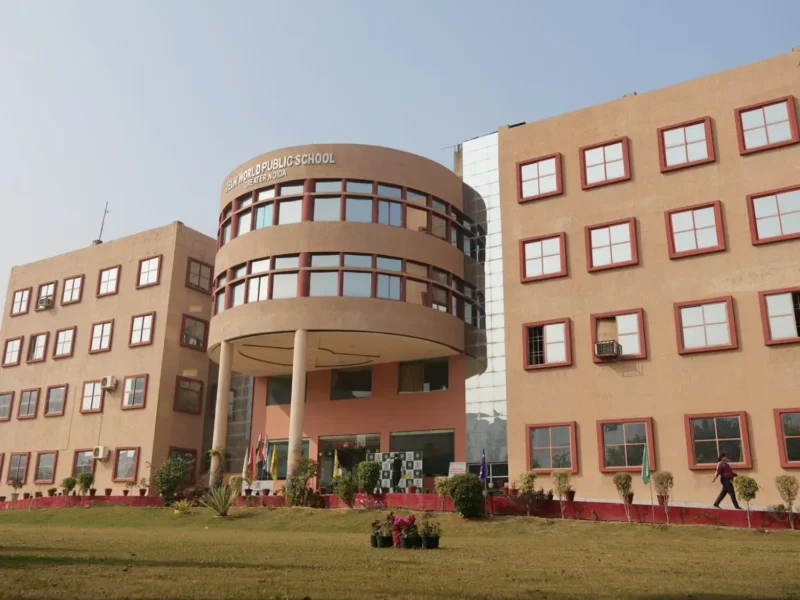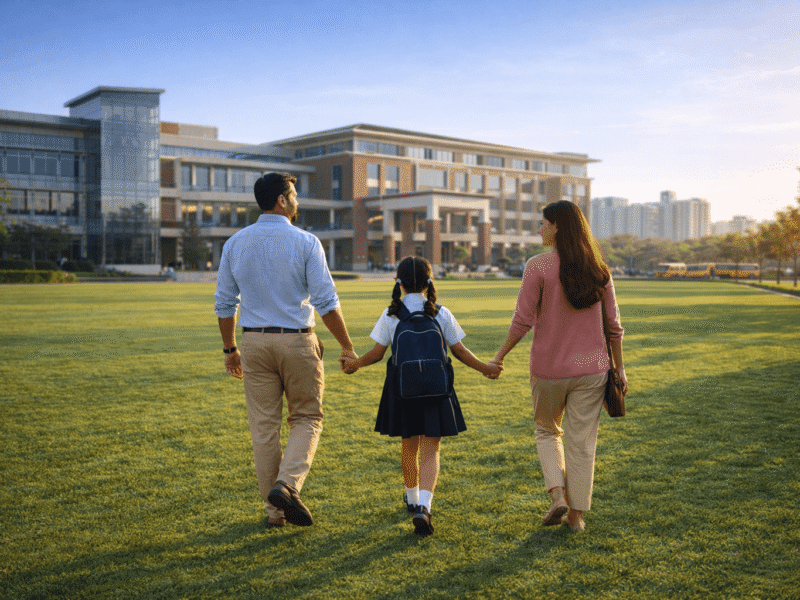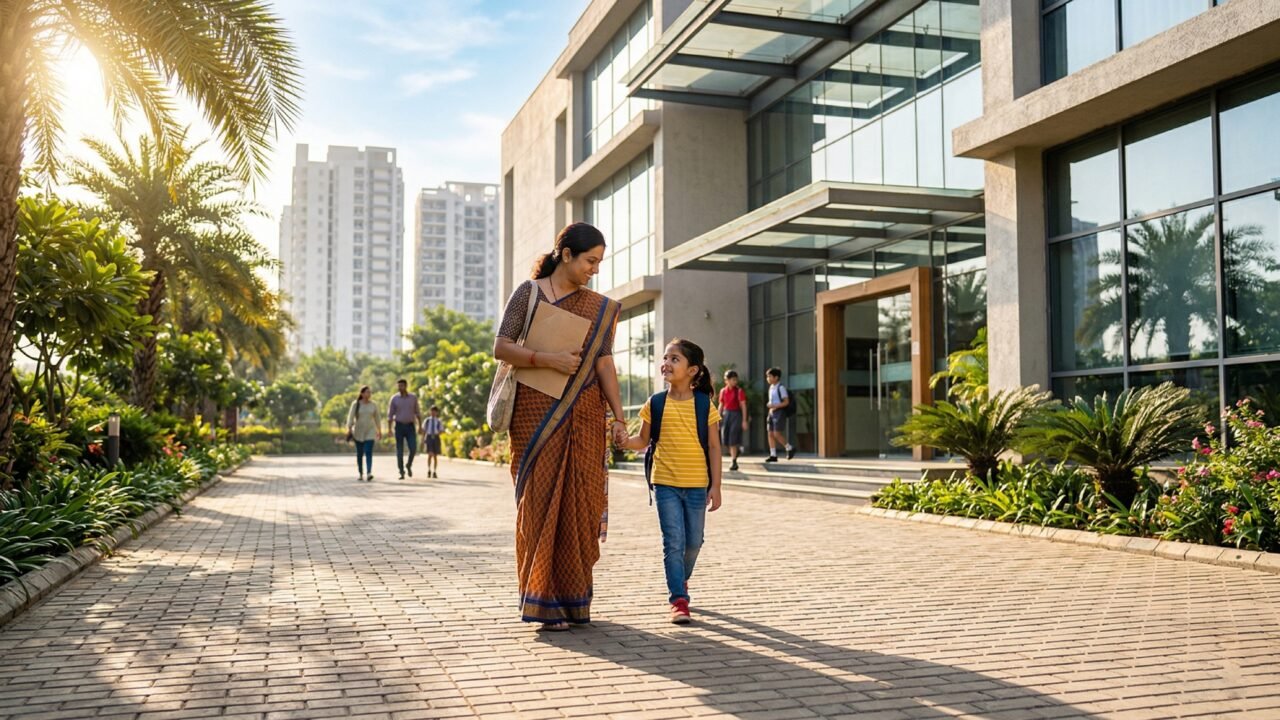
For families in Noida and Greater Noida, the admission season now runs almost through the year. New schools, fresh campuses and multiple curricula give parents more choice than ever, but they also make the process confusing. Many parents are unsure when to start, which forms to fill first and how to compare CBSE, ICSE and international schools in a practical way.
This guide brings together what Noida parents need for the 2026 session. It focuses on timelines, documents, curriculum choices and trusted official contacts so that families can navigate admissions with more confidence. It is designed as a starting point you can return to while shortlisting schools across Noida and Greater Noida West.
Admissions timeline in Noida for 2026
Most schools in Noida follow a broad pattern for the academic session that begins in April. Nursery, kindergarten and Class 1 forms for 2026 usually start appearing between September 2025 and February 2026, though exact dates vary from school to school. Senior classes often open later based on vacancies, board change requests or internal promotions.
Large private schools commonly use online forms on their websites. Parents fill a registration form, pay a non-refundable registration fee and then wait for communication about interaction dates. Shortlisted children may be called for a simple interaction at the pre-primary level or an assessment test from Class 1 upwards. Submission of a form never guarantees admission; most schools clearly state that admission depends on merit and availability of seats.
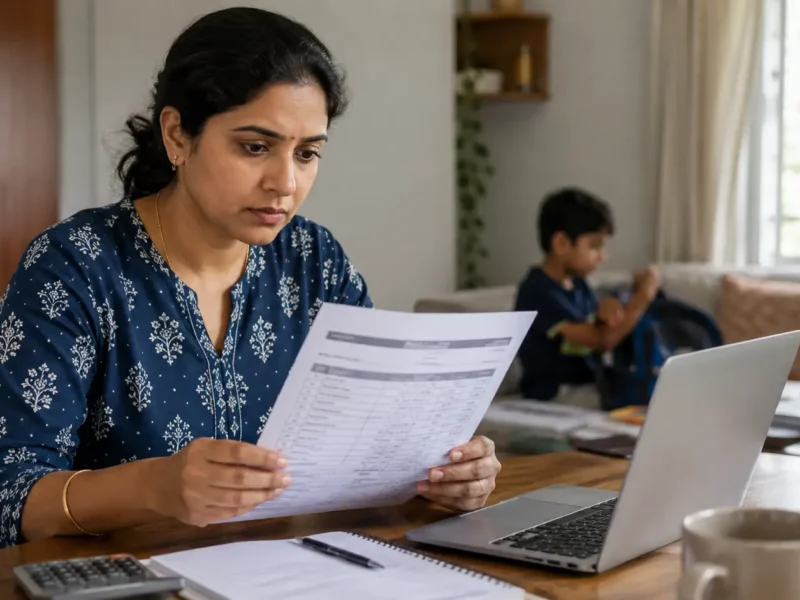
Because every school sets its own calendar, parents should maintain a simple admission tracker. Note the name of each shortlisted school, class applied for, form release date, last date of submission, interaction dates and fee payment deadlines. Checking school websites and social media pages once a week during the active admission window helps ensure that you do not miss updates.
Age criteria and eligibility
In Noida, private schools broadly follow guidelines that align entry age with the class. For nursery or Bal Vatika 1, schools generally look for children around three years of age as on 31 March of the academic year. For Class 1, many schools now expect an age of at least six years as on 31 March in line with national recommendations. Parents should always check the specific age rules on each school website before applying, because cut-off dates and labels such as Bal Vatika 1, Bal Vatika 2 or KG can differ.
For higher classes, schools may look at previous school reports, transfer certificates and subject combinations. Some schools conduct placement tests in core subjects so that they can understand the child’s current level and suggest suitable sections or streams. Others rely mainly on interaction with the child and parents.
Documents parents should keep ready
Almost every school in Noida asks for a similar set of documents during the admission process. Keeping these documents ready in a folder saves time and reduces last-minute stress.
Parents should prepare the following:
- Birth certificate issued by the Registrar of Births and Deaths or a competent municipal authority.
- Passport-size photographs of the child, mother and father or guardian.
- Proof of residence such as Aadhaar card, electricity bill, rent agreement, voter ID or passport.
- Previous school report card and transfer certificate if the child is applying for Class 2 or above.
- Identity proofs of parents, sometimes required for security or verification.
Some schools also ask for vaccination records, special needs documents or custody papers in special situations. Reading each school’s document list carefully before the interaction day prevents disappointment at the last moment.
Understanding CBSE schools in Noida
A large number of Noida schools are affiliated with the Central Board of Secondary Education. CBSE schools follow the national curriculum that is widely used across India and is aligned closely with entrance exams such as JEE Main and NEET. They usually offer a structured approach with clear textbooks, regular tests and a strong emphasis on mathematics and science.
For parents, one advantage of CBSE is portability. If families move to another city, it is easier to find a school with the same board. For students, CBSE provides familiarity with national competitive exams and a large pool of study material. However, the experience still varies from school to school. Parents should pay attention to how each CBSE school balances academics with sports, arts and life skills. Visiting classrooms, labs and libraries provides a better sense of daily learning than brochures or rankings alone.
Understanding ICSE schools in Noida
Some schools in and around Noida follow the Indian Certificate of Secondary Education and Indian School Certificate pattern, commonly known as ICSE and ISC. This curriculum is overseen by the Council for the Indian School Certificate Examinations based in New Delhi. ICSE schools typically place strong emphasis on English language, detailed subject content and project work. Many parents like the level of writing practice and comprehension that the board encourages.
Families who choose ICSE often value depth in humanities and commerce subjects and the stress on applied understanding. However, as with CBSE, quality depends heavily on the individual school. Parents should ask about workload, support for children who need more time, and how the school prepares students for Indian as well as foreign universities.
International curriculum options
Noida also has schools that offer international curricula such as the International Baccalaureate and Cambridge Assessment International Education. These schools may run dual programmes, offering CBSE in some classes while providing global boards in higher classes. International curricula often focus on inquiry, research skills and cross-curricular projects. They can be well suited for families that move between countries or for students planning to study abroad.
International schools typically have higher fee structures because of smaller class sizes, specialised teacher training and extended activities. Parents should look beyond the label and understand how the school actually implements the programme, how assessments are done and how students are guided into appropriate subjects in Grades 9 to 12. Speaking to existing parents and alumni is often useful.
Typical fee ranges in Noida
Fee structures in Noida vary widely. Neighbourhood schools, established legacy campuses and high-end international schools all price differently. At the lower end, some schools charge a modest monthly tuition fee for pre-primary and primary classes, while others collect a larger quarterly amount that covers tuition, activities and labs. Premium schools may charge a significant admission fee or development fee at the time of joining in addition to annual tuition.
Parents should look at the complete cost, not only the admission figure. Transport fee, annual charges, technology fees, exam fees and optional activities can change the overall picture. It is helpful to request a printed fee schedule from each school and note whether amounts are likely to change in the following year. Comparing annual costs across three or four shortlisted schools makes decisions more transparent.
What to check during school visits
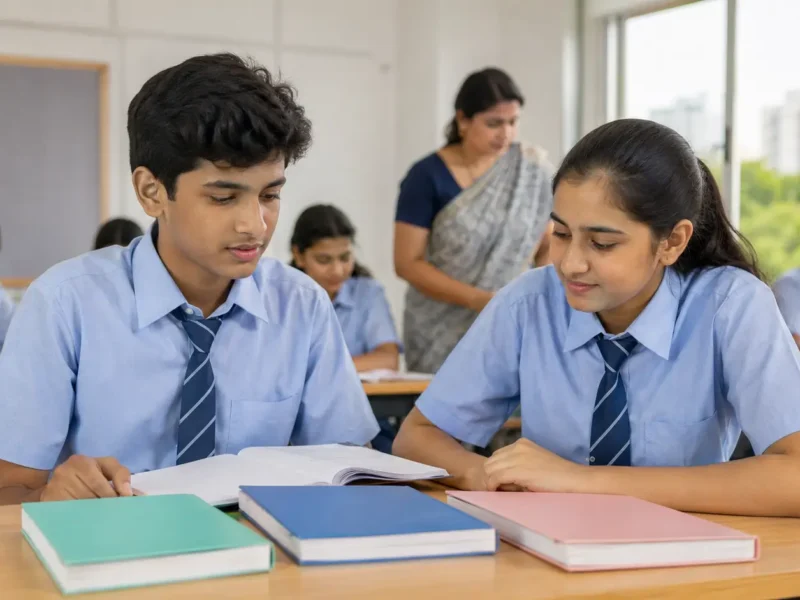
Online research cannot replace physical visits. When schools invite parents for campus tours or interactions, it is useful to carry a written checklist. Observing real classrooms in action reveals more than decorated reception areas. Parents can look at how teachers speak with children, whether students appear engaged and how discipline is maintained.
Key aspects to observe include classroom size, natural light, ventilation and seating. Library resources, science labs, computer labs and sports facilities show how the school supports different kinds of learners. Safety is critical in every part of the campus, from playgrounds and labs to staircases and washrooms. Asking clear questions about CCTV coverage, visitor procedures and emergency drills helps families understand how seriously the school takes child protection.
Transport, commute and daily routine
For many Noida families, transport decides whether a school is practical. Long daily commutes can tire young children and cut into study or play time. Parents should check the bus routes, pick-up and drop points and approximate travel time during normal traffic. It is also important to know whether buses are GPS-enabled and whether there is a female attendant on route for younger children.
If parents plan to use private transport, they should consider parking rules around the school and how traffic is managed during arrival and dispersal. In sectors with narrow internal roads, congestion can become a daily stress point. Thinking through the daily schedule in advance allows families to choose a school that fits their lifestyle instead of only the brand value.
Common mistakes parents make during admissions
Several mistakes repeat across admission seasons in Noida. One frequent issue is applying very late, when most seats are already filled. Another is filling forms for many schools without a clear idea of how fees, commute and teaching style will work for the family. Some parents focus only on the name of the school and ignore whether the environment suits their child’s temperament.
Rushing through document submission can also cause problems. Incomplete forms, missing proof of age or inaccurate residential details can delay the process. Parents should also avoid paying any amount without an official receipt and written confirmation of admission. Keeping copies of all documents submitted and emails exchanged with schools is a safe practice.
Step-by-step admission checklist for 2026
Parents planning for the 2026 session can use this simple order of actions:
- Clarify class and board preference for your child and set a broad budget range.
- Prepare essential documents and keep scanned copies ready for online forms.
- Shortlist a mix of CBSE, ICSE and international schools that fit your location.
- Visit school websites weekly from September onwards and note admission announcements.
- Submit registration forms before deadlines and track interaction dates in a shared calendar.
- Attend campus visits with a checklist covering classrooms, safety, activities and transport.
- After offers arrive, compare total annual cost, commute time and learning environment before confirming a seat.
Useful official contacts for parents
Parents sometimes need to contact education boards directly for queries on affiliation, exams or certificates. These official contacts can be a helpful reference.
Central Board of Secondary Education headquarters
CBSE Office Shiksha Kendra
2 Community Centre, Preet Vihar, Delhi 110092
Helpline: 1800 11 8002
Website: https://www.cbse.gov.in
CBSE Integrated Office Complex Dwarka
Address: CBSE Integrated Office Complex, Sector 23, Phase 1, Dwarka, New Delhi 110077
Enquiry numbers: 011-24050336, 011-24050337, 011-24050338, 011-24050339
Website: https://www.cbse.gov.in
Council for the Indian School Certificate Examinations
Registered office: Pragati House, 3rd Floor, 47–48 Nehru Place, New Delhi 110019
Phone: 011 26413820, 011 26411706, 011 30820091
Website: https://www.cisce.org
CISCE office serving Noida region
Council for the Indian School Certificate Examinations
E-4, Sector 1, Noida, Uttar Pradesh 201301
Phone: 0120-4953100, 0120-4953101, 0120-4953102, 0120-4953103, 0120-4953104, 0120-4953105
Families should always cross-check current contact numbers and details on the official CBSE and CISCE websites because information may be updated over time.
Final thoughts for Noida parents
Choosing a school in Noida is no longer about finding the only good option in your neighbourhood. It is about balancing curriculum, commute, fees and your child’s personality. When parents start early, keep documents ready and rely on verified information from schools and official boards, admissions become less stressful.
With careful planning during the 2026 season, families in Noida and Greater Noida can focus more on the learning journey ahead and less on paperwork.
Disclaimer
This guide has been prepared by the Pulse of Noida editorial team for general informational purposes only. All admission timelines, age criteria, document requirements and fee structures mentioned in this article are indicative and based on commonly observed practices across private schools in Noida and Greater Noida. Actual requirements, dates and processes vary from school to school and may change without prior notice. Readers are advised to verify all details directly with individual schools before taking any admission-related decisions. Contact information for official boards including CBSE and CISCE has been sourced from publicly available official records and is subject to change. Pulse of Noida does not endorse any specific school, board or curriculum mentioned in this article. For the most current and accurate information, always refer to the official websites of CBSE at www.cbse.gov.in and CISCE at www.cisce.org.