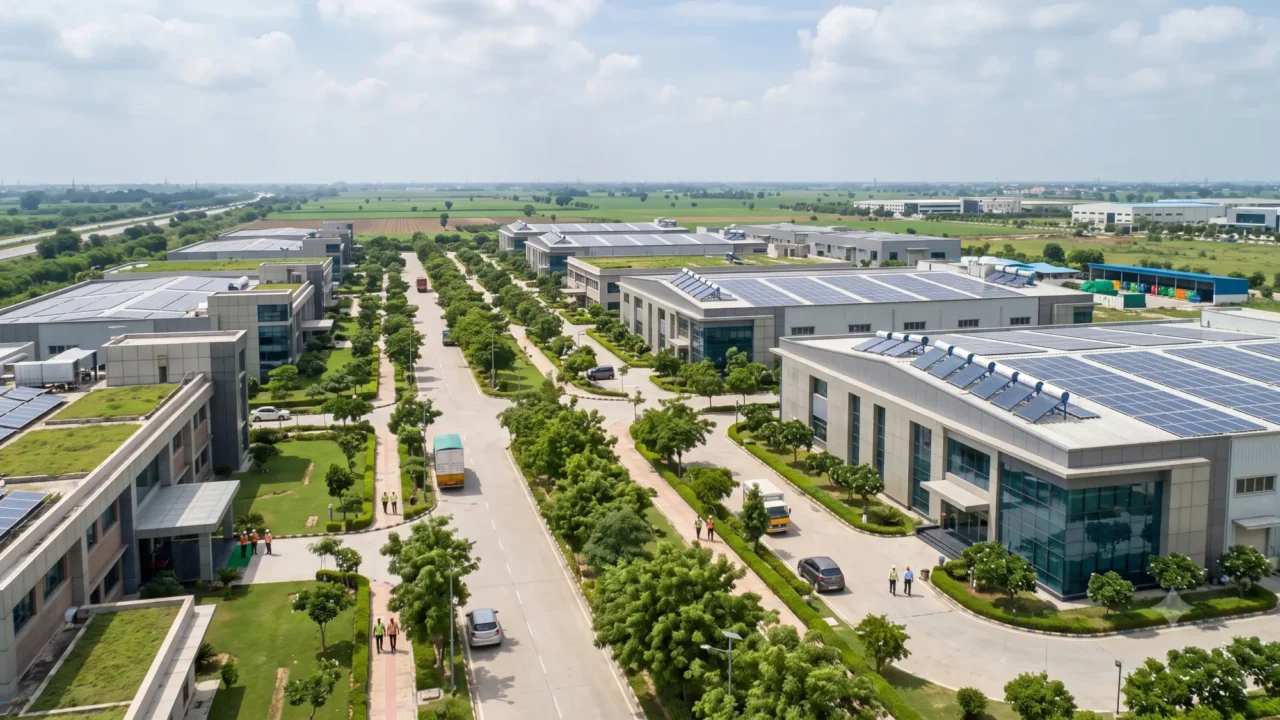
The proposed Electronics Manufacturing Cluster in Sector 10 of the Yamuna Expressway Industrial Development Authority area has received prior environmental clearance for its common infrastructure and area-development components.
The official clearance letter was issued by the Uttar Pradesh State Environment Impact Assessment Authority on 22 June 2026. It followed the State Expert Appraisal Committee’s consideration of the proposal on 11 May and the SEIAA decision on 11 June.
The development came into wider public attention on 22 July after YEIDA officials discussed the approval with the media. The clearance itself, however, was granted in June and should not be presented as a fresh approval dated 22 July.
The approval is an important regulatory milestone, but it does not mean that the entire electronics cluster has been built, that industrial operations have begun or that every future manufacturing unit has received environmental approval.
Also read: Greater Noida’s developing startup ecosystem
YEIDA Electronics Manufacturing Cluster at a glance
| Detail | Officially confirmed information |
|---|---|
| Location | Sector 10, YEIDA, Gautam Buddh Nagar |
| Total project area | 206.40 acres |
| Industrial plots | 121.75 acres |
| Supporting infrastructure | 15.89 acres |
| Utilities | 1.51 acres |
| Green area | 30.63 acres |
| Roads and parking | 36.62 acres |
| Proposed construction area | 100,889.17 square metres |
| Rainwater-harvesting pits | 60 |
| Clearance type | Fresh Environmental Clearance |
| SEIAA decision | 11 June 2026 |
| Clearance letter | 22 June 2026 |
The official document identifies the project as a proposed Electronics Manufacturing Cluster being developed by YEIDA under the environmental-clearance category for township and area-development projects.
How the 206-acre site is proposed to be used
Industrial plots account for 121.75 acres, or approximately 59 percent of the project area.
The remaining land is divided among supporting infrastructure, utilities, roads, parking and green space. The approved land-use statement provides:
- 121.75 acres for industrial plots
- 15.89 acres for supporting infrastructure
- 1.51 acres for utilities
- 30.63 acres for green areas
- 36.62 acres for roads and parking
The clearance documents further break down the processing area into multiple industrial plots, an anchor-unit plot, internal roads, electrical infrastructure, a ready-built factory area, parking, water and sewage facilities, a skill-development centre, an auditorium and other support facilities.
The 206.40-acre figure refers to the complete project site. It should not be confused with the proposed construction area of approximately 100,889 square metres.
Also read: Proposed PRAGATI robotics and advanced-manufacturing hub
What YEIDA proposes to build
The environmental clearance covers common infrastructure and six principal building components:
- a flatted or ready-built factory
- a skill-development centre
- an auditorium
- a community centre
- a crèche and employee hostel
- a commercial complex
The plans also include internal roads, parking areas, electrical substations, water infrastructure and common utilities.
These facilities are proposed components. The environmental-clearance letter does not establish that they have already been constructed or become operational.
Environmental clearance is for common infrastructure
One of the most important qualifications in the approval is that it applies to YEIDA’s common cluster infrastructure and area development.
It is not a blanket environmental approval for every manufacturing company that may operate within the cluster.
The clearance states that individual industries whose activities independently require prior environmental clearance must obtain that approval before construction or operations. Allottees may also require pollution-control consents, hazardous-waste authorisation, groundwater permission, fire-safety approval and other statutory permissions depending on their activities.
This distinction matters because an approved industrial cluster and an approved manufacturing unit are not the same regulatory stage.
Ready-built factory restricted to dry processes
The proposed ready-built or flatted factory has been restricted to dry and non-polluting activities such as:
- electronics assembly
- testing
- quality control
- packaging
- warehousing
- allied dry-process activities
The clearance prohibits wet processes, electroplating, metal finishing, chemical treatment and other effluent-generating activities within the ready-built factory unless separate approvals are obtained.
This means the common factory space cannot automatically be used for every category of electronics manufacturing.
Zero Liquid Discharge required for effluent-generating units
Industrial units that generate liquid effluent will have to install their own effluent-treatment systems and maintain Zero Liquid Discharge within their premises before starting operations.
Under this requirement:
- industrial effluent cannot be mixed with domestic sewage
- untreated effluent cannot be released outside the unit
- treatment sludge and residual salts must go to authorised facilities
- ZLD compliance must be checked before operational approval is granted
The condition applies specifically to effluent-generating industries. It should not be interpreted as a claim that the entire cluster will produce no waste.
Sixty rainwater-harvesting pits required
The project proposes 60 rainwater-harvesting pits across the site.
The clearance requires these structures to be completed before operations begin. It also prescribes desilting chambers, filtration arrangements and safeguards to prevent contaminated runoff from entering the groundwater system.
Rainwater-harvesting structures must be located away from chemical-storage areas, industrial-process zones, treatment plants and hazardous-waste storage areas.
A 30.63-acre Miyawaki greenbelt
YEIDA is required to develop and maintain a common greenbelt covering at least 30.63 acres using the Miyawaki plantation method and native, pollution-tolerant tree species.
Plantation is expected to begin during the early development stage, before or alongside construction.
Individual industrial units will also have separate greenbelt obligations within their allotted plots, depending on their environmental category.
The greenbelt is therefore an approval condition, not an existing completed forest.
Dust and air-pollution controls
During construction, YEIDA must implement measures including:
- covered storage and transport of construction material
- site barricading
- wheel-washing facilities
- water sprinkling
- dust-control monitoring
- anti-smog guns
- PTZ cameras
- compliance with applicable GRAP and CAQM directions
The site must also be registered on the Uttar Pradesh dust-control audit platform.
Industrial units that produce air emissions will have to install process-specific pollution-control equipment before operations.
E-waste cannot enter the general waste stream
Electronics manufacturing can generate specialised waste that requires controlled handling.
The clearance requires individual industries to segregate e-waste and send it only to authorised dismantlers or recyclers.
YEIDA must also establish a common e-waste collection and pre-dispatch facility before industrial operations begin, particularly to support smaller units and businesses operating from the flatted-factory premises.
Sewage-treatment location needs clarification
The environmental-clearance document consistently refers to a 60 MLD common sewage-treatment facility, but different sections cite different YEIDA sector numbers.
The detailed conditions and parts of the project annexure refer to Sector 29, while another annexure passage mentions Sector 19.
Pulse of Noida is therefore not treating the exact sector location as settled until YEIDA issues a clarification.
The broader requirement is clear: domestic sewage from the common facilities must be carried through an underground sewerage network to an authorised common treatment facility, and untreated sewage cannot be discharged into drains, water bodies or open land.
Compliance will continue after the clearance
The approval requires YEIDA to establish a dedicated Environmental Management Cell before construction.
The cell will be responsible for monitoring the clearance conditions, coordinating with individual units, maintaining compliance records and auditing environmental permissions.
YEIDA must also submit six-monthly compliance reports covering issues such as:
- groundwater permissions and use
- sewage-treatment connectivity
- ZLD compliance
- greenbelt survival
- air and water monitoring
- hazardous-waste and e-waste disposal
- solar-energy use
- environmental expenditure
- complaints and enforcement action
The clearance can face regulatory action, including possible suspension or cancellation, if its conditions are violated.
What the environmental clearance does not mean
The approval should not be interpreted to mean that:
- construction has already started
- all common facilities are ready
- industrial operations have begun
- every company has received land or operating approvals
- individual factories no longer need separate permissions
- recruitment has started
- a completion deadline has been officially confirmed
The clearance itself states that construction and operations remain subject to other applicable permissions, approvals, no-objection certificates and statutory conditions.
Pulse of Noida has also not used unverified project-cost, completion-date or employment figures as confirmed facts in this report because the environmental-clearance letter does not establish them.
Why this matters for the Noida region
The approval moves the proposed cluster past an important environmental-review stage and provides a detailed regulatory framework for developing its common infrastructure.
For manufacturers, suppliers and service businesses, the more meaningful next milestones will include construction approvals, tenders, infrastructure development and company-specific permissions.
For students and jobseekers, the proposed skill centre and future manufacturing ecosystem may become relevant, but recruitment or training opportunities should be treated as confirmed only after official notices are issued.
The cluster also adds to a wider advanced-manufacturing corridor emerging across Noida, Greater Noida and the YEIDA region. Pulse of Noida has separately reported on the HCL-Foxconn semiconductor project and the proposed PRAGATI robotics and advanced-manufacturing hub.
Also read: HCL-Foxconn semiconductor project in YEIDA
What to watch next
The next verifiable milestones include:
- Construction and development permissions
- Appointment of contractors or development agencies
- Work on roads, utilities and common facilities
- Development of the 30.63-acre greenbelt
- Completion of rainwater and waste-management systems
- Company-specific environmental and operating permissions
- Official skill-development and recruitment notices
- YEIDA’s six-monthly environmental-compliance reports
- Clarification of the common sewage-treatment facility location
- Confirmed construction and commissioning timelines
Until these stages are officially documented, the Sector 10 project should be described as an environmentally cleared proposed cluster entering its next implementation phase, not as a completed electronics-manufacturing hub.
Resident Takeaway
What happened:
YEIDA’s proposed Electronics Manufacturing Cluster in Sector 10 has received prior environmental clearance for common infrastructure and area development.
Who may be affected:
Future electronics manufacturers, suppliers, workers, students, training institutions and businesses operating in the wider YEIDA industrial corridor.
What is officially confirmed:
The 206.40-acre project, its land-use plan, proposed common facilities and detailed environmental conditions.
What is proposed:
Industrial plots, a flatted factory, skill centre, auditorium, community centre, employee facilities, commercial space, roads, utilities and green infrastructure.
What is not yet confirmed:
Construction commencement, project completion, operational date, recruitment schedule and final implementation timeline.
What readers should watch next:
Official tenders, construction notices, company approvals, compliance reports and recruitment announcements.
Confirmed facts table
| Claim | Confirmed position |
|---|---|
| Project area | 206.40 acres |
| Industrial-plot area | 121.75 acres |
| Green area | 30.63 acres |
| Roads and parking | 36.62 acres |
| Supporting infrastructure | 15.89 acres |
| Utilities | 1.51 acres |
| Construction area | 100,889.17 sqm |
| Rainwater-harvesting pits | 60 |
| Clearance letter date | 22 June 2026 |
| SEIAA decision date | 11 June 2026 |
| Individual-unit approvals | Still required where applicable |
What not to assume
- Environmental clearance does not mean construction is complete.
- It does not authorise every future factory.
- Proposed facilities are not yet confirmed as operational.
- Recruitment has not been announced through the clearance.
- Project cost and completion dates should not be treated as confirmed through this document alone.
Source attribution
Controlling primary source
Document: Prior Environmental Clearance for the proposed Electronics Manufacturing Cluster at Sector 10, YEIDA
Issuing authority: State Environment Impact Assessment Authority, Uttar Pradesh
Letter date: 22 June 2026
Proposal number: SIA/UP/INFRA2/571444/2026
EC identification number: EC26B3813UP5958354N
File number: 10997-10385
Clearance type: Fresh Environmental Clearance
Category: B1
Supporting fresh-trigger sources
Media reports published on 21 and 22 July 2026 brought the environmental clearance into wider public attention after statements from YEIDA officials. These reports establish the current news trigger, while the official SEIAA clearance letter remains the controlling source for the project’s regulatory status, land-use details and environmental conditions.