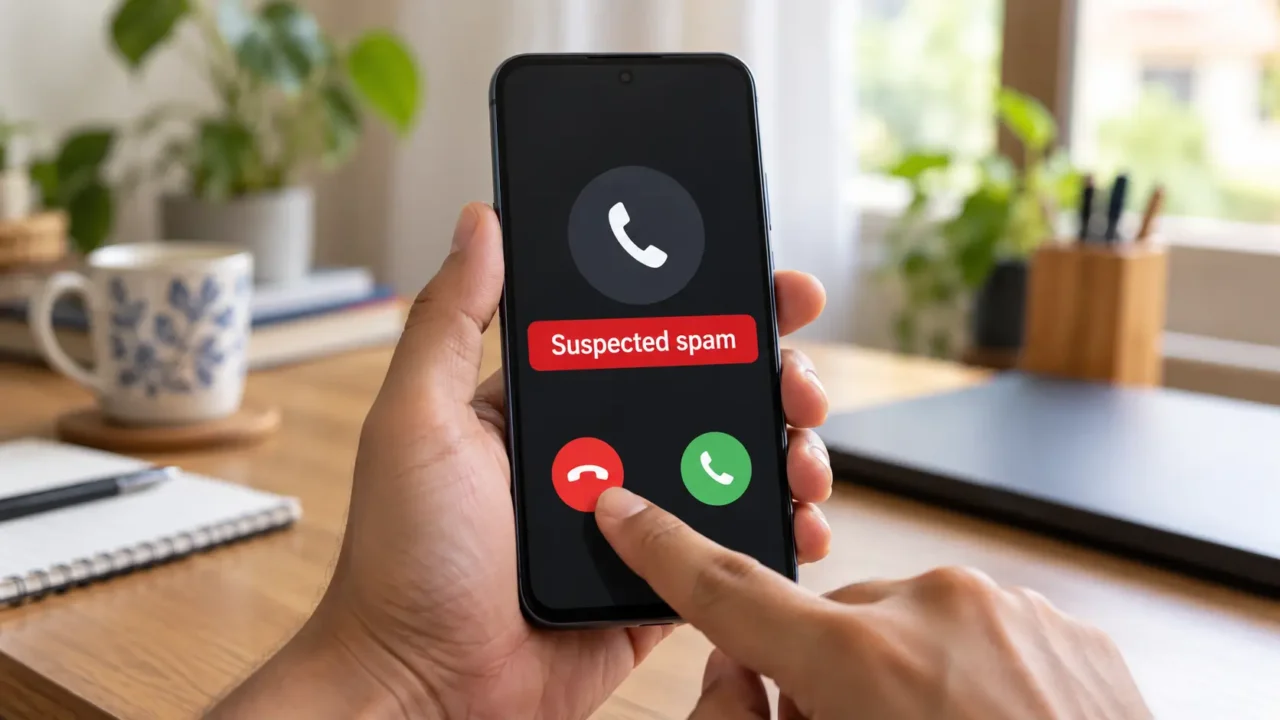
Telecom operators will have a more structured route to investigate suspected spam callers without waiting for consumer complaints under TRAI’s latest amendment. The framework combines AI-based detection, information sharing between networks and checks on the sender’s identity and use of telecom connections.
For residents of Noida, Greater Noida and Greater Noida West, the useful distinction is between a suspected-spam alert and enforcement action. A flag prompts further checks; it does not automatically establish a violation.
The Telecom Regulatory Authority of India issued the Telecom Commercial Communications Customer Preference (Third Amendment) Regulations, 2026 on September 18. The notification provides phased commencement, so the entire framework should not be described as already operational on September 30.
How operators will investigate suspected spam
Under the new Regulation 21A, the network receiving a call must share a number identified as having a high probability of sending unsolicited commercial communication with the originating operator immediately, and within two hours at the latest.
The originating operator then has one business day to identify and share the sender’s unique KYC identifiers. Other operators have one business day after receiving those identifiers to identify connections allotted to the same sender.
Networks must examine, within the next business day, whether other numbers belonging to that sender were similarly flagged during the preceding ten days. Five or more flagged numbers linked to the same sender within ten days trigger the graded verification process.
What penalties can follow?
The amendment distinguishes the AI detection route from action following an investigated consumer complaint.
| Route or stage | Action specified |
|---|---|
| First instance under the AI detection route | KYC re-verification within the next three business days. Failed verification is handled under the applicable KYC guidelines. |
| Second instance under that route | Physical KYC verification and misuse checks within the next five business days. A KYC mismatch or established misuse leads to a 15-day bar on outgoing services across the sender’s telecom resources. |
| Further instance under that route | If investigation finds misuse, the repeat-violation provisions apply, including one-year disconnection and blacklisting. |
| First violation established through the complaint route | A 15-day bar on outgoing services across the sender’s telecom resources. |
| Subsequent violations established through the complaint route | One-year disconnection and blacklisting, with no new telecom resources allotted during that period. |
These measures can extend to connections registered to the sender even if each connection was not used for the offending communication.
The repeat-violation provision allows one telephone number to be retained with outgoing services barred, while permitting notified emergency outgoing services.
When will the rules take effect?
The commencement clock runs from publication in the Official Gazette. The September 18 notification date should not, by itself, be used to calculate the rollout dates.
| Period after Gazette publication | Provisions covered |
|---|---|
| After 30 days | Most amendments, including the new AI detection and investigation framework. |
| After 60 days | Specified provisions covering advance declaration of automated calls, A2P termination charges, interfaces for virtual network operators and misuse of message headers or content templates. |
| After 90 days | The new consumer appeal provision, corroboration of complaint data with AI detection data, and specified action over wrongly categorised content templates. |
What changes for promotional and automated calls?
The amended preference system provides for sending BLOCK PROMO to 1909 to block promotional commercial communication across categories, modes, time bands and days. Transactional, service and government communications are excluded from this block.
Existing “FULLY BLOCK” preferences must be migrated within 15 days of commencement, rather than within 15 days of the notification date.
For application-to-person, or A2P, calls, senders must declare their use of automated calling and the relevant calling numbers to their operator in advance. Undeclared A2P calls will be treated as unsolicited commercial communication.
The permitted charge of up to five paisa per minute is an inter-operator termination charge, subject to exemptions.
Can users still block calls themselves?
Yes. TRAI’s framework restricts blanket spam tagging, filtering or blocking by call-management applications for designated commercial and government number series. The official announcement identifies series including 140xx, 1600xx and 1601xx.
Individual users retain the freedom to block or filter calls on their own devices.
What residents can do now
- Use 1909 or the TRAI DND app to manage preferences and complain about unwanted commercial calls or messages.
- Keep the sender’s number, date, time and a description of the communication ready.
- Save the complaint reference supplied by your operator so you can track the response.
For other urgent reporting routes, residents can also keep PON’s Noida emergency numbers guide handy.
Official sources
- TRAI: Third Amendment Regulations, 2026
Notification dated September 18. Controlling text for commencement, investigation, enforcement and preference changes. - TRAI: Press Release No. 119 of 2026
Official explanation of the amendment’s main provisions. - TRAI: Customer preference registration
Official channels for managing communication preferences. - TRAI: Complain or report against unsolicited commercial communication
Reporting channels and details to keep ready.