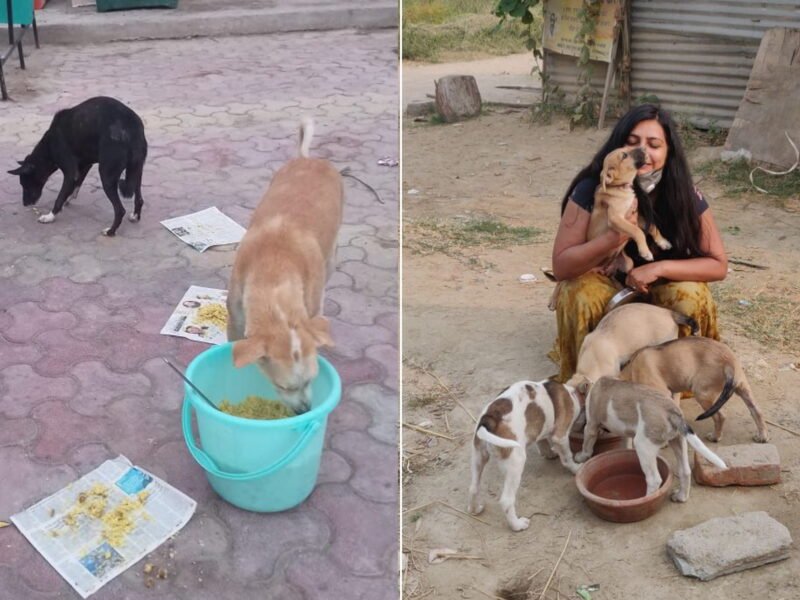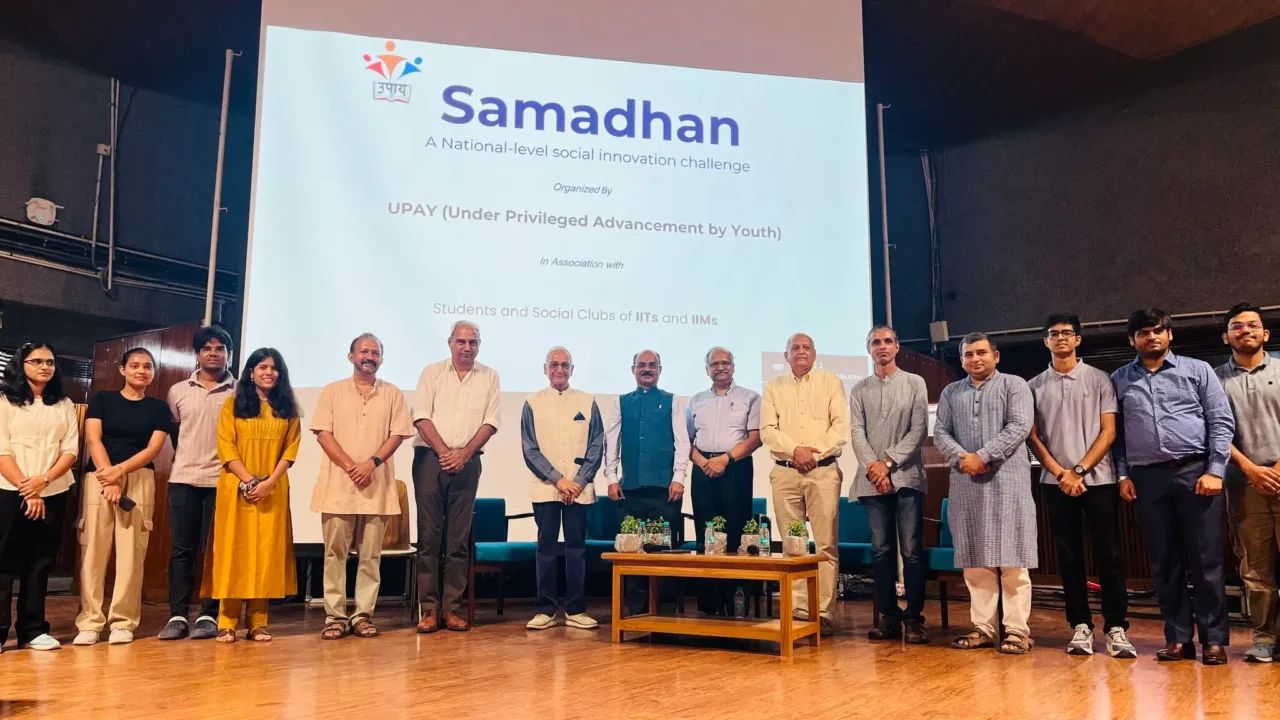
What began with a few children in a village near Nagpur in 2010 is now bringing hundreds of college students into the process of solving problems faced by grassroots organisations.
UPAY, or UnderPrivileged Advancement by Youth, is running the 2026–27 edition of SAMADHAN, a national social innovation challenge built around a relatively simple proposition: instead of asking students to solve hypothetical case studies, give them problems that NGOs and communities are actually dealing with.
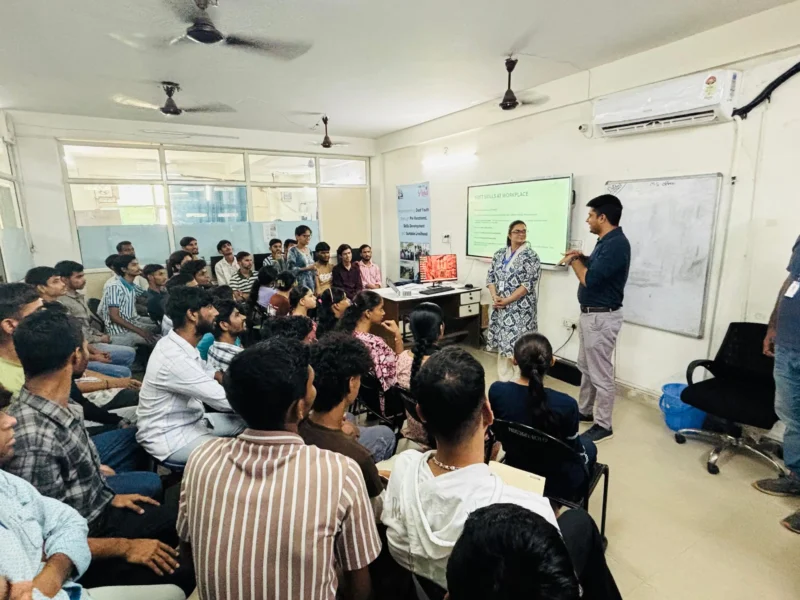
According to information shared by UPAY with Pulse of Noida, 182 teams representing approximately 500 students are participating in the current edition.
The programme also has a direct Noida connection. FDDI Noida is an institutional partner, students from institutions including FDDI Noida and Hierank Business School Noida are participating, and UPAY itself operates a Noida centre that currently serves approximately 50 learners with the support of around 10 community volunteers.
But SAMADHAN makes more sense when viewed in the context of how UPAY itself started.
Quick Summary
| Programme | SAMADHAN 2026–27 |
| Organiser | UPAY, UnderPrivileged Advancement by Youth |
| Current participation | 182 teams, approximately 500 students |
| Current stage | Registration for the current edition ran from 1 August to 5 September 2026. The problem statements went live on 10 September, and Phase-I submissions are due on 30 September. |
| Phase-I submission deadline | 30 September 2026 |
| Regional rounds | 1–31 October 2026 |
| Field visits and pilot testing | 1 to 30 November 2026 |
| Grand Finale | 10 January 2027 |
| Noida institutional partner | FDDI Noida |
| UPAY Noida Centre | Approximately 50 learners |
| Community volunteers at Noida centre | Around 10 |
| Founder | Varun Srivastava |
| UPAY founded | 2010 |
What is SAMADHAN?
SAMADHAN is designed to connect students with problems submitted by NGOs and other social-sector organisations.
Participating teams move beyond an initial idea through multiple stages that include problem understanding, solution development, mentoring, interaction with organisations and, for selected teams, field visits and pilot testing.
The purpose is not simply to produce a presentation for a competition.
The programme attempts to expose students to the conditions in which social organisations actually operate, including limited resources, community behaviour, volunteer coordination, funding constraints, implementation challenges and the need to design solutions that can work outside a college environment.
Registration for the current edition ran from 1 August to 5 September 2026. The problem statements went live on 10 September, and Phase-I submissions are due on 30 September.
Regional rounds will run from 1 to 31 October, followed by field visits and pilot testing from 1 to 30 November. Further mentoring will follow, with the Grand Finale scheduled for 10 January 2027.
182 teams and about 500 students in the 2026–27 edition
UPAY says this year’s edition has received participation from 182 teams representing approximately 500 students.
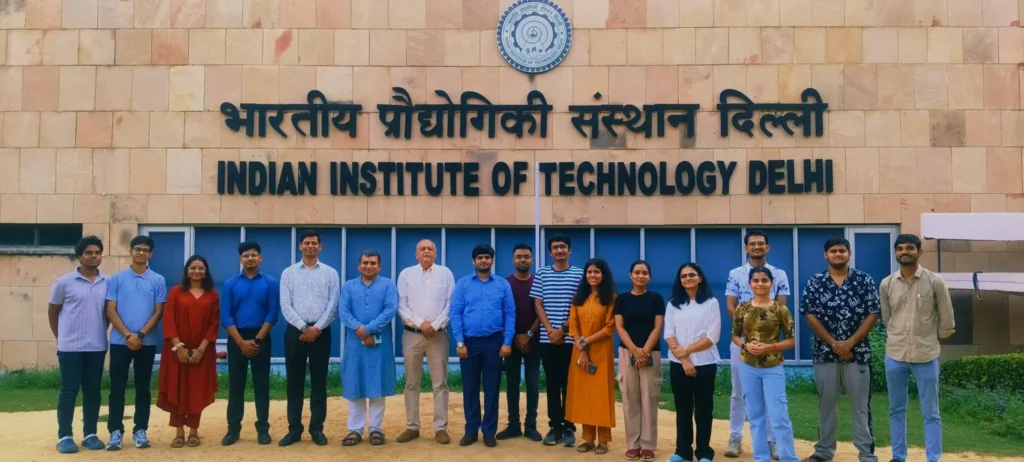
Institutions represented include IIT Bombay, IIM Calcutta, FDDI Noida, Hierank Business School Noida, GL Bajaj Institute of Management and Research, Pune Vidyarthi Griha’s College of Engineering and Technology, and Ness Wadia College of Commerce, among others.
The institutional network around the programme includes FDDI Noida as an institutional partner, while InFED, IIM Nagpur and IIT Delhi have been identified by UPAY as incubation partners. Shiksha, IIM Calcutta is also associated with the programme.
Nazariya is working with SAMADHAN as a Knowledge and Student Engagement Partner.
Upcoming Engineer is associated with SAMADHAN as a Student Engagement Partner.
The social organisations associated with this edition span different areas of community work. They include organisations such as Rihaai Foundation, Mahima Charitable Trust, Buddy4Study, Vibha India, ECHO India, Ecohunar Foundation, iTeach Schools and others.
Rather than treating those organisations simply as beneficiaries of a student event, the SAMADHAN model places their operational problems at the centre of the challenge.
What happens when a student solution leaves the competition?
One of the more useful tests of any innovation challenge is what happens after the presentations and prizes are over.
UPAY points to a project from the previous edition as an example.
Team Sumukh from Symbiosis College, Nagpur developed a technology-enabled Volunteer Management Dashboard as part of SAMADHAN.
According to UPAY, the dashboard was subsequently implemented within the organisation and is now being used by its Programme Support Team.
UPAY says the system has helped reduce manual work associated with volunteer management by approximately 40%.
The figure is an organisation-reported estimate, but the implementation itself is important because it moves the project beyond the usual hackathon cycle of problem statement, presentation and award.
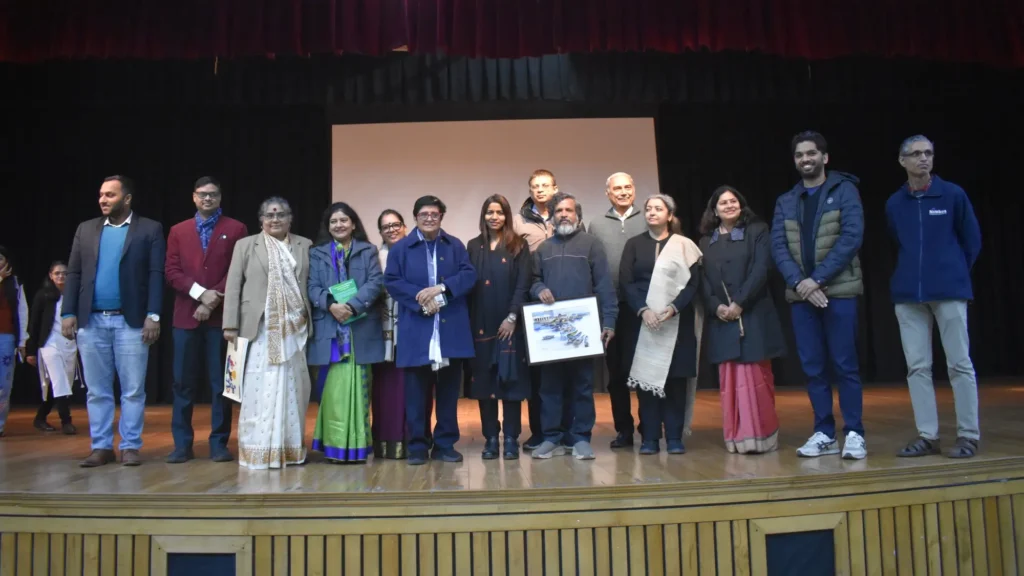
Team Milley, Team Casers and Team Sumukh
Several teams from the previous edition reached the Grand Finale at IIT Delhi.
Team Milley from IIT Delhi won SAMADHAN 2025–26.
Team Casers from IIT Bombay, which worked on a sustainable funding model for social-impact organisations, was the first runner-up.
Team Sumukh from Symbiosis College, Nagpur developed the volunteer-management system that UPAY says is now being used internally.
UPAY says solutions developed by some of the other participating teams from the previous edition remain in testing and are being explored for further application.
That distinction matters. A competition can generate many ideas, but only subsequent testing can show which ones are practical enough to become part of an organisation’s day-to-day work.
The Noida connection goes beyond the competition
For Noida, SAMADHAN is not only a national programme with local college participation.
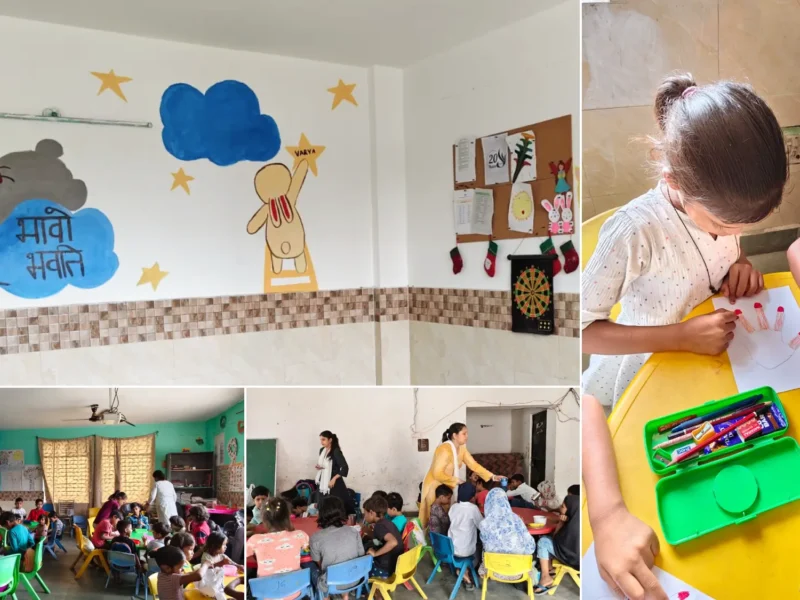
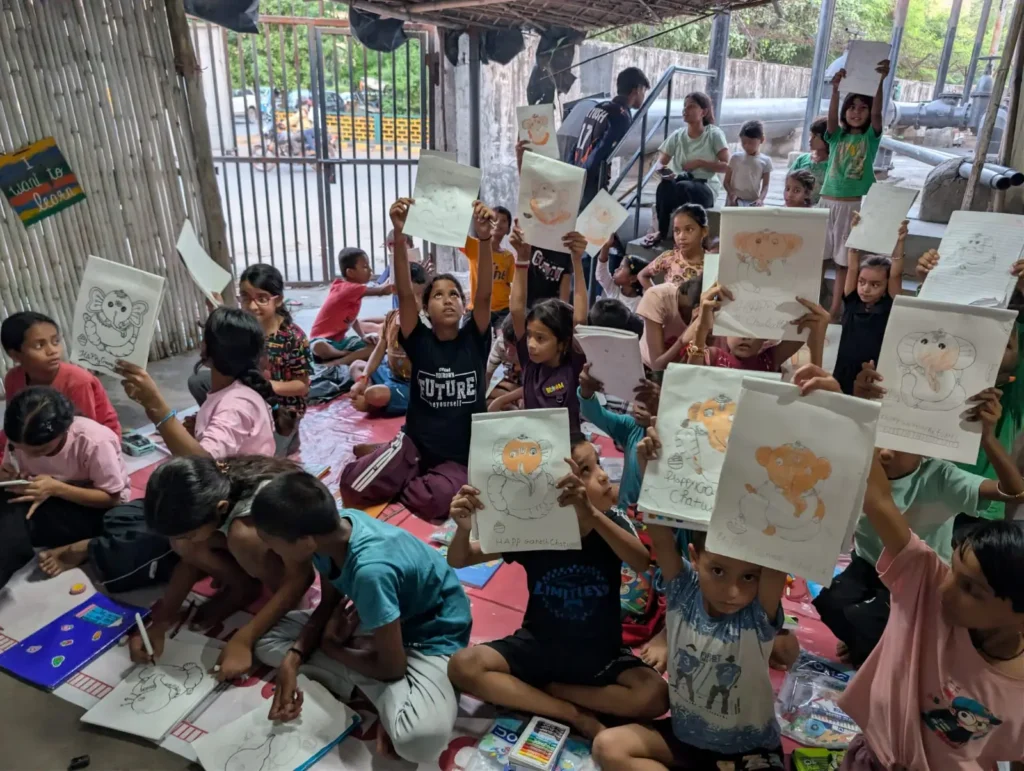
UPAY also operates a centre in the city.
According to the organisation, its Noida centre currently works with approximately 50 learners and around 10 community volunteers.
The centre is coordinated by Khushboo, who oversees its day-to-day functioning and coordination.
It forms part of UPAY’s wider education and community-engagement work.
Noida has a growing ecosystem of organisations using community-led approaches to education and inclusion. Pulse of Noida has previously documented how Pehchaan The Street School is helping more than 100 children from its Noida centre continue their education in formal schools, as well as the education, skills and employment model developed by Noida Deaf Society for deaf children and youth.
UPAY adds another model to this local landscape, combining community education with volunteer participation and, through SAMADHAN, student-led problem solving.
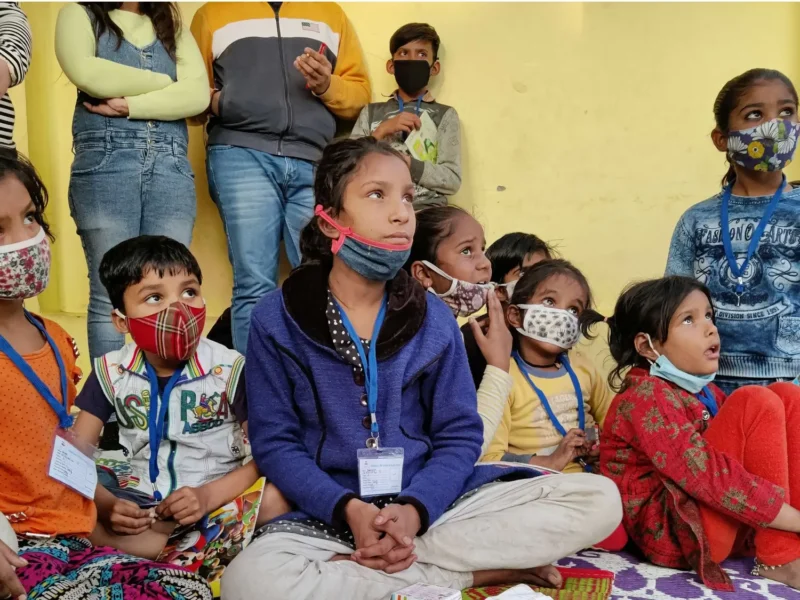
UPAY started with a few children in Kumbhari
The scale of SAMADHAN is quite different from where UPAY began.
The organisation traces its origins to 2010 in Kumbhari, a village around 40 km from Nagpur.
Founder Varun Srivastava, an IIT Kharagpur graduate who went on to work as an engineer with NTPC, encountered children in the village who were not pursuing formal education.
Instead of beginning with a large organisation or institutional programme, he started teaching.
Material shared by UPAY with Pulse of Noida describes an early period in which Srivastava would sit with a blackboard and chalk and wait for children to join. At one stage, the class consisted of just three children.
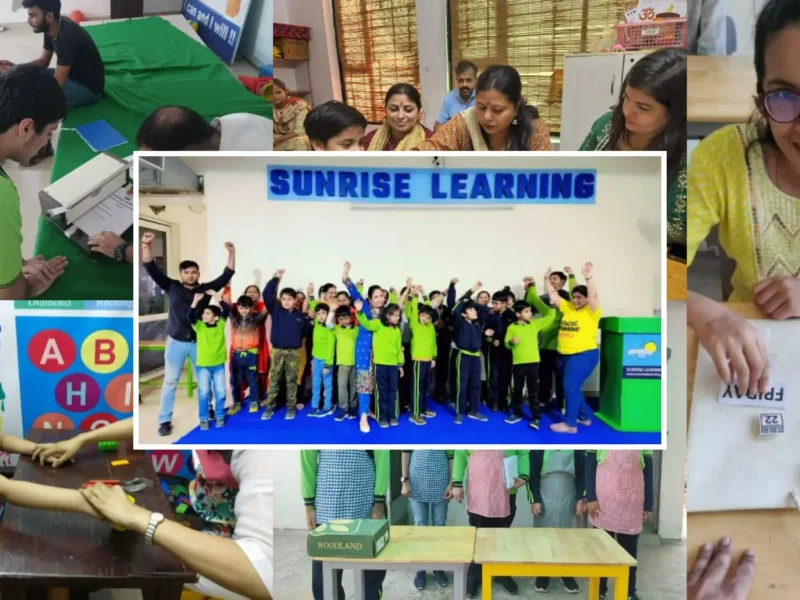
Along with a small group of friends and volunteers, those classes gradually developed into UPAY’s first Reach & Teachcentre.
UPAY’s official account of its history also places the organisation’s beginning in Kumbhari in 2010 and describes Reach & Teach as its first learning-centre model.
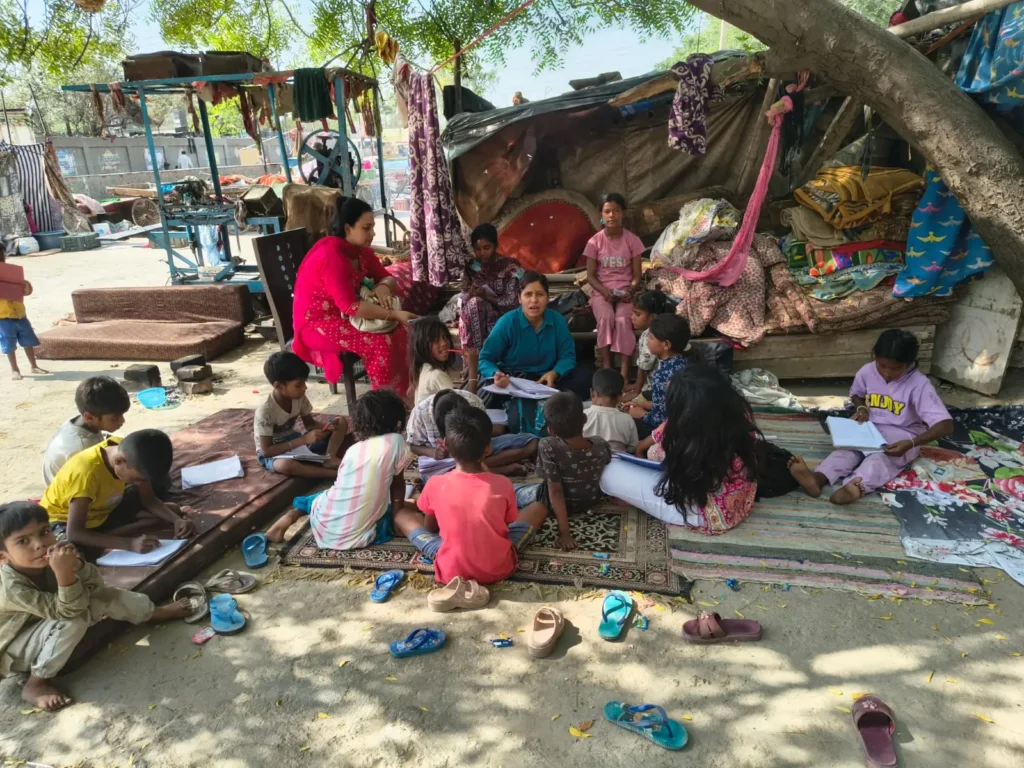
When children could not reach the centre, the classroom moved to them
The organisation soon encountered another problem.
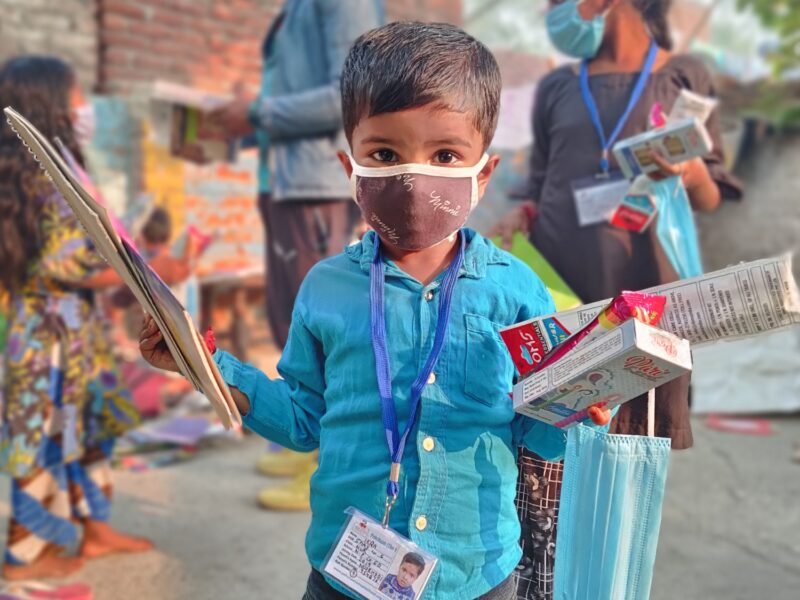
Some children could not come to a learning centre at all, particularly children living or working on streets.
That led to Footpathshaala.
The idea was to take learning to the places where children were already living or spending their time rather than making access to a conventional classroom a precondition for education.
The model became one of UPAY’s principal education initiatives alongside Reach & Teach. UPAY continues to describe both programmes as central to its effort to make education more accessible to children from underserved communities.
Over time, the organisation expanded through volunteers and community-led centres into locations including Nagpur, Gurugram, Pune, Delhi, Noida and Bengaluru.
UPAY’s account of that journey is not presented as a continuous expansion without setbacks. Material shared with Pulse of Noida says some centres closed, some operating models changed, and the organisation adjusted its approach as it learned what worked in different communities.
That process of adapting is relevant to SAMADHAN too. The student challenge is built around the same basic question: can a proposed solution survive contact with the circumstances in which it is supposed to work?
Who is Varun Srivastava?
Srivastava’s role in UPAY predates the creation of a formal organisation.
The material shared by UPAY says he began by teaching children himself and continued being involved with the Kumbhari centre while building his professional career as an engineer.
The first centre remained personally significant to him.
UPAY recounts that, on returning to Kumbhari years later, Srivastava met former students who had grown up after attending the centre. Some told him that UPAY and its volunteers had played an important role in their lives.
That gives the organisation’s 16-year journey a useful measure beyond the number of centres or programmes.
Children who were present during the earliest years are now adults, while the organisation that began with direct teaching is experimenting with a different kind of youth participation through SAMADHAN.
UPAY’s current executive-body page lists Srivastava as its Chairman and Director of Outreach.
UPAY now works beyond classroom education
Education remains central to UPAY, particularly through Reach & Teach and Footpathshaala, but the organisation says its work has expanded into other areas over time.
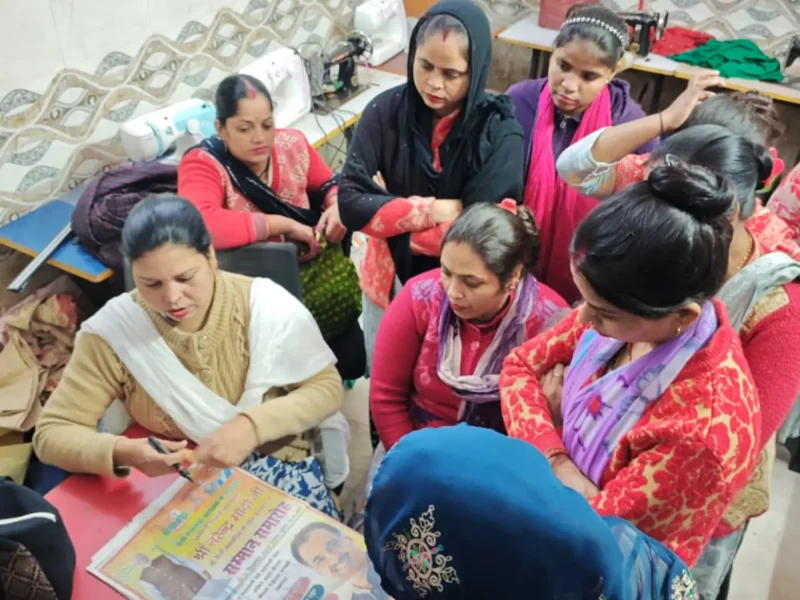
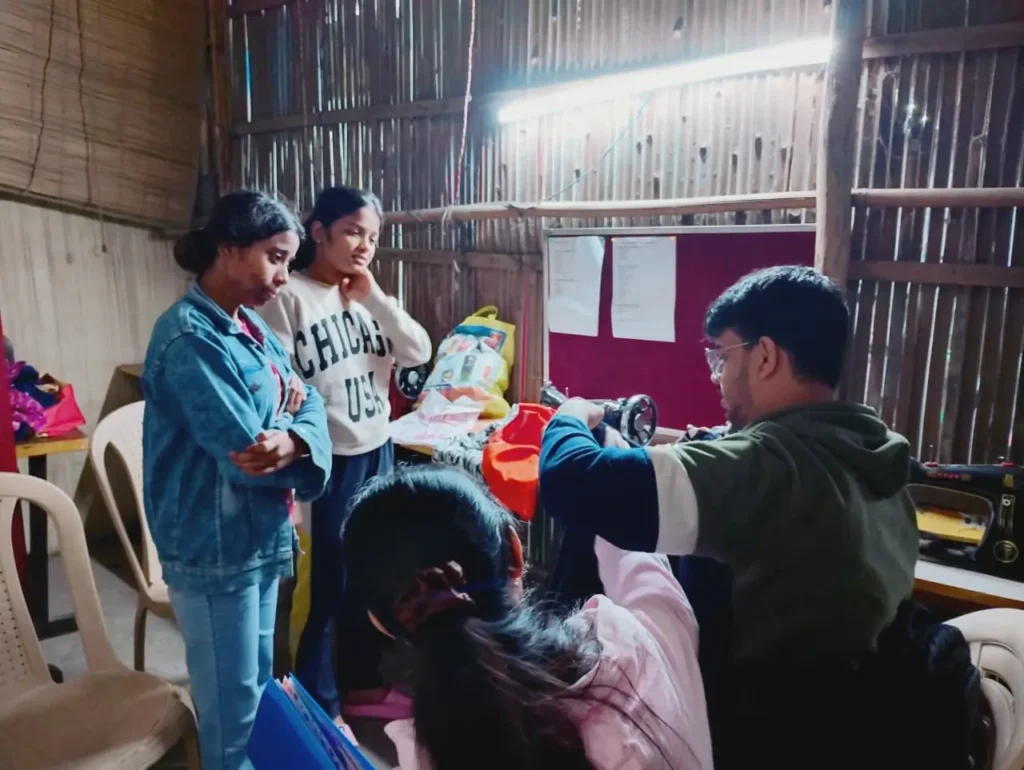
These include skill development, women’s empowerment, hygiene and sanitation, community support and social leadership.
Its stated mission is centred on creating a sustainable ecosystem for underserved communities by enabling, educating and empowering children.
SAMADHAN fits into that evolution because it brings another group into the process: college students who may have technical, design, management, business or research skills but limited direct exposure to the operational realities of community organisations.
Why field visits matter
A student can develop an apparently convincing solution without understanding the people expected to use it.
That is why the field-testing stage of SAMADHAN may ultimately be more important than the first presentation.
Selected teams are expected to interact with organisations, understand the operating environment and test whether their proposals are practical.
A dashboard, funding model or livelihood intervention may make sense in a classroom but fail if it increases work for volunteers, depends on unavailable infrastructure, requires unrealistic funding or does not reflect how a community actually behaves.
The previous edition offers at least one example of a solution progressing beyond that stage through Team Sumukh’s volunteer-management dashboard.
The more meaningful measure for the 2026–27 edition will therefore not be how many ideas reach the finale, but how many survive field testing and are eventually adopted, adapted or developed further.
SAMADHAN 2026–27: What happens next
The next immediate milestone is 30 September 2026, the deadline shared by UPAY for Phase-I submissions.
Field visits and pilot testing are scheduled for November, followed by mentoring and subsequent stages of the competition.
The Grand Finale is scheduled for 10 January 2027.
Between now and then, the key question is whether participating teams can convert student ideas into solutions that organisations can realistically test and use.
For Noida, there is another dimension to watch: how local institutions, students and UPAY’s own Noida centre participate as the programme moves from problem statements to field implementation.
SAMADHAN may begin on a college campus, but its success will ultimately have to be measured somewhere else, inside the organisations and communities whose problems the students are trying to solve.
Contact UPAY
Noida communication address: P-7, Ground Floor, P Block, Sector 12, near Noida Stadium/Police Station, Noida, Uttar Pradesh – 201301
Phone: +91 84548 80129
Email: info@upayngo.org
Website: upayngo.org
SAMADHAN: samadhan.upayngo.org
LinkedIn: UPAY – UnderPrivileged Advancement by Youth
Facebook: facebook.com/upayngo