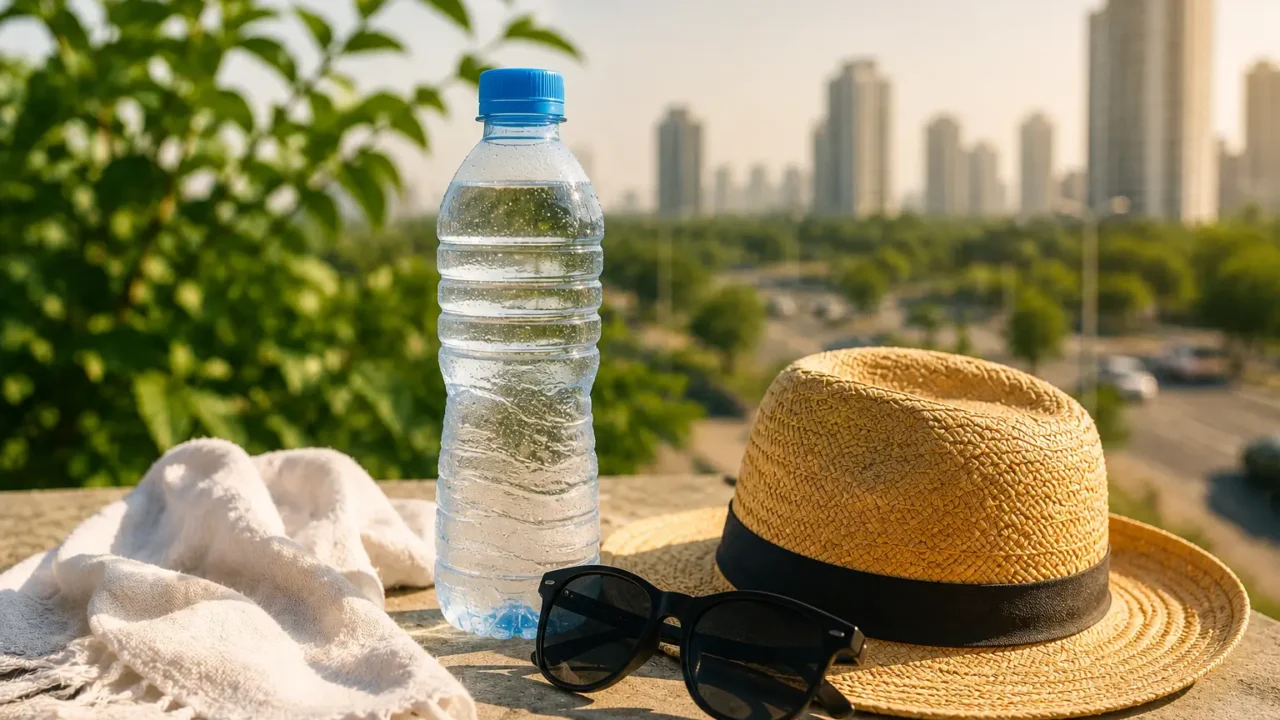
Extreme heat affects daily life in Noida, especially for children, senior citizens, outdoor workers, delivery riders and people commuting during peak afternoon hours. Here is a practical safety guide for residents.
Noida’s summer heat can be harsh, especially when high temperatures combine with humidity, traffic, concrete surfaces and long outdoor exposure.
For residents, the common questions are practical: Should you drink cold water after coming in from the sun? How much water is enough? When should you avoid going out? What are the warning signs of heat exhaustion? And what should families do for children and senior citizens?
The simple answer is this: during extreme heat, the priority is to stay hydrated, avoid direct sun during peak hours, reduce physical exertion and respond early to signs of heat stress.
Is drinking cold water after sun exposure dangerous?
For most healthy people, drinking water after coming in from the sun is important. The bigger risk is dehydration, not water itself.
However, after heavy sun exposure, it is better to cool down gradually. Sit in shade or indoors, rest for a few minutes, and drink water slowly instead of gulping large quantities at once.
Avoid very sugary drinks, alcohol and excessive caffeine in extreme heat. These may not help hydration and can worsen discomfort for some people.
If someone feels dizzy, confused, extremely weak, nauseous or stops sweating despite heat exposure, treat it as a warning sign and seek medical help.
Peak heat hours: avoid unnecessary outdoor work
The National Disaster Management Authority advises people to avoid going out in the sun, especially between 12 noon and 3 PM, and to avoid strenuous activity when the outside temperature is high.
For Noida residents, this is especially relevant for:
- schoolchildren returning home
- delivery workers
- traffic police personnel
- construction workers
- domestic workers
- market vendors
- elderly residents going for afternoon errands
- people using two-wheelers or public transport
If outdoor work is unavoidable, carry water, cover the head, use light cotton clothing and take breaks in shade.
What to drink during extreme heat
Water remains the most important drink.
Residents can also use:
- ORS, if advised or needed
- lemon water with salt and sugar
- buttermilk
- coconut water
- plain water at regular intervals
- homemade fluids without excessive sugar
Do not wait until you feel thirsty. Thirst is often a late signal, especially among children and elderly people.
What to avoid
During extreme heat, avoid:
- stepping out in peak afternoon hours unless necessary
- heavy exercise outdoors
- sitting inside parked cars
- alcohol
- excessive tea or coffee
- very oily or heavy meals before outdoor travel
- ignoring dizziness or weakness
- leaving children or pets inside vehicles
- sudden intense activity after long sun exposure
Warning signs of heat illness
Residents should take these symptoms seriously:
- dizziness
- headache
- nausea
- heavy sweating
- muscle cramps
- weakness
- rapid heartbeat
- confusion
- fainting
- very high body temperature
- dry hot skin
- reduced urination
Heat exhaustion can worsen if ignored. Heatstroke can be life-threatening and needs urgent medical attention.
What to do if someone is affected by heat
If someone appears affected by heat, move the person to a cool shaded place, loosen tight clothing, fan the person and offer water or a rehydrating drink if the person is conscious. NDMA advises cooling the person with a wet cloth and consulting a doctor if symptoms worsen, last long or the person becomes unconscious.
Do not force water into the mouth of an unconscious person. Seek medical help immediately.
Children need extra care
Children may not always explain heat discomfort clearly.
Parents should watch for:
- unusual tiredness
- irritability
- headache
- vomiting
- reduced urination
- excessive thirst
- dizziness
- refusal to eat or drink
School bags, uniforms, buses and afternoon pickup delays can increase heat stress. Children should carry water and avoid long outdoor play during peak heat.
Senior citizens are more vulnerable
Older residents may be more vulnerable to dehydration and heat stress, especially if they have diabetes, blood pressure issues, kidney disease, heart conditions or take regular medication.
Families should ensure that senior citizens:
- drink water regularly
- avoid afternoon errands
- stay in ventilated rooms
- avoid long exposure during power cuts
- keep ORS or fluids available
- seek medical advice early if weakness, confusion or dizziness appears
Outdoor workers need practical protection
Noida’s heat affects people who keep the city running: guards, delivery riders, traffic staff, vendors, construction workers, gardeners and sanitation workers.
Employers, RWAs and market associations should ensure:
- shaded resting points
- drinking water access
- staggered outdoor work
- rest breaks during peak heat
- first-aid support
- awareness of heat illness symptoms
Heat safety is not only an individual issue. It is also a workplace and community responsibility.
What RWAs can do
RWAs can help residents during heat periods by:
- sharing official weather and heat alerts
- keeping drinking water points for guards and workers
- advising residents to avoid afternoon outdoor activity
- checking on elderly residents living alone
- ensuring guards get shaded seating
- keeping emergency contact numbers visible
- avoiding unnecessary outdoor maintenance work during peak heat
The bottom line
Noida residents should treat extreme heat seriously.
Drink water regularly, avoid peak afternoon exposure, rest in shade, wear light cotton clothing and respond early to dizziness, weakness or confusion.
Cold water itself should not become the main fear. The larger danger is dehydration, prolonged sun exposure and ignoring early symptoms of heat illness.
Source of Information
This report is based on public heatwave safety guidance issued by the National Disaster Management Authority and heatwave guidance published by the India Meteorological Department / PIB. Residents with medical conditions, elderly family members, infants or heat-related symptoms should consult a qualified doctor.