As monsoon conditions move further into parts of Uttar Pradesh and Delhi-NCR, Noida and Greater Noida residents should begin a simple but important seasonal health routine: checking for stagnant water, watching fever symptoms carefully and keeping housing societies alert to mosquito breeding risks.
The India Meteorological Department said in its July 1 update that conditions were favourable for the further advance of the southwest monsoon into some more parts of Uttar Pradesh, Haryana-Chandigarh-Delhi, Punjab and nearby regions during the following two days. For Noida residents, this is the point in the season when rain, humidity and stored water can increase mosquito-breeding risks if homes, balconies, rooftops, basements and society common areas are not checked regularly.
This article does not claim any current dengue case count for Gautam Buddh Nagar. Pulse of Noida did not find a public July 2026 district dengue bulletin at the time of writing. The purpose of this guide is preventive: what residents should do now, what symptoms need attention and what societies should inspect before the season intensifies.
Why dengue prevention matters during monsoon
Dengue is a mosquito-borne viral disease. India’s National Center for Vector Borne Diseases Control, under the Ministry of Health and Family Welfare, describes dengue as a major mosquito-borne disease of public-health significance in India. Its national clinical guidelines also note that there is no specific antiviral drug for dengue, which is why timely recognition, monitoring and medical management matter.
The mosquito associated with dengue, Aedes, can breed in clean stagnant water, including water stored in overhead tanks, coolers, containers, trays, buckets, flower pots and other small collection points. NCVBDC public information says dengue vector mosquitoes usually bite during the day, especially in the morning and afternoon, and can rest indoors in dark corners, under furniture and around stored items.
For a high-rise city like Noida, the risk is not only in open drains or public spaces. It can also be inside apartments, balconies, basement areas, shaft spaces, terrace tanks, construction sites, parking corners and society landscaping areas.
Also read: Noida health and wellness guide
What Noida residents should check at home
Residents should begin with a 10-minute weekly inspection.
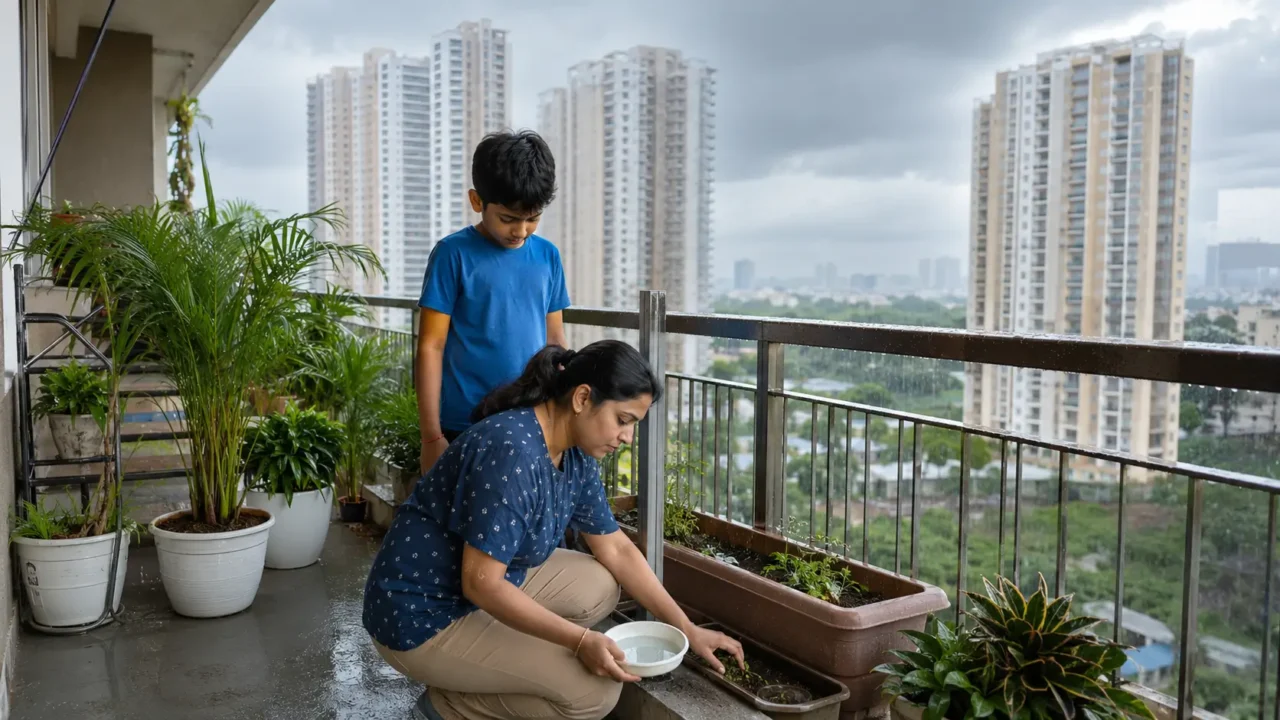
Check balcony corners, plant trays, AC outdoor unit areas, unused buckets, old paint containers, pet bowls, water coolers, terrace corners and bathroom utility areas. Empty, dry or cover anything that can hold water.
In apartments, AC drain water and balcony seepage often collect unnoticed. During the humid monsoon phase, even small pockets of water can remain for days. Families should also check behind curtains, under beds and around dark storage corners where mosquitoes may rest indoors.
If you use a cooler, clean and dry it regularly. If a container cannot be emptied, keep it tightly covered. If you keep plants, avoid water standing in saucers below pots.
What housing societies should inspect
RWAs, AOAs and facility teams should treat dengue prevention as a society-level maintenance issue, not only a household responsibility.
The key inspection points are:
- basement parking areas
- water pump rooms
- rooftop tanks
- terrace drains
- construction or repair zones
- unused pots and planters
- children’s play areas
- garden corners
- garbage collection points
- club house areas
- swimming pool surroundings
- open shafts and service ducts
Society teams should document weekly checks and inform residents if fogging, anti-larval treatment or cleaning drives are being conducted. Residents should also avoid creating panic on WhatsApp groups unless there is confirmed information from the health department, hospital or society management.
Symptoms residents should not ignore
A sudden high fever during monsoon should not be casually dismissed as “seasonal fever”, especially if it comes with body ache, headache, pain behind the eyes, nausea, vomiting, rash, tiredness or unusual weakness.
Families should consult a qualified doctor for diagnosis and testing instead of self-medicating. Dengue can require monitoring, especially if fever continues or symptoms worsen.
Immediate medical attention is important if the patient has persistent vomiting, bleeding from gums or nose, severe abdominal pain, breathlessness, extreme weakness, drowsiness, cold hands and feet or reduced urine output.
This is especially important for children, elderly residents, pregnant women and people with existing health conditions.
Also read: AC drainage and monsoon humidity issues in Noida homes
What not to do
Do not take antibiotics or strong painkillers without medical advice. Do not rely only on home remedies if fever is high or persistent. Do not wait for platelet counts to fall before consulting a doctor.
Residents should also avoid circulating unverified case-count messages on society groups. A Delhi figure, a hospital anecdote or an old news report should not be treated as current Noida data.
What schools and offices can do
Schools, offices, gyms, clinics, cafes and market associations should also inspect their premises. Water collection around planters, rooftop areas, outdoor AC units, basement corners and construction material should be cleared.
For schools, the checklist is simple: clean water storage points, keep toilets and wash areas dry, inspect playground corners and communicate fever-related absence precautions to parents without creating alarm.
For offices and commercial complexes, facility teams should inspect common toilets, pantry areas, terrace equipment, underground parking and landscaping zones.
When to call the authorities
Residents should report visible mosquito breeding, repeated waterlogging or neglected public areas to the relevant local authority or society management. In group housing, the first step should usually be the maintenance office or AOA/RWA. For public spaces, residents should use official civic complaint channels of the local authority and include the exact location, photos if available, and a short description of the stagnant water or sanitation issue.
If a resident has fever symptoms, the priority should be medical consultation, not waiting for civic action.
Useful official contacts for residents
For a medical emergency, residents can call 108 for ambulance support. The Gautam Buddh Nagar district health page also lists 102 for ambulance support for pregnant women and children, the National Health Helpline at 1800-180-1104, and a toll-free helpline for government hospital patients at 1800-180-5145.
For mosquito breeding, stagnant water, fogging, blocked drains, garbage or sanitation-related complaints in Noida, residents can use Noida Authority’s complaint channels. Noida Authority lists its contact numbers as 0120-2425025/26/27and 0120-2422210-317, with email at noida@noidaauthorityonline.com. The Authority also says residents can send complaints with their name, address and complaint details to 9205559204.
For online civic grievances, residents can use the official Noida grievance portal or the Uttar Pradesh Jan Sunwai / IGRS platform. While filing a complaint, residents should add the exact location, sector or society name, photos if available, and a clear description of the stagnant water or sanitation issue.
The bottom line
Noida’s monsoon health routine should start before cases become a headline. The safest approach is simple: remove stagnant water, keep homes and society spaces dry, watch fever symptoms carefully and consult a doctor early when symptoms are concerning.
For residents, this is a practical weekly habit. For RWAs and facility teams, it is a seasonal responsibility. For the city, prevention is easier than outbreak control.
Sources
India Meteorological Department; National Center for Vector Borne Diseases Control, Ministry of Health and Family Welfare; Gautam Buddh Nagar district health page; Noida Authority official website; Uttar Pradesh Jan Sunwai / IGRS public grievance platform.