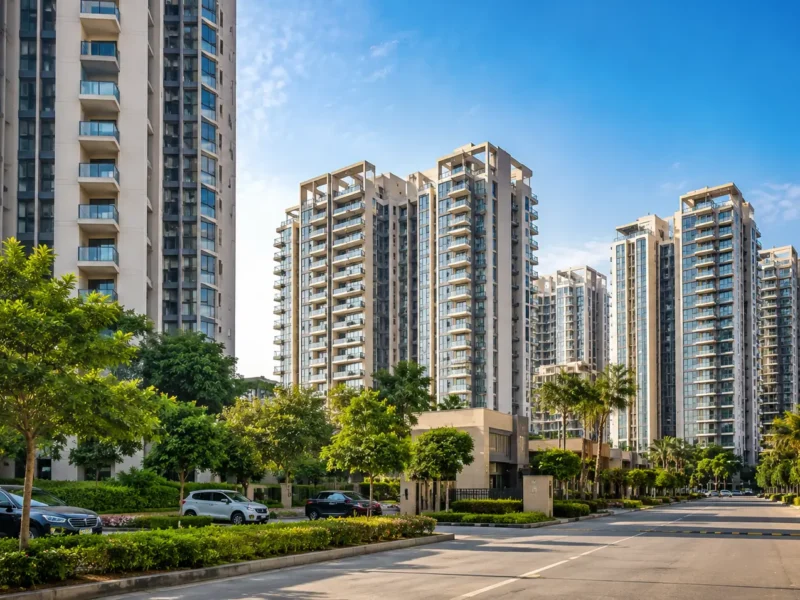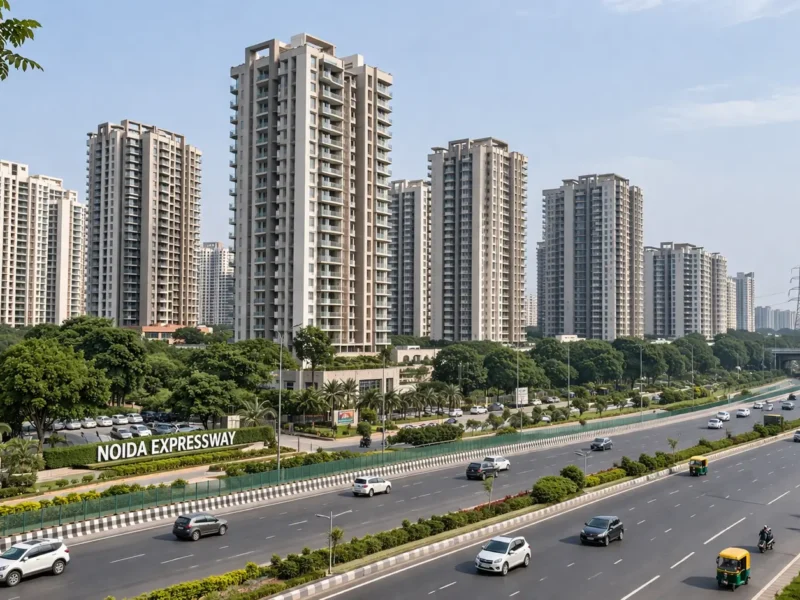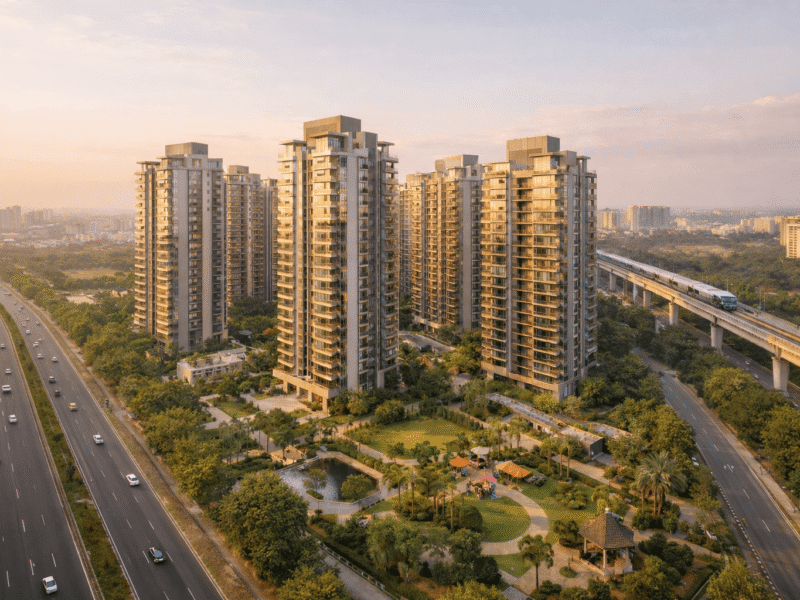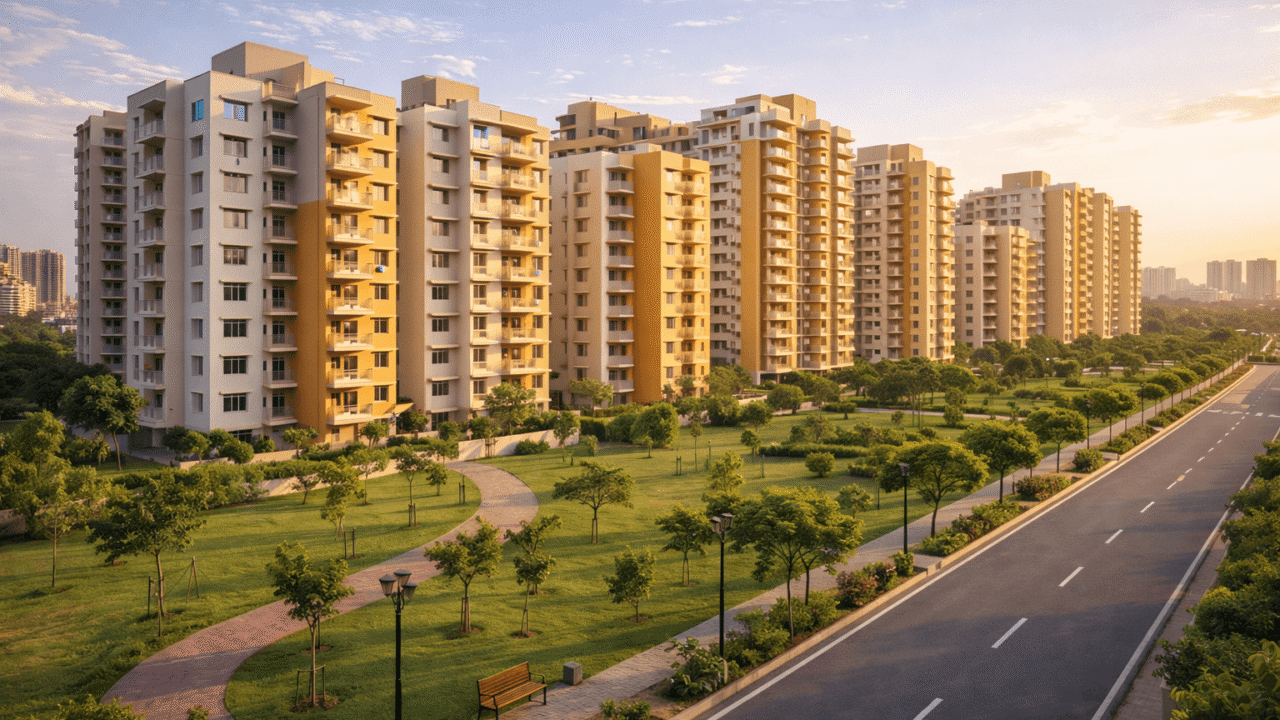
Noida and Greater Noida are actively expanding affordable housing initiatives to accommodate diverse income groups. With property rates in core Noida continuing to climb, these dedicated schemes offer a crucial lifeline in selected lower-cost segments and peripheral belts, targeting Economically Weaker Sections (EWS), Low-Income Groups (LIG), and Middle-Income Groups (MIG). Eligibility is strictly regulated, typically involving income limits, residency requirements, and a mandatory first-time homebuyer status.
Addressing Housing Needs in the NCR
The National Capital Region (NCR) continues to attract a significant population seeking employment and improved living standards. This consistent influx creates a sustained demand for housing across all income segments. Affordable housing initiatives are crucial for ensuring equitable urban development and providing stability for residents.
Both the Noida Authority and the Greater Noida Authority (GNIDA), alongside central government schemes, aim to make homeownership attainable. These efforts focus on providing well-planned residential units and plots at subsidized rates, with the sweet spot for middle-income buyers currently ranging between ₹20 Lakhs and ₹60 Lakhs. Understanding these programs is the first step for prospective homeowners.
Understanding Affordable Housing Schemes
The primary framework for affordable housing in India is the Pradhan Mantri Awas Yojana (PMAY). This central government scheme aims to provide housing for all eligible urban households. It operates through various components, including the Credit-Linked Subsidy Scheme (CLSS) and in-situ slum rehabilitation.
Prospective buyers must explicitly verify the current active status of PMAY subsidy windows and local authority notifications for 2026, as these central schemes are subject to annual budget revisions and strict application deadlines.
In addition to PMAY, local authorities periodically launch their own highly anticipated housing and plot schemes. The specific terms, conditions, and locations vary with each new announcement:
- Noida Authority: Often focuses on built-up flats in developing sectors.
- Greater Noida Authority (GNIDA): Frequently releases independent housing and plot schemes (like the recent BHS and LOP series).
- Yamuna Expressway Industrial Development Authority (YEIDA): Currently driving massive demand with residential plot schemes near the upcoming Noida International Airport.
Eligibility Criteria for Applicants
Eligibility for affordable housing schemes is typically based on several factors. Income is a critical component, with applicants falling into EWS, LIG, or MIG categories. The income ceilings for these categories are defined by the government and are subject to periodic review.

Applicants are generally required to be first-time homebuyers, meaning they or any family member should not own a pucca house anywhere in India. Residency proof for the respective city or state is often a mandatory requirement. Specific schemes may also have restrictions on property transfer; for example, affordable plots allotted by YEIDA cannot be sold or transferred for 10 years to maintain the scheme’s integrity.
Application Process and Required Documents
The application process for affordable housing schemes is conducted online through the official portals of the respective authorities. Interested individuals need to register, fill out the application form, and upload necessary documents.
A non-refundable processing fee is required to apply, which varies by authority. For 2025/2026 schemes, the Noida Authority charges a processing fee for flat/plot applications, GNIDA charges a standard ₹5,000 non-refundable processing fee, and YEIDA requires a ₹600 fee (plus GST) just to download the application form. In addition to the application fee, applicants must deposit Registration Money (Earnest Money Deposit), which is typically 10% of the total property value.
Key documents generally include an Aadhar card, PAN card, income certificate, residency proof, and bank statements. Applicants falling under reserved categories (such as SC/ST, who often receive a 50% concession on registration fees) must provide relevant caste certificates. It is essential to ensure all documents are accurately scanned (usually under 500KB) and up-to-date to avoid application rejection.
New Projects and Announcements 2026
The year 2026 is expected to see continued efforts from development authorities to address housing demand, particularly as major infrastructure projects like the Noida International Airport approach operational status.
Recent announcements have indicated a focus on sustainable and well-connected projects:
- Greater Noida West (Noida Extension): Remains the undisputed hub for affordable, budget-friendly apartment projects. This area is highly sought after by buyers looking for newly launched or under-construction 2 BHK flats in the ₹30 Lakhs to ₹45 Lakhs range.
- Established Greater Noida Sectors: Sectors like Omicron and Eta offer excellent secondary market opportunities where buyers can still find affordable ready-to-move housing options built by the Authority or private developers.
- YEIDA Plot Schemes: YEIDA continues to launch high-demand residential plots (ranging from 120 sq.m to 4000 sq.m) in sectors 16, 17, 18, 20, and 22D.
Prospective buyers should regularly check official websites for upcoming scheme notifications. The allotment process is strictly conducted via a computerized lottery system, ensuring fairness and transparency.
What Noida Residents Need to Know
- Stay Informed: Regularly monitor the official websites of the Noida Authority, Greater Noida Authority, and YEIDA for scheme announcements and updates.
- Understand Eligibility: Carefully review the specific eligibility criteria for each scheme before applying to ensure you meet all requirements.
- Prepare Documents: Keep all necessary documents, such as income certificates, identity proofs, and residency proofs, ready and digitized for online applications.
- Beware of Unofficial Channels: Only rely on information from official government sources and avoid unofficial agents or websites promising “guaranteed” allotment.
- Financial Planning: Assess your financial capacity, including the non-refundable application fee, the 10% registration deposit, stamp duty, and monthly loan EMIs before committing to an application.
- Timeline Awareness: Note application deadlines, draw dates, and payment schedules carefully. For instance, successful GNIDA or YEIDA applicants are typically required to deposit a significant chunk of the total premium (often 30% to 40%) within 60 days of receiving the allotment letter, failing which the allotment can be cancelled and the registration money forfeited.
Editorial Disclaimer: The information provided in this guide is for educational and informational purposes only and does not constitute financial, legal, or real estate investment advice. Government housing schemes, eligibility criteria, property prices, and RERA approvals are subject to change without notice. Pulse of Noida strongly advises all readers to conduct their own independent due diligence, verify scheme details directly with official authority portals, and consult with certified legal and financial professionals before making any property investment or loan commitments.*
Need help finding the best budget-friendly property in Noida or Greater Noida? Contact the Pulse of Noida team today to get connected with our verified local real estate partners.