Road dust in Noida is not just a cleanliness issue. It affects air quality, daily commuting, and the air people breathe on busy roads, especially pedestrians, two-wheeler riders, cyclists, traffic personnel, construction workers, shopkeepers and residents living along major stretches.
That is why the latest inspection by the Commission for Air Quality Management in NCR and Adjoining Areas, or CAQM, matters for the city.
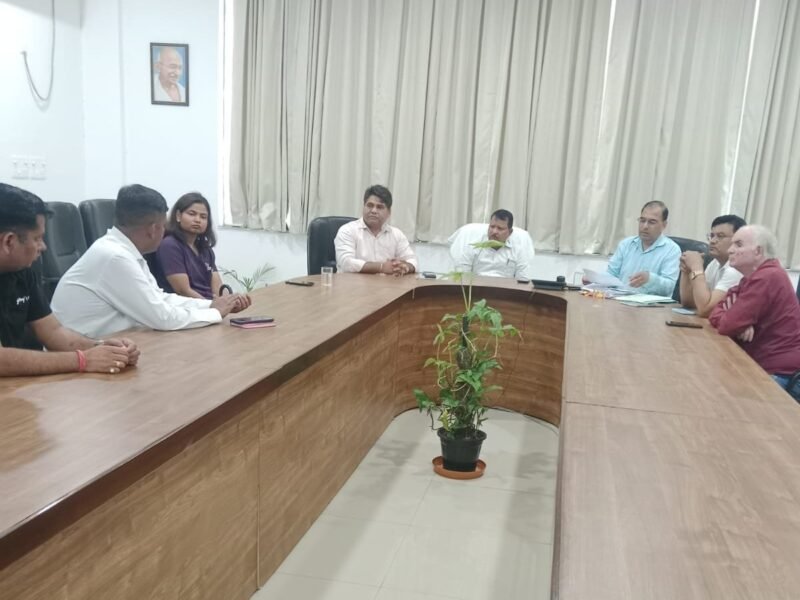
According to an official PIB release, CAQM carried out a special inspection drive in Noida on May 8, 2026, to assess visible road dust levels and review road cleaning and sweeping operations in the city. The inspection covered 46 road stretches under the jurisdiction of the Noida Authority.
CAQM deployed 19 flying squad teams for the drive. During the inspection, the teams recorded 28 instances of high visible road dust and accumulation of construction and demolition waste, commonly called C&D waste. The locations included sectors 20, 21, 59, 62, 80, 82, 83, 84, 87, 88, 138, 140, 141 and 145.
What CAQM found in Noida
The official release said the findings pointed to deficiencies in regular sweeping operations, dust suppression measures and scientific handling and disposal of C&D waste at certain stretches.
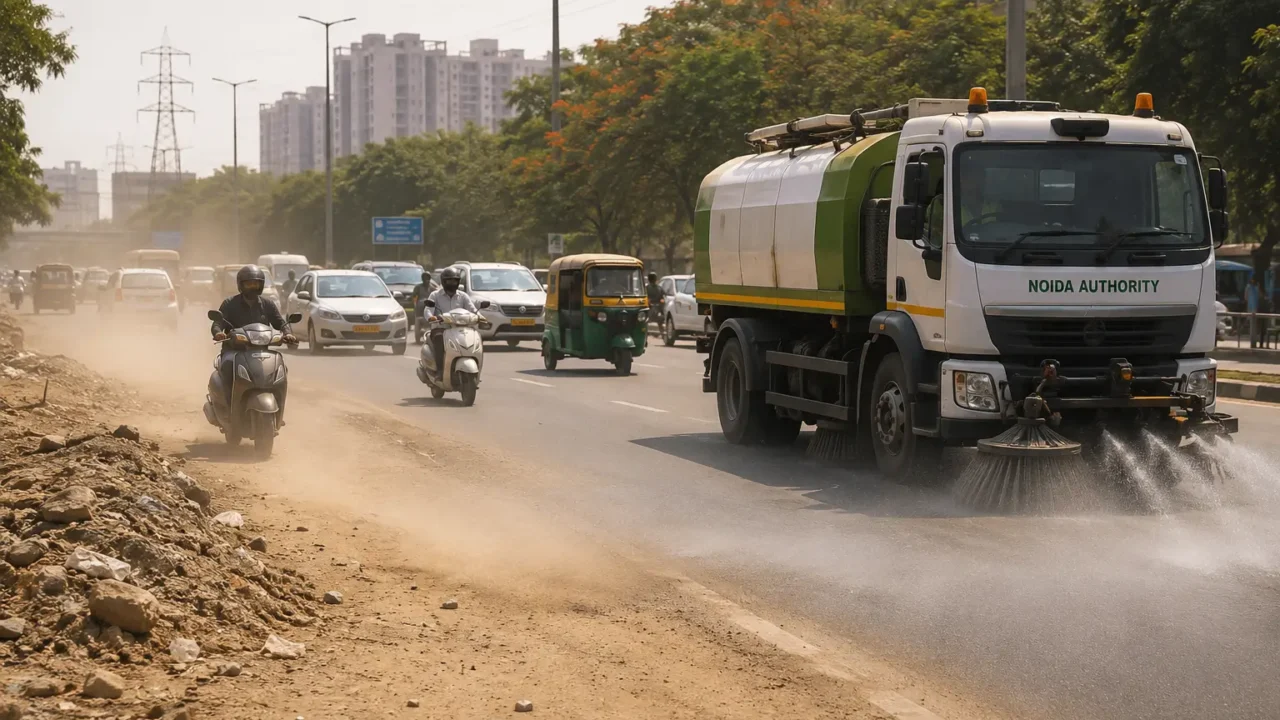
In simple terms, the inspection found places where loose road dust, construction debris or dusty roadside material had not been controlled properly. Once such dust settles on roads, traffic movement can lift it again and again into the air.
For residents, the impact is easy to notice: dusty service roads, dry road edges, debris near construction or repair sites, poor visibility in some stretches and a layer of dust on parked vehicles, balconies and roadside shops.
Why road dust matters
CAQM has highlighted that road dust remains a major contributor to particulate pollution in urban areas and needs sustained, focused mitigation.
Road dust contributes to particulate pollution, especially coarse and fine particulate matter. These particles can affect breathing comfort and can be especially difficult for children, elderly people and people with asthma, allergies or other respiratory conditions.
CPCB guidance on dust mitigation and C&D handling notes that dust from construction material and debris can create nuisance both on-site and off-site. It also says fine particles can travel further and create health hazards away from the immediate source.
In a fast-growing city like Noida, road dust often comes from multiple sources: construction activity, C&D waste dumping, loose soil on road shoulders, unpaved patches, road repair work, uncovered material transport and insufficient sweeping or sprinkling.
That makes road dust a recurring civic problem rather than a one-time cleaning issue.
What is C&D waste
C&D waste refers to construction and demolition waste generated during construction, repair, renovation, remodelling or demolition work. It can include concrete, bricks, rubble, soil, plaster, tiles, metal, wood and other building material.
When such material is left on roadsides, vacant plots or near construction sites, it can break down into loose dust. Passing vehicles then lift this dust into the air, especially during dry weather.
Under dust-control and C&D waste handling norms, such waste is expected to be collected, transported and disposed of scientifically rather than dumped on roadsides or open land.
What residents should expect next
CAQM has directed the concerned authorities to intensify dust mitigation measures in Noida. These include regular mechanised sweeping, targeted water sprinkling and timely lifting and disposal of accumulated C&D waste.
For residents, this may mean more visible road-cleaning activity on identified stretches, especially in sectors where dust and debris were recorded. It may also mean closer checks on construction waste, unauthorised dumping and road stretches where sweeping is irregular.
The Noida Authority has also been advised to strengthen monitoring and enforcement mechanisms to prevent unauthorised dumping and ensure sustained compliance with prescribed environmental norms.
CAQM has said lapses in implementation of dust mitigation measures and negligence by concerned officers will be viewed seriously. Authorities have also been advised to fix accountability and take appropriate action against officers found responsible for deficiencies.
This does not mean every dusty road will improve overnight. But it does mean road dust control is now under sharper official watch.
What residents can watch for
Residents can keep an eye on a few recurring dust hotspots:
- Loose dust on road shoulders and service roads.
- C&D waste dumped near sector roads or vacant plots.
- Road repair areas where debris has not been lifted.
- Construction material kept uncovered near public roads.
- Sweeping that only pushes dust to the side instead of removing it.
- Dry stretches around construction corridors, markets and heavy traffic routes.
If follow-up action is sustained, residents should see more mechanised sweeping, more water sprinkling where required, faster lifting of debris and stricter checks on dumping.
Why this matters for growth corridors
Several of the sectors mentioned in CAQM’s inspection are part of Noida’s busy residential, industrial and expressway-side growth belt. Sectors such as 59, 62, 80, 82, 83, 84, 87, 88, 138, 140, 141 and 145 see a mix of traffic, offices, construction activity, service roads and daily movement of workers and residents.
As Noida expands, road cleanliness and dust control are not cosmetic issues. They are part of urban management, public health and the city’s everyday liveability.
For Noida residents, the immediate message is clear: expect more dust-control activity on city roads, but also watch whether sweeping, sprinkling and debris removal are maintained beyond the inspection cycle.
Official and validated sources
- Press Information Bureau / CAQM: CAQM conducts inspection drive in Noida, directs intensified mitigation and strict enforcement.
https://www.pib.gov.in/PressReleasePage.aspx?PRID=2259368®=1&lang=1 - Central Pollution Control Board: Guidelines on dust mitigation measures in handling construction material and C&D waste.
https://prana.cpcb.gov.in/assets/pdf/c_and_d_guidelines_1.pdf - CAQM Operation Clean Air public communication.
https://x.com/CAQM_Official/status/2053075710500282474