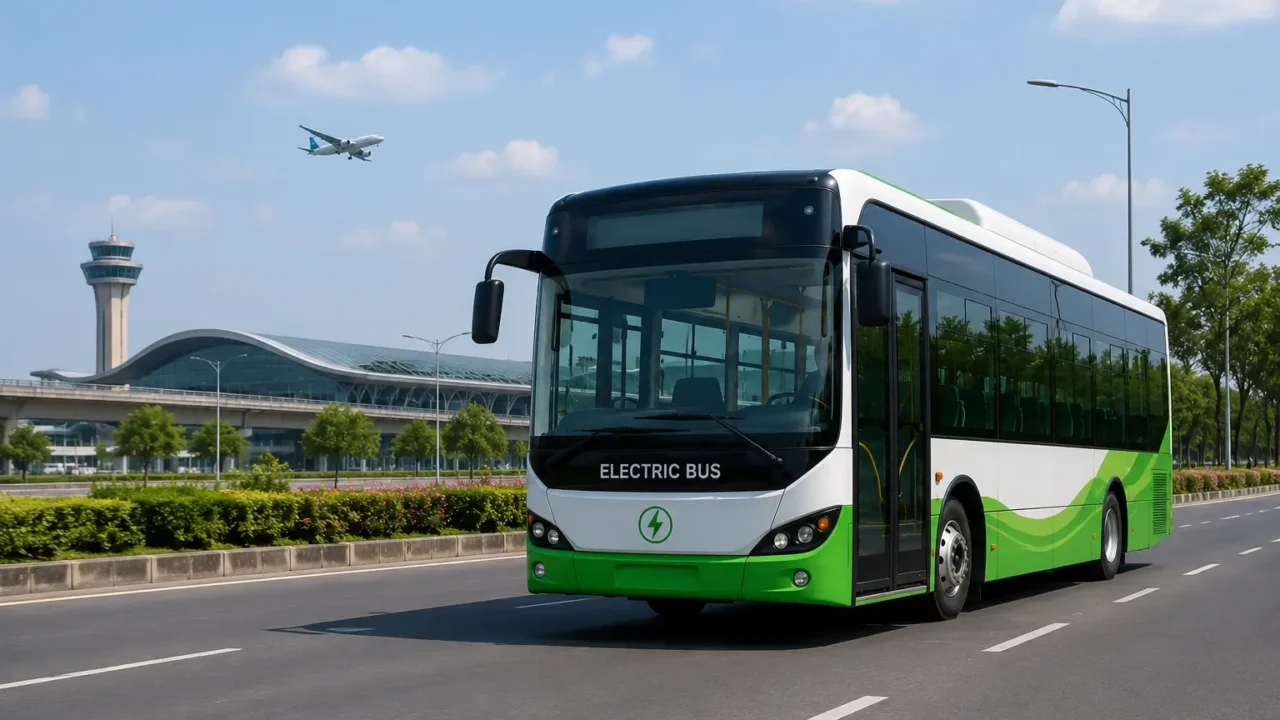
Greater Noida may soon get a green public transport link to the upcoming Noida International Airport, with GNIDA approving a pilot project for 15 electric buses.
According to current reports, the Greater Noida Industrial Development Authority has approved a six-month trial to run 15 e-buses on four feeder routes connecting key parts of Greater Noida with the upcoming airport at Jewar. The service is expected to be operated by Uttar Pradesh State Road Transport Corporation, or UP Roadways.
The pilot has been budgeted at around ₹1.8 crore as part of GNIDA’s 2026–27 planning. The project is aimed at improving last-mile and regional connectivity before commercial passenger operations begin at Noida International Airport.
What is being planned
The proposed e-bus network is expected to connect Greater Noida’s major residential and commercial nodes with the airport.
Reports say the four feeder routes are likely to include connectivity from key points such as Gaur Chowk, Surajpur, Pari Chowk, Makoda roundabout and Sector 16. Frequencies and exact route details should be treated as reported until a final route notification is issued by the authority or operator.
The six-month pilot will help authorities assess passenger response, route viability, operating cost and frequency requirements before a larger public transport rollout.
Why this matters
Airport access is one of the biggest upcoming mobility questions for Greater Noida and the wider YEIDA belt.
Once Noida International Airport begins operations, residents, airport staff, airline workers, passengers, hotel employees and service-sector workers will need reliable public transport options. Private cars and taxis may serve some users, but affordable mass transport will be important for daily mobility.
Electric buses also fit into the region’s broader push for cleaner transport. If the pilot performs well, it could become a base for expanding e-bus connectivity between Greater Noida, Noida, YEIDA sectors and the airport.
What residents should watch next
Residents should watch for the final route map, start date, bus frequency, fare details, first and last service timings, and whether the buses will connect smoothly with metro stations, residential sectors and commercial hubs.
For now, the key takeaway is simple: Greater Noida’s airport connectivity planning is moving beyond roads and private vehicles, with a public electric-bus pilot now part of the mobility plan.
Official and validated sources
- Greater Noida Industrial Development Authority: Official authority background and contact details.
https://gbnagar.nic.in/public-utility/greater-noida-industrial-development-authority/ - Noida International Airport: Airport background and official project context.
https://www.niairport.in/