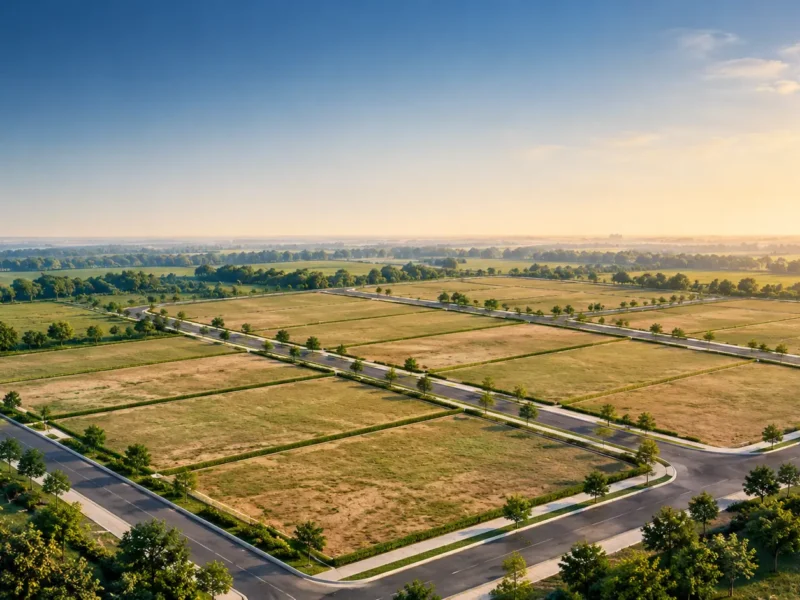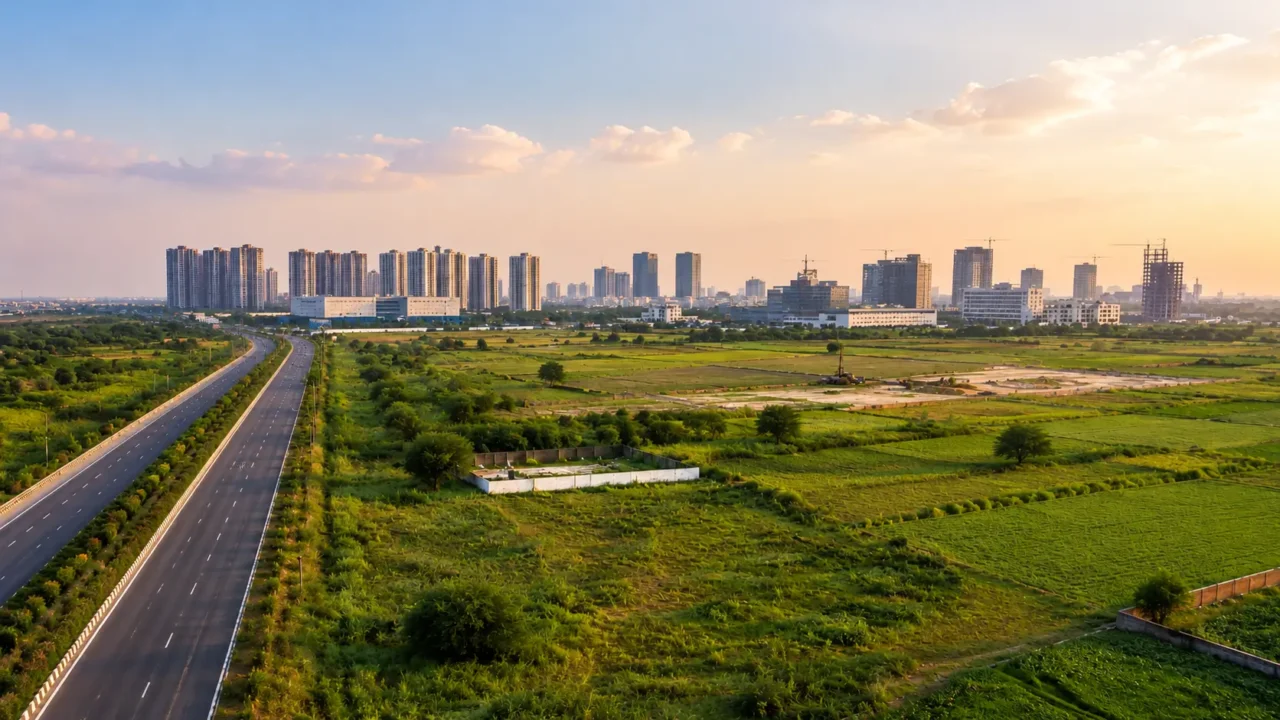
The first phase of land acquisition for New Noida is reportedly moving ahead across 37 villages, a step that could move the Dadri-Noida-Ghaziabad Investment Region, or DNGIR, closer to on-ground development.
According to recent reports, land from 37 villages is expected to be taken up in the first phase through a consent-based acquisition process. The mix includes 24 villages in Bulandshahr and 13 villages in Gautam Buddha Nagar.
New Noida, officially planned as DNGIR, is one of the region’s most important long-term urban and industrial expansion projects. It is expected to shape future development around Noida, Dadri, Greater Noida and the wider NCR growth belt.
Pulse of Noida could not independently verify a fresh public Noida Authority notice for the exact 37-village first phase at the time of writing. For that reason, this update is being treated as a reported infrastructure development, with official project background used only for broader context.
What is being reported
Reports say the first phase will focus on consent-based acquisition across the 37 villages, with the process expected to move through landowner consent.
Reports say the first phase includes villages across Bulandshahr and Gautam Buddha Nagar. Readers should rely on official notices for the final village-wise list, timelines and land-related details.
Because land acquisition is a sensitive and procedural matter, residents and landowners should rely on official notices and district-level communication for exact village lists, timelines, compensation details and hearing schedules.
Why this matters
The land acquisition step matters because it can move New Noida from planning towards implementation.
Once land is assembled, the next stages usually include layout-level planning, trunk infrastructure, roads, drainage, utilities, industrial sectors and supporting residential or commercial areas. For a large project like DNGIR, these stages are likely to unfold in phases rather than all at once.
For residents and businesses, New Noida could influence future investment, connectivity, housing and employment zones around Noida and adjoining districts. But the practical pace will depend on consent, administrative approvals, compensation, land assembly and infrastructure execution.
What this means for the New Noida timeline
Official investment-promotion material has described New Noida/DNGIR as a phased project. Earlier project background documents have referred to the city being developed in four phases, with the first phase covering around 3,165 hectares by 2027, followed by later phases up to 2041.
The reported 37-village acquisition update should be read as a first-phase land-assembly step, not as an immediate sign that the full city will be built quickly.
In practical terms, the likely timeline is:
- Land identification and consent-based acquisition.
- Public notices, documentation and district-level process.
- Compensation and transfer formalities.
- Sector-level layout planning.
- Basic infrastructure such as roads, drainage, power and utilities.
- Gradual industrial, residential and commercial development.
This means residents should track the project over months and years, not days. The most important near-term development will be official notices from the Noida Authority and the district administration.
Which official sources should residents track?
Residents, landowners and businesses should watch the following official sources for reliable updates:
- Noida Authority for project announcements, planning updates and development-related communication.
- Gautam Buddha Nagar district administration for land acquisition notices, public hearing notices, SIA/R&R documents and official village-level communication.
- Invest UP / Nivesh Mitra for broader DNGIR investment and project background.
- Bulandshahr district administration for land-related notices involving villages falling in Bulandshahr.
- Official gazette or government notifications, wherever applicable.
For landowners, official notices should carry more weight than social media forwards, property-channel videos or unverified compensation-rate claims.
What residents should watch next
The next important signals will be official village-wise notices, public hearings, consent terms, compensation communication and land-transfer timelines.
Residents should also watch whether Noida Authority releases clearer project phasing details, road and utility plans, and sector-level development timelines.
For now, the key takeaway is cautious but significant: New Noida’s first-phase land process is being reported as moving forward, but exact implementation details should be confirmed only through official notices.
Official and validated sources
- Invest UP: New Noida / Dadri-Noida-Ghaziabad Investment Region background and phased project context.
https://invest.up.gov.in/wp-content/uploads/2024/10/All-about_281024.pdf - Invest UP / Nivesh Mitra: Dadri-Noida-Ghaziabad Investment Region investment profile.
https://niveshmitra.up.nic.in/InvAssis.aspx?ID=dadri - Gautam Buddha Nagar district administration: Land acquisition for planned development of Noida.
https://gbnagar.nic.in/land-acquisition-for-planned-development-of-noida/