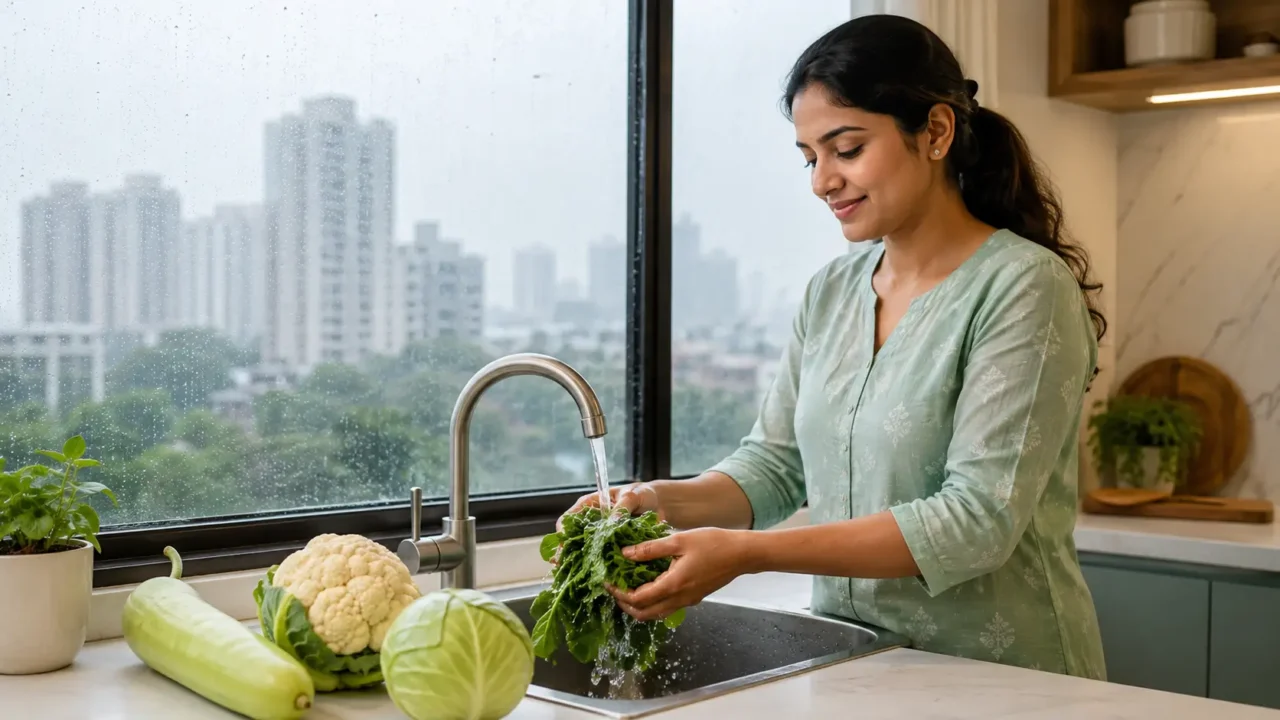
Monsoon food advice often tells consumers to stop buying spinach, cabbage, cauliflower and other vegetables altogether. However, the official food-safety guidance reviewed by Pulse of Noida does not identify a blanket list of vegetables that everyone must avoid during the rainy season.
The official food-safety guidance reviewed by Pulse of Noida does not identify a blanket list of vegetables that everyone must avoid during the rainy season. It instead emphasises buying fresh produce, using safe water, maintaining clean preparation areas, preventing cross-contamination, cooking food thoroughly and storing perishable food at safe temperatures.
Some vegetables do require more careful inspection and cleaning, particularly when they arrive wet, mud-covered, tightly layered, bruised or already cut. The safer approach is therefore not an arbitrary “avoid” list, but a practical buy, wash, cook, store and discard checklist.
DISCLAIMER: This article provides general food-safety information based on publicly available guidance from the Food Safety and Standards Authority of India and the National Centre for Disease Control. It is not medical advice and should not replace advice from a qualified doctor or dietitian. Individual dietary needs and health risks may differ. Anyone who becomes unwell after consuming food should seek appropriate medical advice.
Monsoon vegetable safety at a glance
| Situation | Recommended action |
|---|---|
| Fresh, firm and undamaged vegetables | Buy after inspecting carefully |
| Wilted, slimy or visibly rotten produce | Do not buy or consume |
| Produce showing mould or infestation | Discard |
| Leafy vegetables with trapped mud | Separate leaves and wash thoroughly |
| Cabbage and cauliflower | Check between layers and florets |
| Pre-cut vegetables at room temperature | Avoid |
| Refrigerated, hygienically covered cut vegetables | Use quickly and follow storage instructions |
| Mud-covered root vegetables | Wash thoroughly before peeling or cutting |
| Vegetables to be eaten raw | Wash carefully with potable water |
| Fresh produce washing | Do not use soap or household disinfectant |
| Cooked vegetables not eaten immediately | Refrigerate promptly |
| Doubt about freshness or storage history | Choose another item |
FSSAI training material advises that fruit and vegetable stores should control heat, moisture, pests and soil contamination. It also says produce in storage should be inspected regularly and items showing spoilage should be discarded.
Are there five vegetables everyone should avoid during monsoon?
No official blanket prohibition was found in the FSSAI or NCDC material reviewed for this guide.
Vegetables remain an important part of a balanced diet. The risk depends more on:
- The freshness of the produce;
- The water used during cultivation and washing;
- How it was transported and displayed;
- Whether it was cut in advance;
- Cleanliness during preparation;
- Cooking and storage conditions.
NCDC notes that fruits and vegetables can become contaminated during production, washing, handling or storage. Contaminated water, cross-contamination, inadequate cooking and warm storage are among the recognised food-safety risks.
That means a fresh, carefully washed and properly cooked vegetable is not automatically unsafe simply because it is being sold during the monsoon.
Which vegetables need extra inspection?
The following groups are not prohibited, but they may require more attention before purchase and preparation.
Leafy vegetables
Spinach, methi, coriander, mustard leaves, lettuce and similar vegetables can retain soil, moisture and insects between their leaves.
Before buying:
- Check whether the leaves are crisp rather than slimy;
- Avoid bunches with extensive yellowing or rotting;
- Look between the stems for insects or excessive mud;
- Avoid produce with a strong, unpleasant smell;
- Buy only what the household can use soon.
At home, remove damaged leaves, separate the remaining leaves and wash them thoroughly using water that is safe for food preparation.
Cabbage and cauliflower
Cabbage layers and cauliflower florets can conceal soil, insects or damaged portions.
Check for:
- Dark or wet patches;
- Excessive softness;
- Visible mould;
- Insect damage;
- Foul odour;
- Decay inside the outer layers.
Remove damaged outer leaves or florets before washing and cooking.
Root vegetables
Potatoes, carrots, radish, beetroot and similar vegetables often carry soil on their outer surfaces.
Wash them before peeling or cutting so that soil and contaminants are not transferred from the skin to the knife, chopping board or edible portion.
Gourds and firm-skinned vegetables
Lauki, tori, pumpkin and similar vegetables are comparatively easy to wash externally, but they should still be checked for:
- Unusual softness;
- Cracks or deep bruises;
- Mould;
- Leakage;
- Internal discolouration after cutting.
Discard the vegetable if spoilage is extensive or its smell and texture appear abnormal.
Pre-cut vegetables
Cutting exposes a larger surface area and creates more opportunities for contamination during handling.
FSSAI regulations state that fresh fruits and vegetables that are cut or juiced should be used immediately. Any short storage should be under refrigeration and the product should be properly covered.
Avoid buying pre-cut vegetables that are:
- Displayed unrefrigerated;
- Left uncovered;
- Surrounded by flies;
- Leaking liquid;
- Discoloured;
- Of uncertain preparation time.
What should you check before buying vegetables?
Choose fresh and wholesome produce
NCDC’s safer-food guidance recommends selecting fresh and wholesome raw materials.
Look for vegetables that are:
- Firm for their type;
- Free from extensive bruising;
- Not slimy;
- Not visibly mouldy;
- Not giving off an unpleasant smell;
- Free from obvious pest infestation.
A vegetable does not need to look cosmetically perfect. Minor natural variations are different from rot, mould or active spoilage.
Check how the vegetables are displayed
Prefer vendors or stores where vegetables are:
- Kept away from wastewater and open drains;
- Protected from excessive handling;
- Displayed on relatively clean surfaces;
- Not mixed with visibly rotten produce;
- Protected from flies and pests;
- Refrigerated where cold storage is required.
Buy smaller quantities during humid weather
Buying only what the household can use within a reasonable period reduces the chance of vegetables deteriorating before they are cooked.
This is particularly useful for leafy vegetables, herbs and fresh-cut produce.
How should vegetables be washed?
1. Wash your hands first
Wash hands properly before handling food and again after touching dirty produce, waste or contaminated surfaces.
NCDC’s food-safety guidance identifies handwashing and kitchen hygiene as key preventive measures.
2. Remove spoiled portions
Discard:
- Rotten leaves;
- Visibly mouldy sections;
- Heavily damaged pieces;
- Produce with extensive slime or decay.
Discard produce when mould, rot, slime or damage is extensive, or when its safety is uncertain.
3. Use potable water
FSSAI advises washing raw vegetables and fruits thoroughly in potable water. NCDC similarly recommends washing vegetables, fruits and raw ingredients with safe water before cooking.
Potable water means water considered safe for drinking and food preparation.
Residents concerned about the quality of water reaching their homes can read Pulse of Noida’s society water-quality guide covering storage tanks, internal plumbing, TDS and complaint steps.
4. Wash before cutting
Wash whole vegetables before peeling or chopping. This reduces the chance of transferring surface dirt to the edible portion through knives, peelers or hands.
5. Clean knives and chopping boards
FSSAI training guidance says chopping boards, knives, peelers and other equipment used during food preparation should be thoroughly clean. Raw and cooked food should also be handled separately to reduce cross-contamination.
6. Do not wash produce with soap
FSSAI guidance advises washing fruits and vegetables with fresh or potable water and says soap, disinfecting sprays and cleaning wipes should not be applied directly to produce.
Products intended for cleaning floors, utensils, hands or household surfaces should not be applied to food.
Should vegetables be eaten raw during monsoon?
Official guidance does not impose a universal ban on raw vegetables.
However, vegetables that will be eaten without cooking require particularly careful washing because there is no subsequent cooking step.
A cooked preparation may be the more cautious choice when:
- The produce is difficult to clean;
- Its handling history is uncertain;
- Safe washing water is not reliably available;
- It was displayed in unhygienic conditions;
- The consumer has been advised to follow additional precautions by a doctor.
Cooking does not make rotten or mouldy produce acceptable. Spoiled vegetables should be discarded rather than cooked in an attempt to make them safe.
Why proper cooking and storage matter
NCDC states that insufficient cooking and improper storage can contribute to food-borne illness. Food kept at warm temperatures can allow pathogens to multiply.
Its five keys to safer food include:
- Keeping food-preparation areas clean;
- Separating raw and cooked food;
- Cooking thoroughly;
- Keeping food at safe temperatures;
- Using safe water and raw materials.
Cooked and perishable food should not be left at room temperature for long periods. NCDC recommends refrigerating cooked and perishable food promptly, preferably below 5°C, and not leaving cooked food at room temperature for more than two hours.
How should vegetables be stored at home?
Keep produce dry where appropriate
Excess surface moisture can accelerate deterioration. Dry vegetables appropriately after washing if they are being stored rather than cooked immediately.
Separate spoiled items quickly
Inspect stored vegetables regularly. Remove any item showing signs of spoilage so that it does not affect nearby produce.
FSSAI storage guidance specifically recommends regular inspection and discarding items that show signs of spoilage.
Refrigerate perishable produce
Leafy vegetables, fresh herbs, salad ingredients and cut produce generally require refrigeration.
Do not overfill the refrigerator because cold air must circulate properly.
Keep raw and cooked food separate
Store raw produce separately from cooked or ready-to-eat food, particularly where there is a risk of dripping, soil transfer or contact with unclean packaging.
Use cut produce quickly
Once vegetables are cut, use them promptly. Short storage should be refrigerated and properly covered.
When should a vegetable be discarded?
Discard produce showing clear signs of spoilage, including:
- Visible mould;
- Extensive rot;
- Persistent sliminess;
- Strong off-odour;
- Severe insect infestation;
- Leaking or decomposing tissue;
- Widespread abnormal softness;
- Extensive discolouration associated with decay.
Food contaminated with harmful organisms may not always look, smell or taste different. Visual inspection therefore helps, but it cannot guarantee that food is free from contamination. Good washing, preparation and storage practices remain essential.
What about water quality in Noida societies?
Vegetable safety depends partly on the water used during washing and preparation.
Noida homes may receive water through municipal supply, groundwater blends, society storage tanks, internal pipelines and treatment systems. Residents who notice a sudden change in taste, smell, colour or sediment should raise the issue with their AOA, maintenance team or the relevant civic authority.
Pulse of Noida’s Noida water-supply guide explains local sources, quality concerns and complaint channels.
For the final rinse of vegetables, use the same quality of water the household considers safe for drinking and food preparation.
A practical Noida household checklist
Before buying:
- Inspect freshness and smell.
- Avoid visibly mouldy, slimy or rotten produce.
- Check leafy vegetables and florets carefully.
- Avoid uncovered or unrefrigerated cut vegetables.
- Buy quantities that can be used soon.
Before cooking:
- Wash hands.
- Remove spoiled portions.
- Wash produce with potable water.
- Wash before cutting or peeling.
- Clean knives, peelers and chopping boards.
- Keep raw and cooked food separate.
- Do not apply soap or household disinfectant to produce.
After cooking:
- Eat freshly prepared food where possible.
- Refrigerate leftovers promptly.
- Keep cooked food covered.
- Do not leave cooked food at room temperature for more than two hours.
- Discard food if its freshness or storage history is doubtful.
The bottom line
Noida residents do not need to stop eating nutritious vegetables solely because it is monsoon season.
The official guidance supports a more practical approach:
- Buy fresh produce;
- Avoid visible spoilage;
- Take additional care with leafy, layered and pre-cut vegetables;
- Wash using potable water;
- Keep hands, utensils and preparation areas clean;
- Cook properly;
- Refrigerate perishable food promptly;
- Discard produce when freshness is doubtful.
The safest question is not simply, “Which vegetable should I avoid?”
It is: Was it fresh, handled hygienically, washed with safe water, prepared cleanly and stored correctly?
Official sources and links
Controlling official source
- Food Safety and Standards Authority of India
- FSSAI Guidance Document on Clean Fresh Fruit and Vegetables
- FSSAI Basic Food Safety Training Manual
- FSSAI Safe Storage, Distribution and Transportation Manual
- FSSAI Eat Right Consumer Guidance