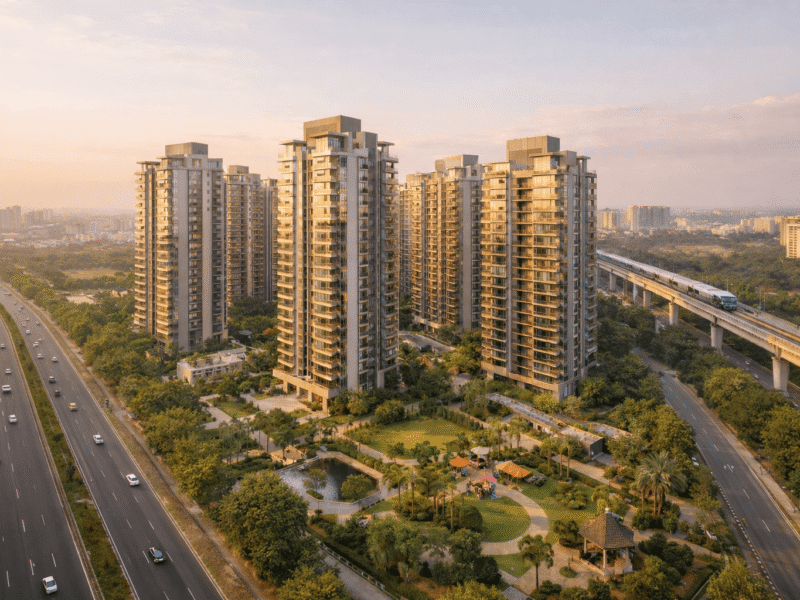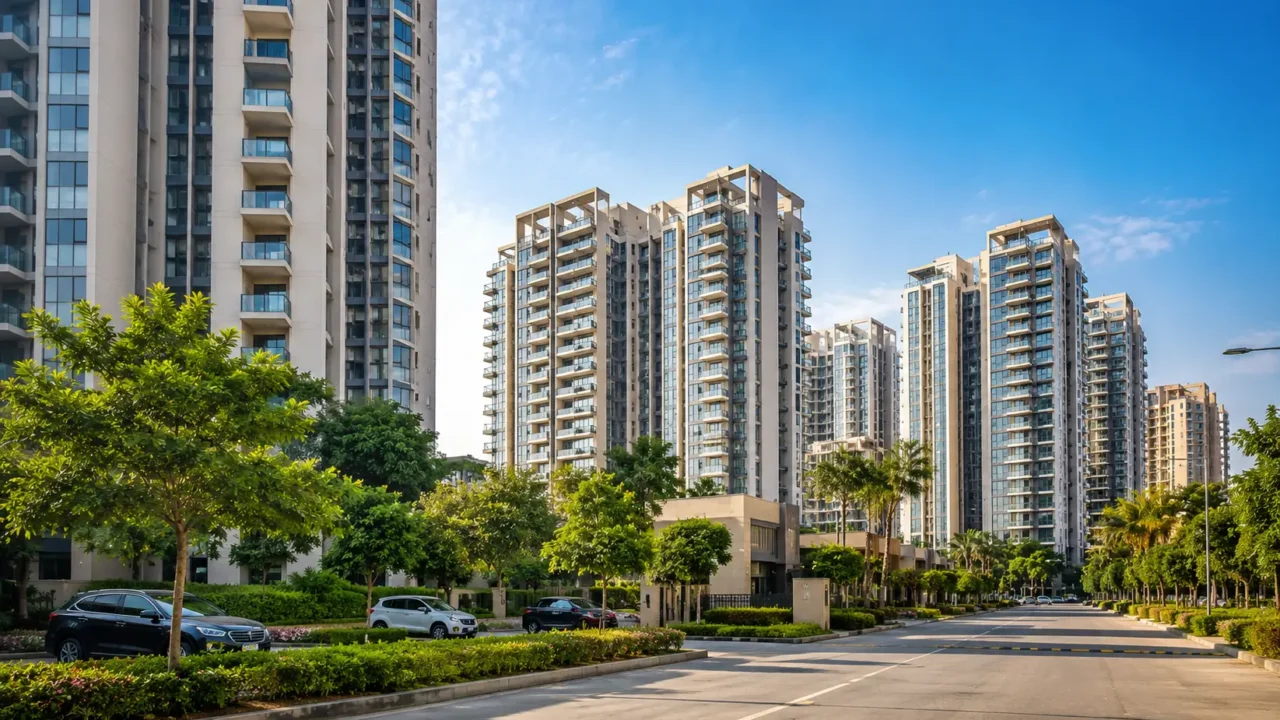
Noida’s real estate story is changing.
For years, the city was seen mainly as an affordable and mid-segment housing extension of Delhi. It offered larger homes, planned sectors, expressway access and relatively lower prices compared to central Delhi and parts of Gurugram.
That image is now being rewritten.
A new set of premium and luxury housing projects is entering the market, backed by airport expectations, expressway connectivity, corporate growth and rising demand from senior professionals, business owners and high-income buyers.
Recent market signals show how sharp this shift has become. Noida Authority’s latest plot scheme includes a commercial parcel with a reserve price of around ₹758 crore in central Noida, while luxury residential launches in parts of Noida are being quoted in the range of ₹25,000 to ₹35,000 per sq ft. Select branded residences are being discussed at ticket sizes of ₹35 crore to ₹40 crore.
For residents and buyers, the question is no longer whether Noida is growing. The more important question is whether the city’s premium housing market is maturing sustainably, or whether some pockets are pricing in too much future expectation.
From affordable extension to premium urban market
Noida’s rise as a premium housing market did not happen overnight.
The city already had several advantages: planned sectors, wide roads, proximity to Delhi, institutional land, commercial corridors, industrial pockets and a large base of working professionals. Over time, the Noida-Greater Noida Expressway, IT and office clusters, malls, schools, hospitals and gated housing societies created a stronger lifestyle base.
What has changed now is buyer perception.
Earlier, many high-income buyers preferred south Delhi, central Delhi or Gurugram for premium housing. Noida was often considered practical, but not necessarily aspirational. That gap is narrowing.
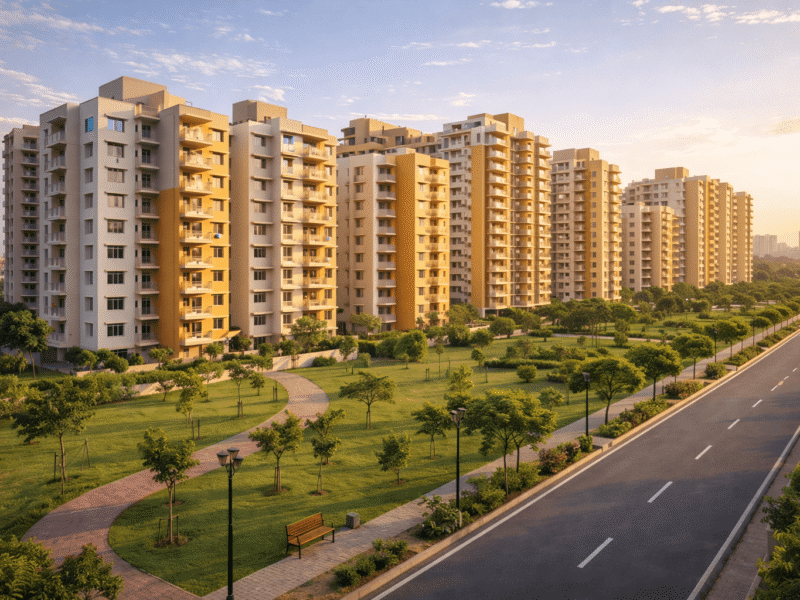
Developers are now positioning parts of Noida as a serious luxury market, especially along the Expressway corridor and in selected central Noida sectors. Branded homes, larger apartments, serviced residences, club-led projects and high-amenity towers are being used to attract CXOs, entrepreneurs, NRIs and affluent families.
What is driving the shift?
1. Noida International Airport expectations
The upcoming Noida International Airport at Jewar has become one of the biggest drivers of real estate sentiment in the region.
Even before full operations begin, the airport has changed how investors look at the Yamuna Expressway and Greater Noida belt. The logic is simple: airports tend to attract logistics, hospitality, commercial development, business travel and supporting infrastructure.
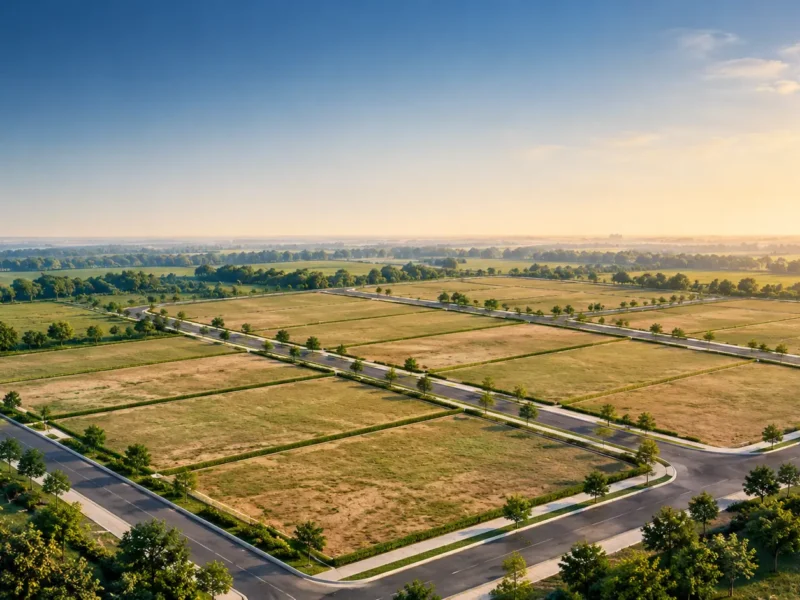
This does not mean every project near the airport will automatically perform well. But it does explain why land, plotted development, villas and premium projects in the wider Noida-Greater Noida-YEIDA corridor are being marketed around future connectivity and long-term economic activity.
The airport story has also helped developers sell a wider vision: Noida as not just a residential suburb, but as a future business and aviation-linked growth region.
2. Expressways and connectivity
Connectivity is the second major driver.
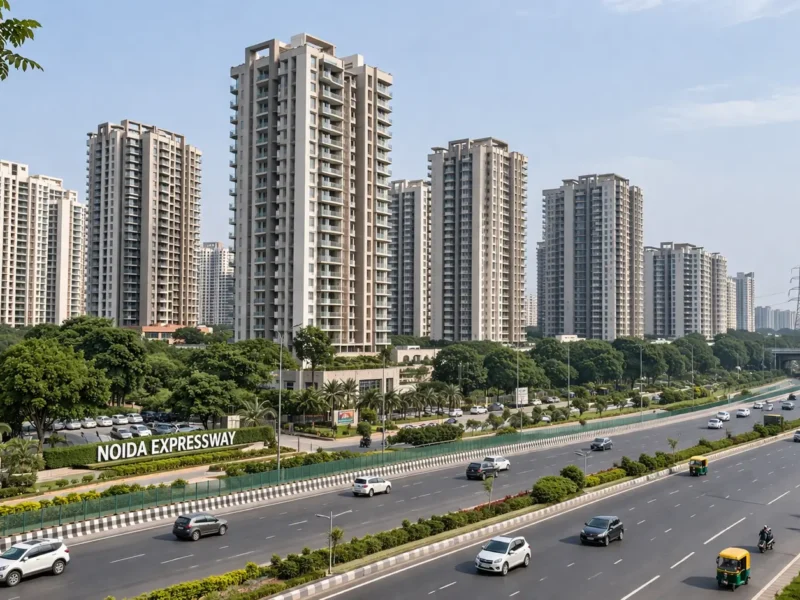
Noida’s premium housing pitch depends heavily on the Noida-Greater Noida Expressway, Yamuna Expressway, DND access, links to Delhi, proposed metro extensions, and improved road connections across the NCR.
For premium buyers, commute is not just about distance. It is about predictability. A larger apartment in Noida becomes more attractive when it is connected to office clusters, schools, hospitals, airports and commercial districts through reliable corridors.
This is why sectors along the Expressway belt, especially between Noida and Greater Noida, are increasingly being marketed as high-value residential locations.
3. Corporate, IT and senior professional demand
Noida’s luxury housing market is also being shaped by the people who work in and around the city.
The region now has a stronger base of IT companies, media businesses, startups, electronics firms, educational institutions, hospitals, professional services firms and global capability centres. As the senior professional base grows, so does demand for larger homes, better amenities, secure gated living and premium community infrastructure.
For many buyers, Noida offers a practical alternative to Delhi and Gurugram. The buyer may get a larger unit, newer construction, more parking, club facilities and better planned layouts at a lower price than prime Delhi micro-markets.
That value gap is one reason Noida is becoming more attractive to upper-income families.
What the numbers say
A few recent numbers explain the shift.
Noida Authority has brought a large plot scheme to market, including a commercial parcel of around 29,408 sq m with a reserve price of about ₹758 crore. The size and pricing of such parcels signal how much value is now being attached to central Noida land.
At the housing end, premium and branded residential projects in Noida are being positioned at a much higher price band than the city’s traditional mid-segment market. Recent reports mention luxury projects quoting around ₹25,000 to ₹35,000 per sq ft, while select Taj-branded serviced residences have been linked to ticket sizes of ₹35 crore to ₹40 crore.
The wider NCR luxury housing market is also strong. A CBRE report said luxury housing sales across India’s top seven cities grew by 85% year-on-year in H1 2025, with about 7,000 luxury units sold. Delhi-NCR led the market, accounting for about 57% of luxury sales during that period.
This does not mean all of that demand is concentrated in Noida. Gurugram and Delhi remain major luxury markets. But the NCR-wide demand surge gives Noida developers a larger buyer pool to target.
Where premium clusters are emerging
Noida’s luxury market is not evenly spread across the city.
The strongest premium activity is visible in select corridors and pockets.
Noida-Greater Noida Expressway belt
The Expressway corridor, especially sectors around 124 to 150, is one of the most visible premium housing zones. It offers proximity to office corridors, institutional areas, Greater Noida, and the Yamuna Expressway route.
Several developers are using this belt to sell larger homes, low-density projects, golf-facing or green-facing apartments, branded residences and high-amenity societies.
Central Noida pockets
Some central Noida sectors also continue to hold premium value because of location, mature neighbourhoods, schools, markets, hospitals and access to Delhi.
Sectors around 50, 51, 72 and nearby pockets are often attractive to buyers who want established social infrastructure rather than purely future-led growth.
YEIDA and Yamuna Expressway belt
The Yamuna Expressway and YEIDA areas are more airport-influenced and future-facing.
This belt has strong long-term potential because of the airport, industrial planning, logistics, film city proposals and planned urban development. But it is also more speculative than established Noida sectors.
Buyers here need to separate marketing claims from current liveability.
Buyer risks and questions to ask before booking
For homebuyers and investors, the luxury label in Noida now comes with both upside and risk. Before signing a cheque, it is worth asking a few practical questions.
How much of the price is “airport story” and how much is existing reality?
Many premium launches in the Noida-Greater Noida-YEIDA belt are pricing in future benefits from the airport, expressways and new metro links.
Buyers should check how liveable the area is today. What is the current commute time to offices? Are schools, hospitals, grocery stores, public transport and daily services already available? Or is the project depending mainly on future infrastructure?
Future growth matters, but families live in the present.
Delivery track record and RERA compliance
Noida and Greater Noida have a history of delayed projects and stuck inventory, especially in the mid-segment. A luxury price tag does not automatically remove execution risk.
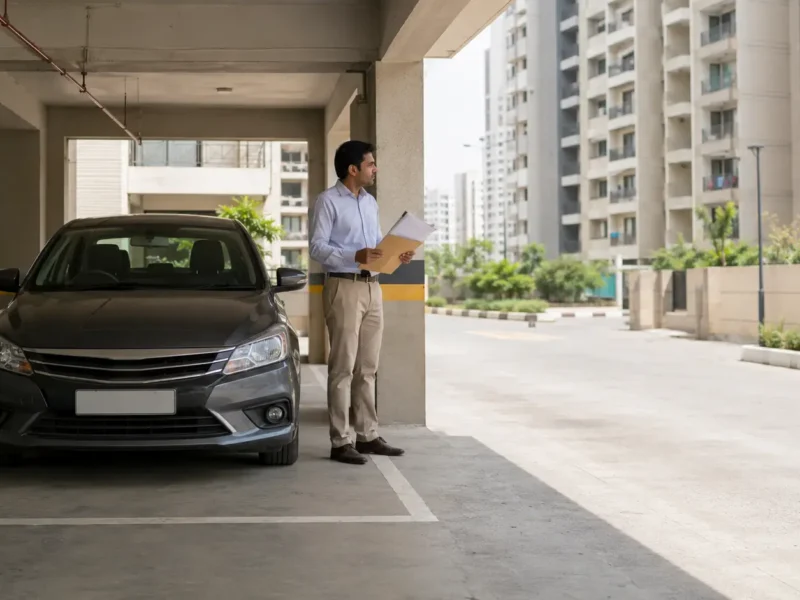
Before booking, buyers should confirm that the project is registered with UP RERA and check the developer’s past delivery record in Noida, Greater Noida and the wider NCR.
For under-construction luxury towers, buyers should ask for clear construction milestones tied to payment schedules.
Ticket size and liquidity risk
Apartments priced at ₹4 crore to ₹8 crore or more have a smaller resale buyer base compared to mid-segment homes.
This matters for investors. A premium unit may look attractive on paper, but resale can take longer, especially in a less-established micro-market. Quick exit at a profit should not be assumed.
The higher the ticket size, the more important the holding period becomes.
Common-area and maintenance costs
Luxury housing comes with recurring costs.
Clubhouses, concierge services, landscaped podiums, central air-conditioning, premium security, elevators, pools and sports facilities all need maintenance.
Buyers should ask for estimated maintenance charges per sq ft, escalation clauses and whether some facilities are optional or mandatory.
For landlords, these recurring charges directly affect net rental yield.
Micro-market saturation and competition
Several pockets along the Expressway and airport corridor are now being marketed to the same buyer segment: CXOs, NRIs, founders, business families and high-income professionals.
If too many similar premium projects enter one micro-market at the same time, rental growth and resale appreciation can be capped.
The best project in a good location may still do well. But generic luxury positioning may not be enough.
Regulatory and infrastructure dependencies
Projects near the airport and expressways depend heavily on timely public infrastructure.
Internal roads, flyovers, sewage systems, drainage, metro links, power supply, water supply and last-mile access all matter. Buyers should track updates from Noida Authority, GNIDA and YEIDA to see which projects have clear timelines and budgets, and which are still at announcement stage.
For most buyers, the question is not just whether Noida’s luxury market is growing. The real question is whether a specific project fits their risk appetite, commute pattern and family needs over the next 10 to 15 years.
What this means for Noida residents
Noida’s luxury real estate growth will affect more than just homebuyers.
As premium projects expand, some sectors may see higher rentals, more expensive retail, better commercial activity and improved neighbourhood services. At the same time, the shift can also push up land values and make certain areas less accessible for middle-income buyers.
For the city, the premium housing boom is a sign of economic confidence. It shows that Noida is being taken more seriously by developers, investors and high-income residents.
But luxury housing is not automatically a guarantee of returns.
The strongest locations will be those where infrastructure, liveability, developer execution and realistic pricing come together. For buyers, Noida’s growth story is attractive, but due diligence remains essential.
Official and Validated Sources
- Noida Authority – https://noidaauthorityonline.in
- GNIDA – https://www.gnida.in
- YEIDA – https://yamunaexpresswayauthority.com
- UP RERA – https://www.up-rera.in