Noida is not just one city in everyday conversation.
For many residents, “Noida” can mean Sector 18, Sector 62, Greater Noida West, Pari Chowk, the Yamuna Expressway or even Jewar airport. But these places do not function the same way. They are managed by different authorities, connected by different transport systems and offer very different daily-life experiences.
If you are moving here, buying a flat, renting your first apartment, visiting for work, studying in Greater Noida, or simply trying to understand what all those sector numbers mean, this guide is a practical starting point.
It explains where Noida, Greater Noida and Greater Noida West are located, how they connect to Delhi NCR, how the metro works, where the airport fits in, and what residents should know before making decisions about travel, housing or daily life.
Where Is Noida?
Noida is located in Gautam Buddha Nagar district of Uttar Pradesh and is part of the Delhi National Capital Region (NCR). It sits next to Delhi and has grown as one of NCR’s most important residential, commercial, industrial and technology hubs.
Gautam Buddha Nagar district was formed in 1997 by carving out portions of Ghaziabad and Bulandshahr districts, according to the official district history page. The district includes Noida, Greater Noida, Dadri, Dankaur, Bisrakh and Jewar areas.
On a simple map, the region can be understood like this:
- Noida sits closer to Delhi.
- Greater Noida lies further south-east, around Pari Chowk, Knowledge Park, Alpha, Beta, Gamma, Delta and nearby sectors.
- Greater Noida West, also called Noida Extension, sits between Noida and Greater Noida, around Gaur Chowk, Ek Murti, Bisrakh and nearby high-rise residential sectors.
- Jewar, where Noida International Airport is located, lies further south-east along the Yamuna Expressway.
This is why people often get confused. The larger region feels connected, but administratively and practically, these areas are not the same.
What Is Noida?
Noida stands for New Okhla Industrial Development Authority. It was constituted under the Uttar Pradesh Industrial Area Development Act, 1976, and is governed by the New Okhla Industrial Development Authority, commonly known as the Noida Authority.
Noida was planned as a sector-based urban extension near Delhi. Over time, it has grown into a major hub for offices, IT companies, media organisations, malls, schools, hospitals, high-rise societies and industrial activity.
For everyday residents, Noida is usually understood through its sectors.
Some important Noida zones include:
- Sector 18: One of Noida’s main commercial and shopping hubs, connected by Delhi Metro.
- Sector 62 and Sector 63: Major office, IT, BPO and institutional belts.
- Sector 75, 76, 77 and nearby areas: Dense residential sectors with metro access and high-rise societies.
- Sector 137 and Sector 142: Expressway-side residential and office zones.
- Sector 150: A newer residential belt marketed for larger green spaces and expressway connectivity.
- Noida Expressway: A major road spine connecting Noida with Greater Noida, lined with offices, schools, hospitals, residential societies and institutional projects.
Noida’s biggest daily-life advantage is connectivity. Many sectors are directly connected to the Delhi Metro Blue Line, which makes commuting to Delhi easier than from many other NCR suburbs.
However, Noida is also dense. Traffic pressure, parking, air pollution, waterlogging in some pockets and high housing costs in premium sectors are real issues residents must plan around.
What Is Greater Noida?
Greater Noida is a separate planned city governed by the Greater Noida Industrial Development Authority (GNIDA). The official GNIDA investment website says Greater Noida was set up in January 1991 under the UP Industrial Area Development Act, 1976, as a metro centre intended to decongest Delhi and provide a planned urban environment.
Greater Noida feels different from Noida. It has wider roads, larger sectors, more institutional land use and a more spread-out urban character.
Important Greater Noida reference points include:
- Pari Chowk: The most recognised landmark and transport reference point.
- Knowledge Park: A major education and institutional belt with universities and colleges.
- Alpha, Beta, Gamma and Delta sectors: Older and more established residential sectors.
- Swarn Nagari: A known residential and institutional area.
- Surajpur: An older urban and administrative zone.
- India Expo Mart: A major exhibition and convention centre.
- Buddh International Circuit: A motorsport venue located in the wider Greater Noida region.
Greater Noida is often preferred by people looking for wider roads, larger plots, institutional campuses, relatively planned layouts and a less congested feel compared to central Noida. But its trade-off has historically been last-mile connectivity. Many areas still depend heavily on private vehicles, autos, e-rickshaws, buses and app-based cabs.
What Is Greater Noida West?
Greater Noida West is where the confusion becomes strongest.
Greater Noida West is commonly called Noida Extension, but it is not part of Noida city administratively. It falls under the Greater Noida development area and is governed by GNIDA. It grew rapidly as a high-rise residential belt, especially after 2012, because it offered comparatively affordable housing near Noida, Ghaziabad and Delhi NCR job centres.
Important Greater Noida West landmarks and sectors include:
- Gaur Chowk
- Ek Murti
- Bisrakh
- Techzone 4
- Sector 1
- Sector 2
- Sector 3
- Sector 4
- Sector 16B
- Sector 16C
Greater Noida West has thousands of high-rise apartments and large group housing societies. It is popular among families, working professionals and first-time homebuyers because flats are generally more affordable than many Noida sectors.
But residents also face a major issue: metro connectivity has not reached Greater Noida West yet.
Most daily travel currently depends on road connectivity, private vehicles, shared autos, e-rickshaws, buses and cabs. This makes road congestion around Gaur Chowk, Ek Murti, Bisrakh and connecting corridors a daily concern for many residents.
A revised Phase 1 plan for Greater Noida West metro has been reported with a smaller initial station count, but timelines should be treated as provisional until final approvals, funding and construction schedules are formally confirmed.
PON Note: If you are planning to buy or rent in Greater Noida West, do not assume metro connectivity is already available. Check current commute time during your actual office hours before making a decision.
Noida Metro: How the Aqua Line Works
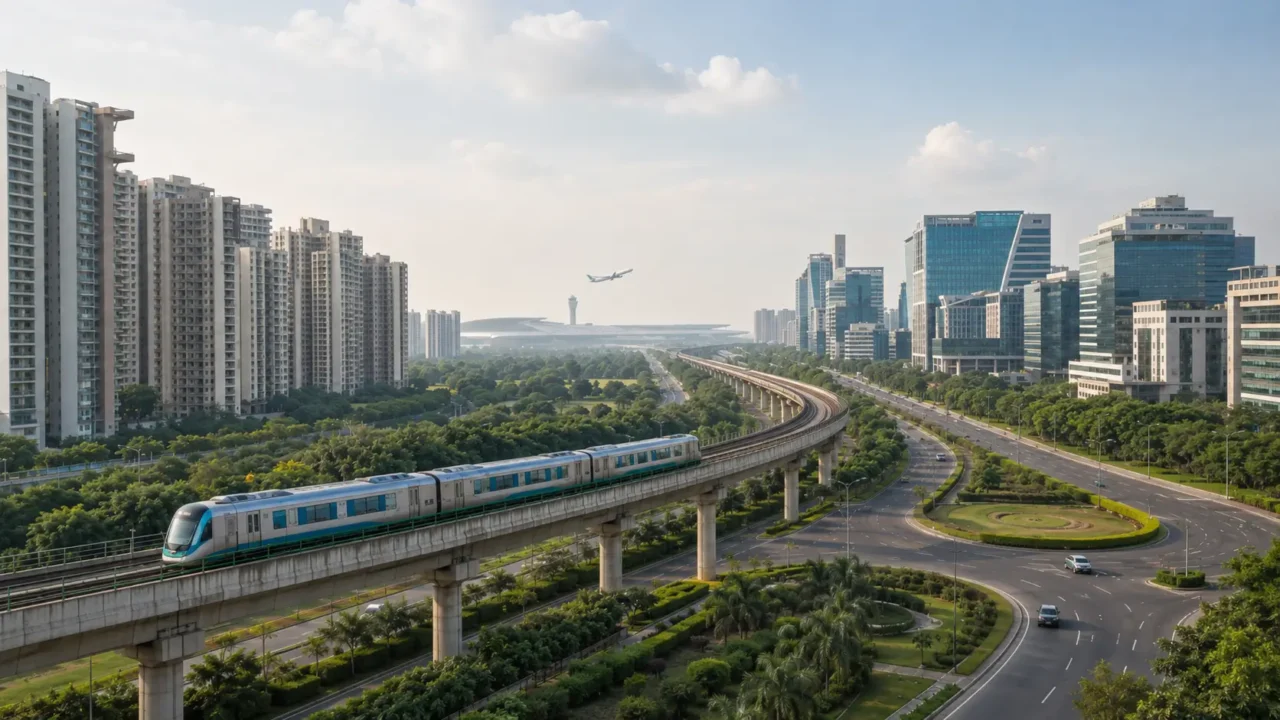
The Noida Metro Aqua Line connects Noida and Greater Noida. It is operated by the Noida Metro Rail Corporation (NMRC), which is separate from Delhi Metro Rail Corporation (DMRC).
The Aqua Line runs from Noida Sector 51 to Depot station in Greater Noida. It passes through several Noida Expressway sectors and then moves into Greater Noida via Knowledge Park II, Pari Chowk, Alpha 1, Delta 1 and GNIDA Office.
New ticketing option: Aqua Line passengers can now start QR ticket booking through NMRC’s WhatsApp service, while NMRC and SBI have also introduced an NCMC-featured City1 MTS card. See PON’s Noida Metro WhatsApp ticketing guide for the verified number, step-by-step booking process and what is currently confirmed about the new card.
Aqua Line station list
From Noida Sector 51 towards Greater Noida, the main station sequence is:
Noida Sector 51, Noida Sector 50, Noida Sector 76, Noida Sector 101, Noida Sector 81, NSEZ, Noida Sector 83, Noida Sector 137, Noida Sector 142, Noida Sector 143, Noida Sector 144, Noida Sector 145, Noida Sector 146, Noida Sector 147, Noida Sector 148, Knowledge Park II, Pari Chowk, Alpha 1, Delta 1, GNIDA Office and Depot.
Aqua Line timings
NMRC’s official train timing information says Aqua Line services start at 6:00 AM from Monday to Saturday and 8:00 AM on Sunday from terminal stations. The last train timing is listed as 10:00 PM, with trains reaching final stations later depending on direction and station. Residents should check NMRC’s official timing page before late-night or early-morning travel.
Important thing new residents must know
The Aqua Line does not work like a direct Delhi Metro extension.
If you are travelling from Greater Noida or Noida Expressway sectors towards Delhi, you usually need to get down at Noida Sector 51, move to the nearby Delhi Metro Blue Line’s Sector 52 station, and then continue towards Delhi.
This interchange is useful, but it is not as seamless as a single-platform interchange. New residents should factor in extra walking and interchange time.
Upcoming Metro Extension: Sector 142 to Botanical Garden
A major improvement is planned for the Aqua Line.
In February 2026, the Union Cabinet approved the extension corridor from Noida Sector 142 to Botanical Garden. The project length is 11.56 km with 8 elevated stations. The official Cabinet release said that once this corridor becomes operational, Noida and Greater Noida will have 61.62 km of active metro rail network.
This matters because Botanical Garden is already an important Delhi Metro interchange for the Blue Line and Magenta Line. Once the Aqua Line extension is built, residents along the Noida Expressway and Greater Noida corridor are expected to get better access to Delhi’s metro grid.
For now, however, commuters should treat it as an approved project, not an operational route.
Also read: Noida Metro Aqua Line Extension Approved: Route, Stations and Timeline
Where Does Noida International Airport Fit?
Noida International Airport at Jewar is now one of the biggest reasons people are trying to understand this region better.
The airport began commercial operations on June 15, 2026, with IndiGo operating the first commercial flight linked to Lucknow, according to public reports.
The airport is located in Jewar, along the Yamuna Expressway, further south-east of Noida and Greater Noida. For most residents, this means the airport is not “inside Noida city” in the everyday sense. It is part of the wider Gautam Buddha Nagar and Yamuna Expressway growth belt.
For residents, the practical relevance of the airport is still evolving.
At present, airport access depends heavily on:
- Yamuna Expressway
- road travel via Greater Noida and Pari Chowk side
- cabs and private vehicles
- emerging public transport links
- future road and metro proposals
Residents of Greater Noida are generally better positioned for faster road access to Jewar airport than those living in central or north Noida. For Delhi and Noida residents, actual travel time will depend heavily on origin point, traffic, time of day and airport-side arrangements.
PON Note: Before booking an early-morning or late-night flight from Jewar, check live travel time, airport transport availability and airline reporting time. Do not rely only on distance shown on a map.
Also read: Noida International Airport Opens Today: First IndiGo Flight Lands at Jewar, Akasa Starts Tomorrow
Does Noida Have a Railway Station?
Noida does not have a major long-distance railway station like New Delhi, Anand Vihar, Ghaziabad or Hazrat Nizamuddin.
Residents generally use different railway stations depending on where they live and where their train starts.
| Railway station | Useful for |
|---|---|
| Anand Vihar Terminal | Many trains towards eastern Uttar Pradesh, Bihar and Jharkhand |
| Ghaziabad Junction | Useful for residents of north Noida, Greater Noida West and Ghaziabad-side routes |
| New Delhi Railway Station | Major national routes |
| Hazrat Nizamuddin | Many central, south and west India routes |
| Dadri | Some routes useful for residents of Greater Noida and nearby areas |
Always check the actual boarding station before booking. “Delhi NCR” does not mean all major railway stations are close to every part of Noida or Greater Noida.
Common PIN Codes in Noida and Greater Noida
PIN codes in Noida and Greater Noida can vary by sector, society, village, post office and delivery area. Use the following only as a quick reference.
| Area | Commonly used PIN code |
|---|---|
| Central Noida, including many older sectors | 201301 |
| Some newer Noida sectors and Expressway-side areas | 201305 |
| Greater Noida West / Bisrakh side | 201306 |
| Greater Noida core areas | 201310 |
| Dadri | 203207 |
| Jewar | 203135 |
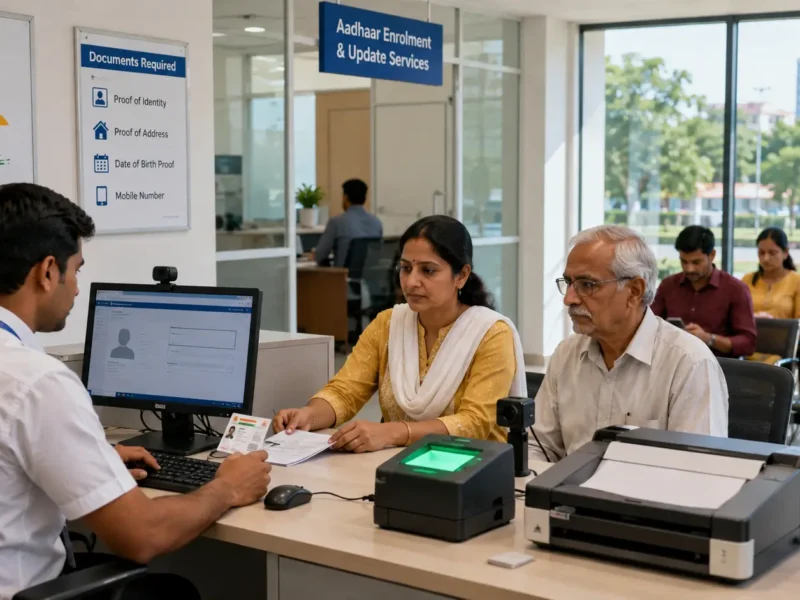
Before using a PIN code for bank documents, Aadhaar, passport, property records, school admission or delivery address, verify it using India Post’s official PIN code or post office locator.
What Makes Noida a Good Place to Live?
Noida works well for many residents because it combines Delhi proximity with planned-sector living. It has strong employment centres, good private schools, hospitals, malls, metro access and expressway connectivity.
For working professionals, Noida can be convenient if the office is in Noida, Delhi, Ghaziabad, Greater Noida or along the Expressway corridor. For families, the appeal is often a combination of schools, gated societies, hospitals, parks and relatively modern apartment infrastructure.
Greater Noida appeals to those who prefer wider roads, institutional areas, lower density in older sectors and easier access to Yamuna Expressway.
Greater Noida West appeals to homebuyers and renters who want larger or more affordable apartments, though commute planning is essential because metro access is still pending.
What Are the Trade-Offs?
Noida and Greater Noida are not perfect.
Residents should plan around these issues:
- Air pollution: Winter air quality can become very poor across NCR.
- Traffic bottlenecks: Key junctions such as Sector 62, Gaur Chowk, Noida-Greater Noida Expressway stretches and Pari Chowk can become congested.
- Waterlogging: Some roads and underpasses face monsoon pressure.
- Last-mile connectivity: Metro access does not automatically mean door-to-door convenience.
- Builder and registry issues: Some societies have faced possession, registry or maintenance-related disputes.
- High-rise dependency: Many residents depend heavily on RWAs, AOAs, facility management and private maintenance systems.
- Distance confusion: A place may be called “Noida Extension” but may not be close to central Noida in daily commute terms.
For homebuyers, the basic rule is simple: check RERA status, registry status, builder track record, maintenance cost, actual commute time and local infrastructure before making a decision.
Where Should Visitors Stay?
Where you should stay depends on why you are visiting.
For business meetings in Noida, Sector 18, Sector 62, Sector 63, Sector 104, Sector 142 and Expressway-side hotelscan be practical depending on your office location.
For exhibitions at India Expo Mart, staying in Greater Noida near Pari Chowk, Knowledge Park or Expo Mart is usually more convenient than staying in Delhi.
For airport-linked travel from Jewar, Greater Noida and Yamuna Expressway-side stays may become more relevant over time, but travellers should still verify actual cab availability and airport reporting requirements before booking.
For tourists, Noida is not a classic leisure destination like Delhi, Agra or Jaipur. It is better understood as a practical NCR base with malls, food markets, business hotels, religious places, birding spots and weekend drives nearby.
Places to Visit in Noida and Greater Noida
Noida and Greater Noida are not built like traditional tourist cities, but residents and visitors still have several places to explore.
Useful places to consider include:
- Okhla Bird Sanctuary
- DLF Mall of India
- Sector 18 market
- Brahmaputra Market
- ISKCON Noida, Sector 33
- Noida Haat
- India Expo Mart, Greater Noida
- Buddh International Circuit
- Surajpur Wetland, subject to current access rules
- Yamuna Expressway drive-side destinations
For a weekend, many residents also use Noida and Greater Noida as a base for short drives towards Agra, Mathura, Vrindavan, Aligarh, Meerut, Delhi heritage areas and nearby NCR leisure spots.
Where to Eat in Noida and Greater Noida
Noida’s food scene is spread across multiple pockets rather than one single high street.
Popular food belts include:
- Sector 18: restaurants, cafes, street food, malls and commercial dining.
- Brahmaputra Market: older Noida food culture, snacks and casual eating.
- Sector 104: cafes, restaurants and newer dining formats.
- Advant Navis / Sector 142 side: office crowd, cafes and restaurant clusters.
- Gaur City and Gaur Chowk belt: Greater Noida West’s growing food and cafe zone.
- Pari Chowk and Knowledge Park side: student-friendly, institutional and Greater Noida-focused dining.
PON should gradually build separate food guides for each of these areas because “best restaurants in Noida” is too broad to be useful.
Noida vs Greater Noida vs Greater Noida West: Quick Difference
| Area | Best understood as | Strength | Main caution |
|---|---|---|---|
| Noida | Delhi-adjacent planned city | Metro, offices, malls, hospitals, schools | Congestion, cost, pollution |
| Greater Noida | Wider planned satellite city | Roads, institutions, Expo Mart, Yamuna Expressway access | Last-mile connectivity |
| Greater Noida West | High-rise residential belt | Relatively affordable housing, large societies | No metro yet, road commute pressure |
| Jewar / Yamuna Expressway belt | Airport and future growth corridor | Airport, logistics, land and infrastructure interest | Distance, evolving connectivity |
Also read: Noida AC Electric Bus Service Launched: Routes, Fares, Airport Link and What Commuters Should Know
A Practical Guide for New Residents
If you are new to the region, here is the simplest way to make decisions:
If you work in Delhi:
Choose a Noida sector with strong Blue Line connectivity or easy access to Delhi roads.
If you work on Noida Expressway:
Look at Sectors 137, 142, 143, 144, 150 and nearby areas, but check last-mile options.
If you work or study in Greater Noida:
Pari Chowk, Knowledge Park, Alpha, Beta, Gamma, Delta and nearby sectors may be practical.
If you want more affordable high-rise housing:
Greater Noida West may offer options, but check commute reality during peak hours.
If airport access matters:
Greater Noida and Yamuna Expressway-side locations may become more relevant, but check actual current transport options.
If you are buying property:
Do not buy only on future metro, future airport or future road promises. Verify the present-day liveability first.
Why This Region Matters Now
Noida, Greater Noida and Greater Noida West are entering a new phase.
Noida has already become a mature office, media, IT and residential hub. Greater Noida is growing through institutions, exhibitions, manufacturing, data centres and airport-linked access. Greater Noida West is one of NCR’s biggest residential growth belts. Jewar airport has added a new layer of infrastructure and investment interest.
But the real question for residents is not just growth. It is whether daily life becomes easier.
That depends on the basics:
- reliable public transport
- safer roads
- cleaner air
- better last-mile connectivity
- transparent property systems
- stronger civic maintenance
- better information for residents
That is why understanding the difference between Noida, Greater Noida and Greater Noida West matters. These are not just names on a map. They shape how long you commute, where your children study, how much you pay for housing, how easily you reach the airport, and how your everyday life works.
Pulse of Noida View
For residents, the most important takeaway is this:
Do not treat Noida, Greater Noida and Greater Noida West as interchangeable.
They are connected, but not identical. Noida is closer to Delhi and better served by metro in many sectors. Greater Noida is wider, more planned and more connected to the Yamuna Expressway and institutional growth. Greater Noida West is a dense residential belt with strong housing demand but major public transport gaps.
If you are moving, investing, renting or commuting in this region, understand the geography first. It will help you make better decisions.
Sources and Attribution
This guide uses information from the official Gautam Buddha Nagar district website, Noida Authority, Greater Noida Industrial Development Authority, Noida Metro Rail Corporation, PM India Cabinet release, India Post and public reports on Noida International Airport and regional transport developments.
Last updated: 22 June 2026