Noida—short for New Okhla Industrial Development Authority—was officially formed on April 17, 1976, under the Uttar Pradesh Industrial Area Development Act. Its creation marked a turning point in Indian urban development, conceived with the clear mission of providing a well-structured, self-sufficient city to absorb the rising pressure on Delhi’s housing, industry, and infrastructure.
Why Noida Was Conceived
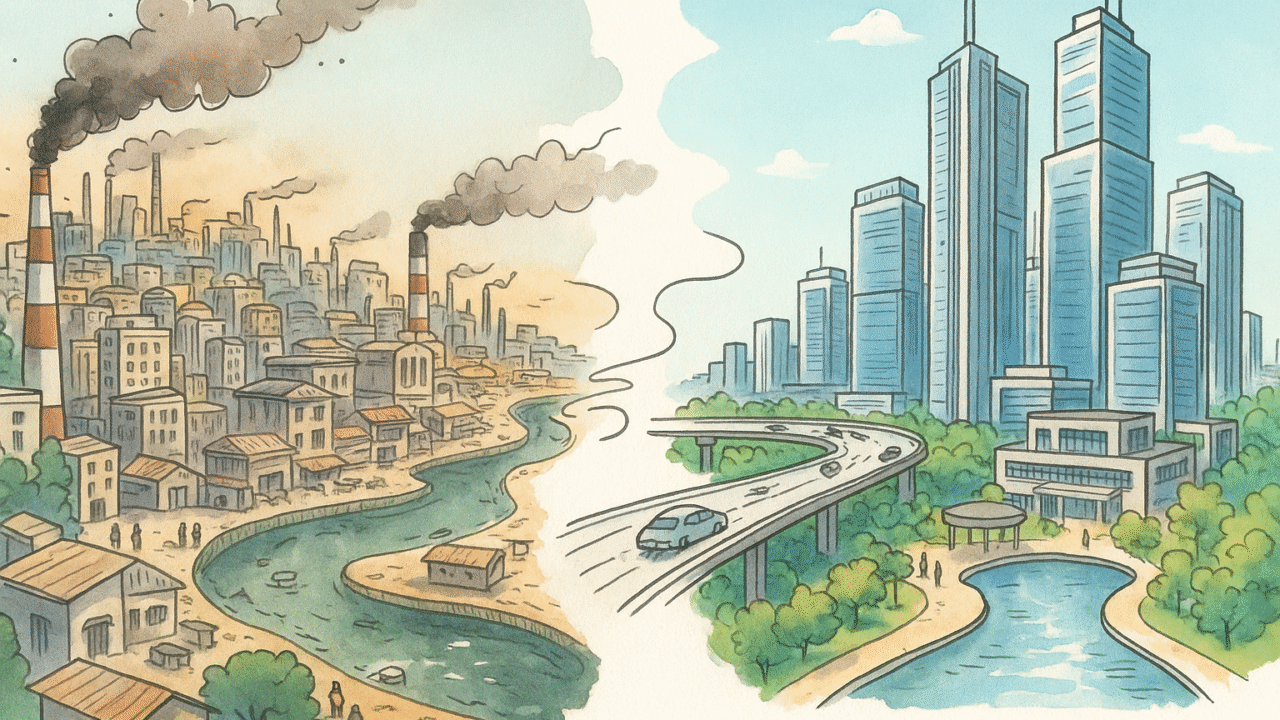
By the early 1970s, Delhi was grappling with unplanned growth, pollution from clustered industries, and a housing crunch. The Uttar Pradesh government responded by identifying vast, underutilized land on Delhi’s eastern periphery. As detailed in the official NOIDA Master Plan 2031, officials designated dozens of villages in Bulandshahr district for a new urban township, giving rise to Noida.
The primary objectives—spelled out in master plan and policy documents—were:
- Industrial decentralization from Delhi to a planned industrial township.
- Urban decongestion and improved living standards for the broader National Capital Region (NCR).
Formation and Early Planning
Noida’s establishment was rapid. Within months, the new Authority began acquiring land, laying arterial roads, and setting up essential infrastructure. The founding was not only a response to Delhi’s problems but also a vision for modern Indian city life, with mixed zones for industry, housing, and green spaces. The government formalized the city’s mandate via gazette notifications and regular master plan revisions, and today celebrates April 17th as Noida Foundation Day.
The entire structure and functioning of Noida have been shaped by official documents including:
- NOIDA Master Plan 2031 – the core urban planning document outlining zoning, administrative boundaries, and phased development.
Master Plan PDF - District Gautam Buddha Nagar History – for administrative milestones including the district’s 1997 creation, carved out to oversee Noida’s rapid growth.
District history
Chronological Development
Noida’s development journey can be traced through government-approved milestones:
1972–1976:
Early proposals and legal groundwork. Villages demarcated for inclusion in the new township under Building Operations Regulation.
District history
1976–1990s:
The Authority focused on building industrial clusters, roads, and basic utilities, in line with the original Master Plan projections. Manufacturing zones, residential sectors, and green spaces were planned in tandem.
1991:
With Noida’s success outpacing projections, the UP government formally launched Greater Noida as a distinct, meticulously planned city with its own Authority under the same Act.
Early 2000s:
Noida’s rapid industrial and infrastructural expansion accelerated with the completion of the Noida–Greater Noida Expressway—a project highlighted in the Noida Master Plan.
2010–Present:
Recent government documents, such as the NOIDA Master Plan 2031 and New Noida Master Plan 2041, showcase a city entering its “Smart City” phase—
- Expansion of metro links,
- Sustainable infrastructure projects,
- The upcoming Jewar International Airport,
- Data-driven planning through online GIS platforms like OneMap Noida.
Latest plans chart the city’s future growth through systematic village acquisition, land use allocation, and seamless integration with the wider NCR economic zone.
Current Landscape and Vision
Today, Noida covers over 20,000 hectares and is governed by the Noida Authority—a semi-autonomous body under UP state’s supervision, focused on industry, housing, and citizen services. Smart infrastructure, strong economic clusters, and a high quality of life reflect the fulfillment of decades-old government vision.
From official history and master plans to daily urban management, Noida’s rise is a testament to the power of planned development, administrative resolve, and visionary city planning.
Sources (with official links):
- NOIDA Master Plan 2031 – Noida Authority PDF
- Gautam Buddha Nagar District History
- New Noida – UP Govt Official Approval
- OneMap Noida GIS Platform
This story is curated for informational, civic, and media purposes drawing entirely from official government documents and master plans. No editorial claims of original research or new information are made.